California Reaches Historic Milestone as Entire State Registers Drought-Free for First Time Since December 2000
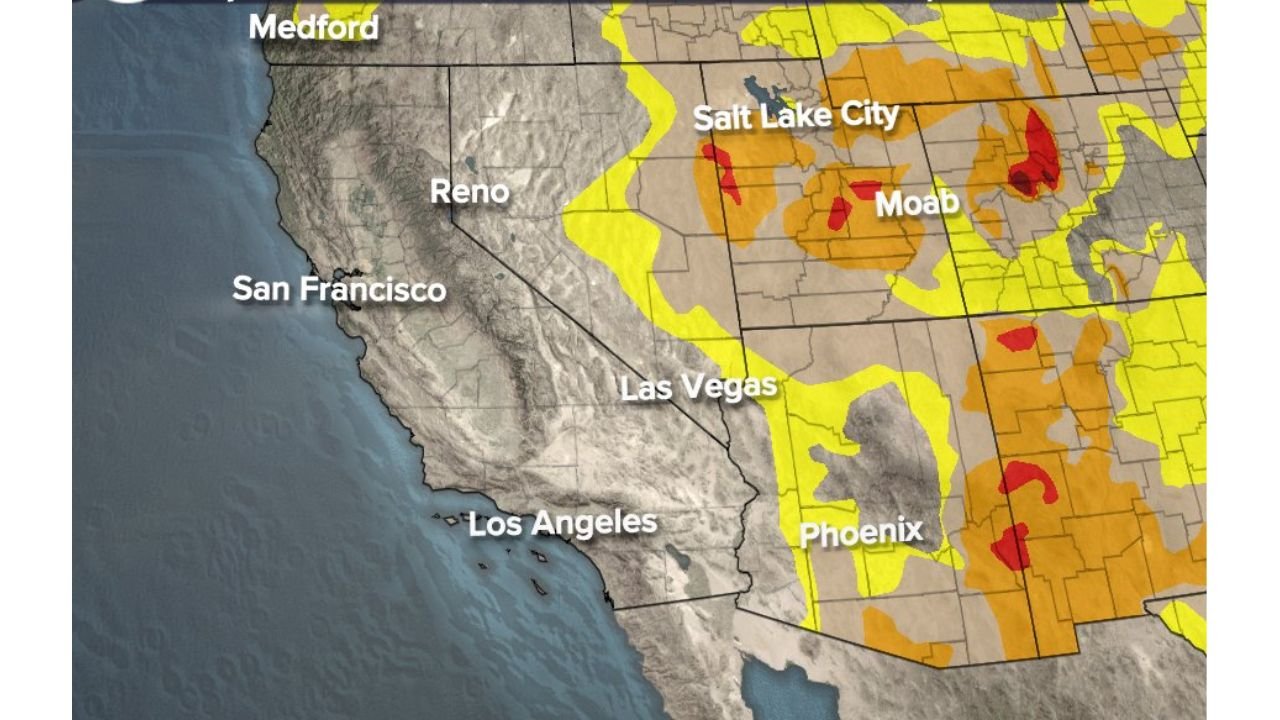
CALIFORNIA – For the first time in nearly 25 years, not a single square mile of California is classified as dry on the U.S. Drought Monitor, marking a historic turning point for a state that has spent decades cycling through drought emergencies and partial recoveries.
According to the latest drought map, California has fully exited all drought categories, a situation not seen since December 2000. For millions of residents under the age of 25, this is the first time in their lifetime experiencing a California completely free of drought conditions.
What the Drought Monitor Map Shows Right Now
The latest map confirms:
- Zero areas labeled “Dry,” “Moderate,” “Severe,” “Extreme,” or “Exceptional” drought
- No lingering drought pockets anywhere in Northern, Central, or Southern California
- Neighboring regions in the Southwest and Great Basin still show drought stress, highlighting how unusual California’s current status is
This makes California stand out sharply from surrounding states like Nevada, Utah, Arizona, and New Mexico, which continue to deal with moderate to severe drought zones.
Why This Moment Is Historically Significant
California’s climate history over the last quarter century has been dominated by:
- Prolonged multi-year droughts
- Water rationing and reservoir depletion
- Agricultural losses and wildfire escalation
- Periodic recovery followed by renewed drought cycles
To find a comparable moment, meteorologists have to go back to late 2000, before many of today’s residents were even born. Since then, California has never fully cleared drought conditions statewide—until now.
How California Reached a Drought-Free Status
This milestone is the result of several consecutive wet seasons, including:
- Repeated atmospheric river events
- Above-average mountain snowpack
- Strong reservoir recovery across the state
- Widespread soil moisture replenishment
These factors combined to erase even the most stubborn dry zones that had persisted through prior wet years.
What This Does — and Does Not — Mean
While the drought monitor status is a major win, experts caution against complacency.
What it means:
- Short-term water stress is significantly reduced
- Ecosystems and agriculture get a rare recovery window
- Fire season risk related to drought stress is temporarily lowered
What it does not mean:
- California is “immune” to future drought
- Long-term water security issues are resolved
- Climate volatility has stabilized
California’s climate remains highly variable, and history shows that drought can return quickly after wet cycles.
A Once-in-a-Generation Climate Snapshot
For younger Californians, this moment is more than just a statistic—it represents a climate state they’ve never known. A fully drought-free California is something that, until now, existed only in historical records.
Whether this marks a longer-term shift or simply a rare pause in California’s drought-prone pattern remains uncertain. But for now, the data is clear: California has entered a brief but historic drought-free chapter.
Stay tuned for continued climate and weather updates as conditions evolve nationwide.