Kansas Winter Storm Brings 29 Hours of Light Snow and 8–9 Inch Totals as Wind Chills Plunge to 20 Below Zero
KANSAS — A prolonged winter storm impacted much of Kansas from January 23 through January 25, delivering light, fluffy snow over an unusually long duration and producing impressive snowfall totals across north-central and northeast Kansas. While snowfall rates remained light for much of the event, the persistence of the snow — combined with dangerously cold temperatures and wind chills dropping to 10 to 20 degrees below zero — made this storm particularly impactful.
In Topeka, snow fell for nearly 29 consecutive hours, a remarkable stretch that allowed accumulations to steadily build despite the lack of intense snowfall bands.
Persistent Light Snow Leads to Widespread Accumulations
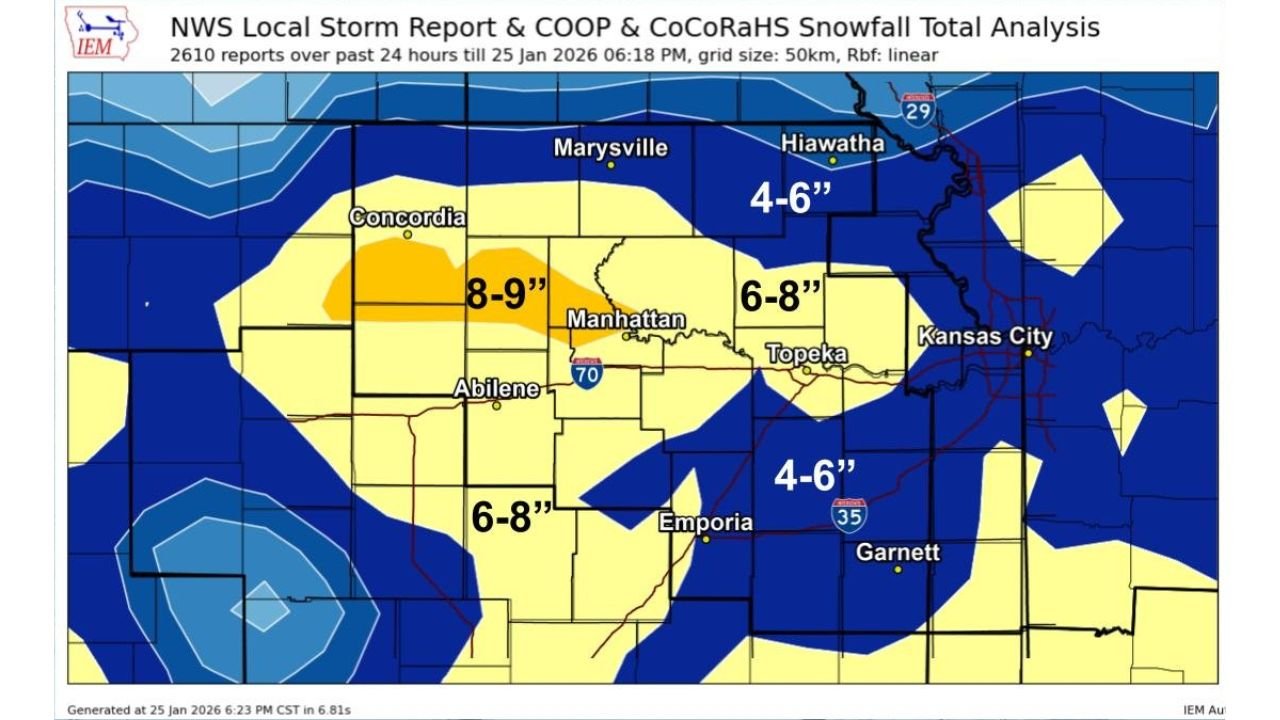
Snowfall analysis from the National Weather Service shows a broad swath of 6 to 8 inches across much of north-central Kansas, with localized amounts reaching 8 to 9 inches near the Manhattan, Concordia, and Abilene areas.
Some of the higher reported totals include:
- 4 miles southwest of Olsburg: 9.2 inches
- 2 miles west-northwest of Manhattan: 8.8 inches
- Greenleaf area: 8.6 inches
- Concordia: 8.5 inches
- Minneapolis, Kansas: around 8 inches
- Topeka (Billard area): just over 7 inches
Snow amounts tapered slightly farther east and south, with 4 to 6 inches reported near Kansas City and Emporia, but still enough to create widespread travel difficulties.
Topeka Sees Nearly 29 Straight Hours of Snowfall
One of the most notable aspects of this event was its longevity. In Topeka, light snow persisted almost continuously for nearly 29 hours, from late Friday into Sunday. While individual snowfall rates were modest, the lack of meaningful breaks allowed snow to gradually accumulate on roads, sidewalks, and open areas.
Meteorologists noted that this type of long-duration, low-intensity snowfall can be just as disruptive as heavier bursts, especially when road crews struggle to keep up over extended periods.
Extreme Cold and Dangerous Wind Chills Compound Impacts
In addition to snowfall, the storm was accompanied by intense Arctic air, driving temperatures well below normal across Kansas. Gusty winds pushed wind chill values down to between 10 and 20 degrees below zero, creating hazardous conditions for anyone outdoors.
The combination of powdery snow and extreme cold led to blowing snow, reduced visibility at times, and increased risk of frostbite and hypothermia for exposed skin.
Why This Snow Was So Light and Fluffy
Forecasters described the snow as exceptionally light and dry, a result of the very cold atmospheric profile in place during the storm. Snow-to-liquid ratios were high, meaning small amounts of moisture produced relatively larger snowfall totals.
While this helped boost accumulation numbers, it also meant snow was easily blown by the wind, leading to drifting and uneven coverage, especially in rural and open areas.
Travel and Cleanup Challenges Across Kansas
Road conditions deteriorated steadily through the weekend as snow continued to fall and temperatures remained frigid. Even after plowing, roads quickly became snow-covered again, particularly during the overnight hours.
Officials urged caution for anyone traveling, noting that cold pavement temperatures limited the effectiveness of road treatments. Cleanup efforts were further complicated by the ongoing cold, which prevented melting even during daylight hours.
A Storm That Will Be Remembered for Its Duration and Cold
While Kansas has seen heavier single-day snowstorms in the past, this event stands out for its persistence, geographic coverage, and brutal cold. The nearly nonstop snowfall in Topeka, combined with widespread 6–9 inch totals and subzero wind chills, made this a challenging winter event for communities across the state.
As residents dig out and temperatures slowly moderate, the storm serves as a reminder that long-duration winter weather can be just as impactful as intense, short-lived systems.
For continued coverage of winter storms, snowfall reports, and weather impacts across the Midwest and beyond, stay with ChicagoMusicGuide.com for the latest updates and expert analysis.