United States Faces Prolonged February Freeze as Large Swath of the Country Stays Below Freezing for Up to Two Weeks
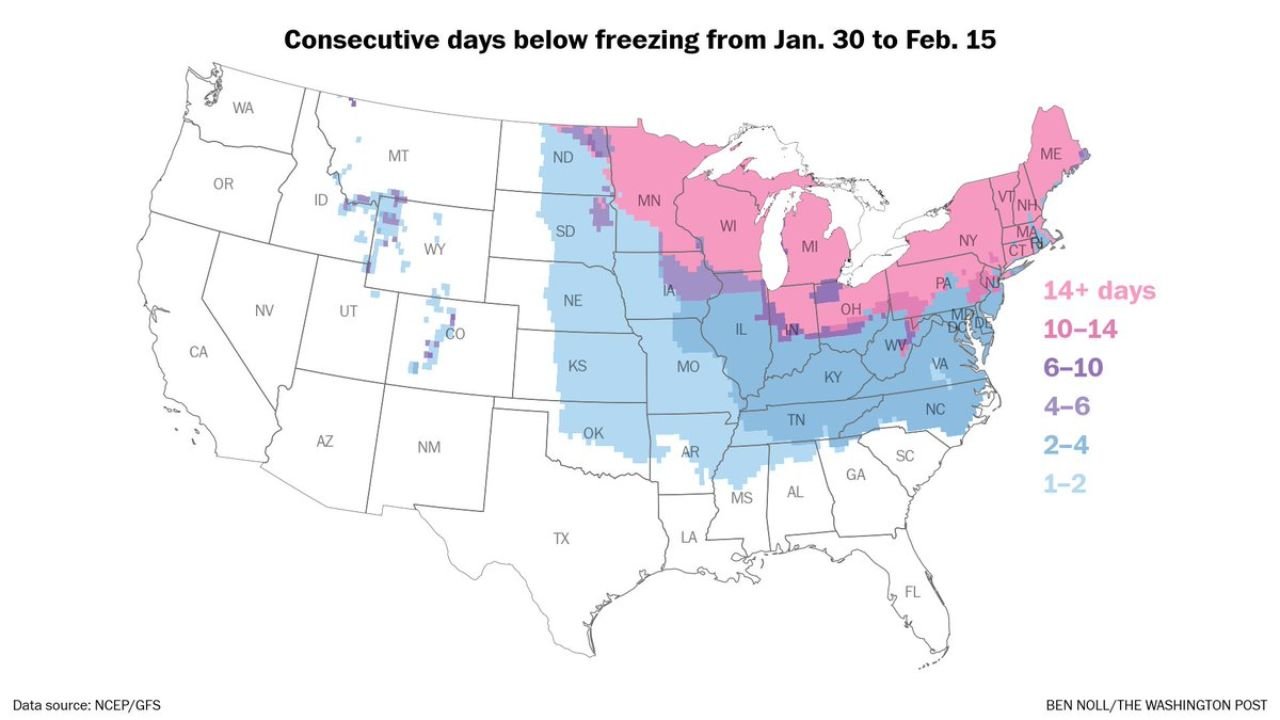
UNITED STATES — No matter what the groundhog predicts, early spring is not showing up anytime soon across much of the country. New forecast data shows a widespread and sustained stretch of sub-freezing temperatures from January 30 through at least February 15, affecting a massive portion of the Midwest, Great Lakes, and Northeast.
According to the latest outlook, millions of Americans are expected to endure consecutive days below freezing, with some regions facing 10 to 14 days — and even more than two full weeks — without temperatures rising above 32°F. The pattern highlights one of the most persistent cold spells of the winter season, reinforcing that winter still has a firm grip on large parts of the U.S.
Where the Cold Will Last the Longest
Forecast maps show the most extreme and long-lasting cold centered across:
- Upper Midwest and Great Lakes states including Minnesota, Wisconsin, Michigan, Illinois, and Ohio
- Much of the Northeast, including New York, Pennsylvania, Vermont, New Hampshire, and Maine
These areas are projected to experience 10 to 14 or more consecutive days below freezing, with some northern locations exceeding that threshold. This level of prolonged cold is notable even by mid-winter standards and significantly reduces any realistic chance of an early seasonal warm-up.
Widespread Freeze Extends Deep Into the Central and Eastern U.S.
The cold does not stop in the northern tier. Forecasts indicate that large portions of the central U.S. and interior Southeast — including parts of Missouri, Kentucky, Tennessee, Arkansas, and surrounding states — are likely to see 6 to 10 consecutive days below freezing.
Farther south, even areas not typically associated with long winter freezes could experience 2 to 6 days of sub-freezing temperatures, reinforcing the broad reach of this Arctic-dominated pattern.
Why This Matters: Winter Isn’t Letting Go
A stretch of below-freezing days of this magnitude has real-world impacts beyond discomfort:
- Energy demand remains elevated as heating systems run continuously
- Infrastructure stress increases, especially on pipes and road surfaces
- Snow and ice linger longer, compounding travel and safety concerns
- Agriculture and early budding vegetation remain at risk if cold persists
This extended cold pattern strongly suggests that any early-spring hopes are premature, particularly for the Midwest and Northeast, where winter conditions are expected to dominate well into February.
What Comes Next
While temperatures will fluctuate day to day, the overall signal remains clear: winter is far from finished. Even brief warm-ups are likely to be temporary, with cold air quickly reasserting itself. Meteorologists will continue watching for pattern shifts later in February, but for now, the data strongly favors continued cold over early warmth.
Winter isn’t backing down yet — and neither is the weather coverage. Stay ahead of cold snaps, snow chances, and major pattern changes by following ongoing updates at ChicagoMusicGuide.com, and let us know how this prolonged freeze is affecting your area.