Pennsylvania and New York Groundhogs Call for Six More Weeks of Winter as 2026 Groundhog Day Brings Unified Forecast
PENNSYLVANIA — Groundhog Day delivered a clear and unified message across the Northeast on February 2, 2026, as Punxsutawney Phil and multiple New York-area groundhogs all saw their shadows, officially calling for six more weeks of winter. The annual tradition, followed closely by weather watchers and winter-weary residents alike, pointed toward a prolonged cold season despite recent hints of gradual moderation.
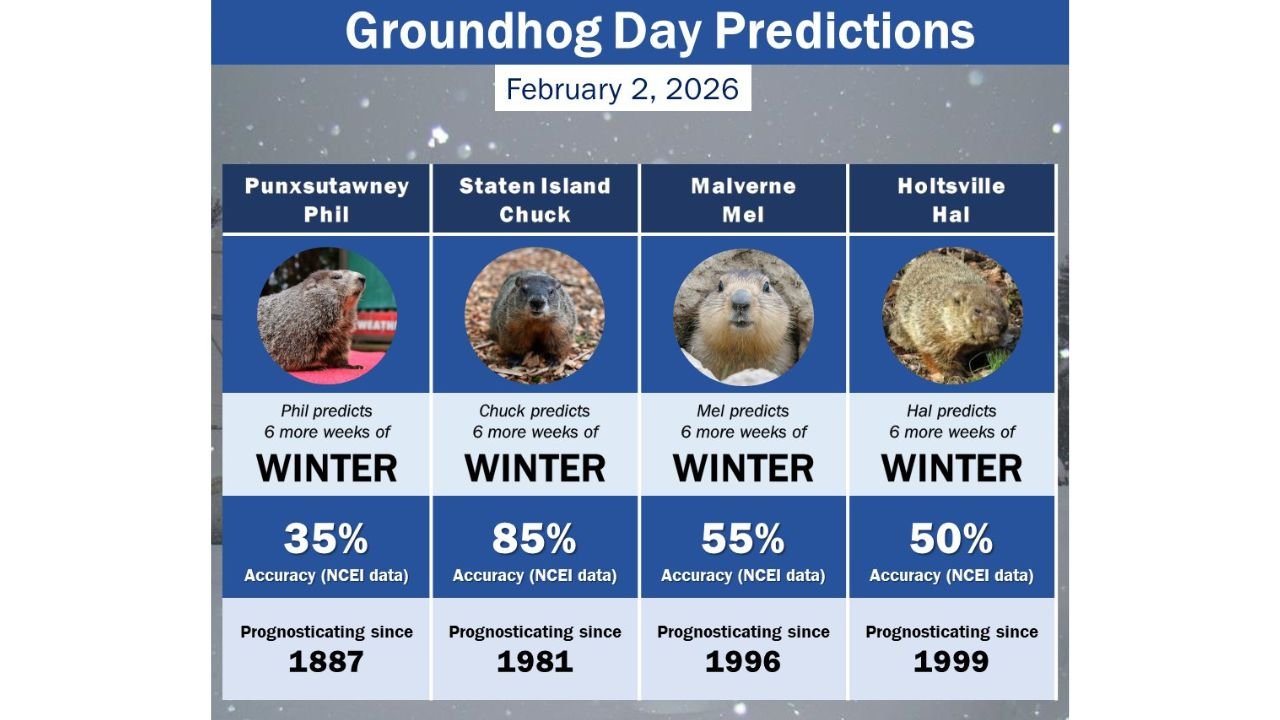
According to graphics released by the National Weather Service in New York, every featured groundhog echoed the same winter-forward forecast — a rare moment of agreement in a tradition known as much for folklore as forecasting.
Punxsutawney Phil Signals Continued Winter in Pennsylvania
In Punxsutawney, Pennsylvania, the nation’s most famous groundhog emerged early Monday morning and saw his shadow, triggering the classic proclamation of six more weeks of winter.
Phil’s 2026 prediction continues a long-running tradition dating back to 1887, though historical data shows his accuracy sits at 35 percent, based on climate verification records. Despite the modest track record, Phil’s announcement remains the most widely followed Groundhog Day forecast in the country.
New York Groundhogs Match Phil’s Prediction
Across New York, local groundhogs also delivered the same winter outlook. Staten Island Chuck, Malverne Mel, and Holtsville Hal all reportedly saw their shadows, reinforcing the call for an extended winter period.
Staten Island Chuck stands out with an 85 percent historical accuracy rate, making him one of the most reliable groundhog forecasters in the region. Malverne Mel follows with 55 percent accuracy, while Holtsville Hal checks in at 50 percent, giving New Yorkers a statistically stronger reason to take this year’s prediction seriously.
The shared outcome across Pennsylvania and New York added an unusual level of consistency to the 2026 Groundhog Day results.
What Six More Weeks of Winter Traditionally Means
A shadow sighting traditionally suggests colder-than-average conditions persisting through much of February and into early March. While not a precise meteorological forecast, the message often aligns with lingering cold snaps, additional snow chances, and delayed spring warmth.
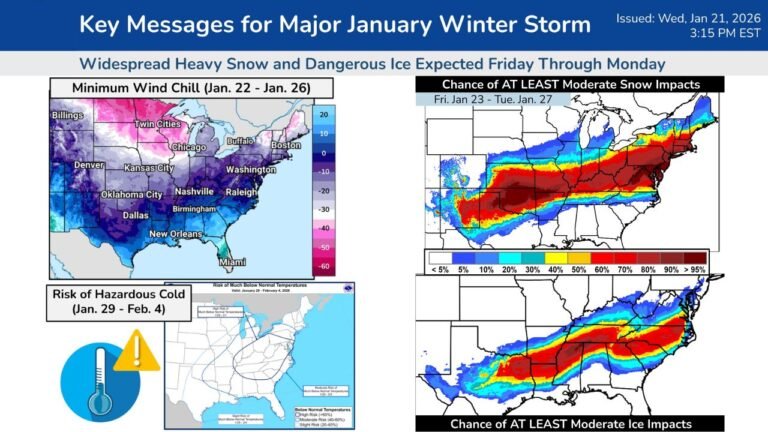
This year’s Groundhog Day outcome arrives amid an already active winter pattern, marked by recent Arctic outbreaks and repeated snow chances across parts of the Midwest and Northeast.
Groundhog Day Accuracy vs. Modern Forecasting
While groundhog predictions remain symbolic, meteorologists note that modern weather models — not rodents — determine seasonal outlooks. Still, Groundhog Day continues to offer a cultural snapshot of winter sentiment, especially when multiple regions align as they did in 2026.
The fact that every featured groundhog reached the same conclusion adds to the day’s significance, even as forecasters emphasize that winter patterns can change quickly in late February.
Winter Isn’t Done Yet — At Least Symbolically
Whether taken seriously or enjoyed as tradition, Groundhog Day 2026 delivered a clear verdict: winter isn’t finished yet. For residents across Pennsylvania, New York, and the broader Northeast, the prediction serves as a reminder to stay prepared for additional cold and snow as February unfolds.
As seasonal patterns continue to evolve, ChicagoMusicGuide.com will keep tracking winter weather trends, temperature shifts, and the eventual transition toward spring. For more updates on regional weather milestones and seasonal outlooks, visit ChicagoMusicGuide.com.