Florida Drought Deepens as ECMWF Forecast Shows Extremely Dry Pattern for Florida, Alabama, Georgia and Gulf Coast States Into March
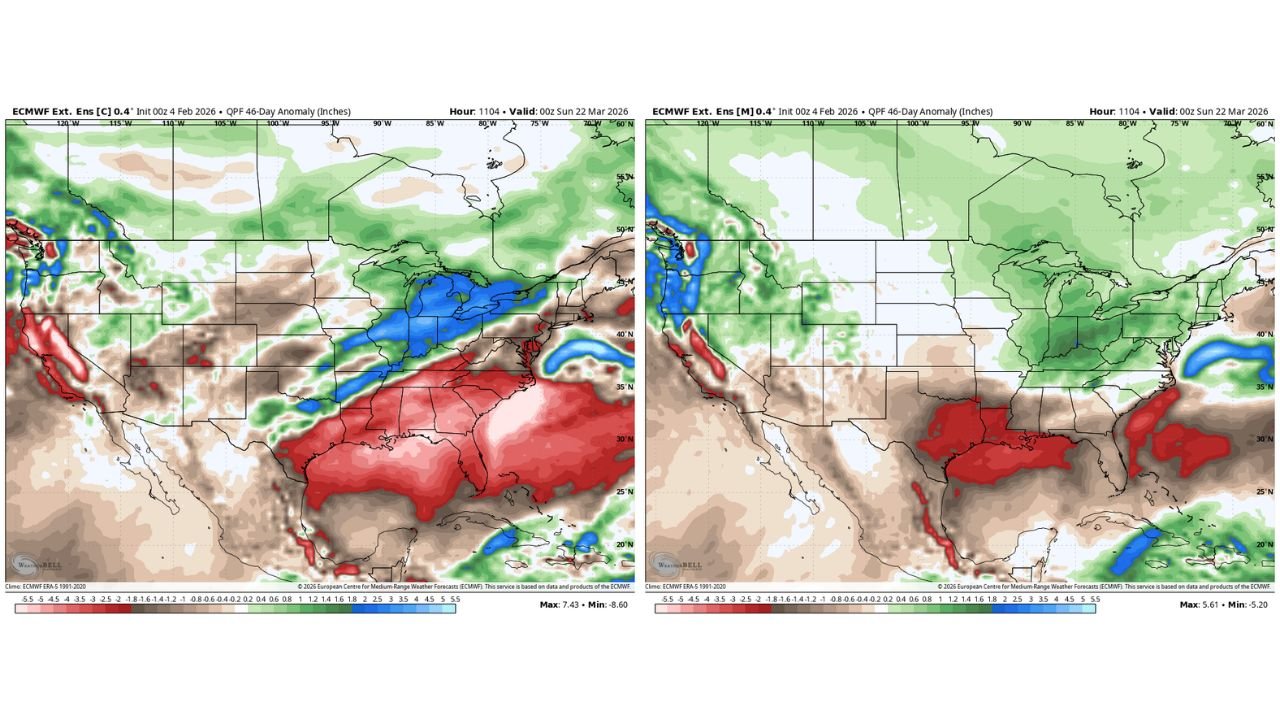
UNITED STATES — Florida is entering February under what forecasters are calling one of the worst drought setups on record, with long-range ECMWF guidance continuing to signal exceptionally dry conditions across Florida, Alabama, Georgia, and much of the central and eastern Gulf Coast through March 2026. The latest extended-range precipitation anomaly maps show widespread rainfall deficits persisting well beyond the typical winter dry season, raising concerns about wildfire risk, water supply stress, and an unusually early start to brush fire season.
Florida Drought Intensifies With Little Relief in Sight
The ECMWF 46-day precipitation anomaly forecasts paint a stark picture for Florida, where large portions of the peninsula remain shaded in deep red, indicating well-below-normal rainfall through late March. This dryness follows a 2025 hurricane season with no direct Florida impacts, eliminating a major source of seasonal rainfall recharge.
Compounding the problem, the winter rainy season ended earlier than normal, leaving soils already stressed as February begins. With little meaningful rain projected, forecasters warn that drought conditions could worsen rapidly, particularly across central and southern Florida, where groundwater and surface moisture deficits are already mounting.
Gulf Coast States Also Locked Into a Dry Pattern
The dry signal is not limited to Florida. ECMWF ensemble guidance shows Alabama, southern Georgia, Mississippi, Louisiana, and parts of Texas also trending below normal for precipitation through much of the next six weeks. The strongest deficits appear along the central Gulf Coast, where winter frontal systems are failing to produce sustained rainfall.
This regional dryness raises concerns for agriculture, water management, and ecosystem stress, especially as temperatures gradually rise heading toward spring. Without a pattern shift, moisture recovery may be delayed well into late March or April.
La Niña Influence Continues to Shape the Pattern
Forecasters note that the persistent dry outlook is not surprising, given La Niña conditions lingering in the Pacific. La Niña winters often favor suppressed Gulf moisture, steering storm systems north and limiting widespread rainfall across the Southeast.
The ECMWF long-range ensemble mean continues to reinforce this signal, suggesting that any rain events that do occur are likely to be brief, scattered, and insufficient to meaningfully reduce drought intensity. Until the larger-scale pattern changes, Florida and neighboring Gulf states remain vulnerable to prolonged dryness.
Early Brush and Wildfire Season Concerns Rising
One of the most immediate risks tied to the ongoing drought is the potential for an early and active brush and wildfire season across Florida, southern Georgia, and Alabama. Dry vegetation, low soil moisture, and increasing sunshine as spring approaches can quickly elevate fire danger—especially if windy conditions develop.
Fire managers often rely on late-winter rainfall to suppress early-season fire activity. With ECMWF guidance showing little indication of sustained rain, officials may need to prepare for heightened fire readiness earlier than normal.
Why This Matters for Travel, Outdoor Events, and Planning
Extended drought conditions can have wide-ranging impacts beyond agriculture and wildfire risk. Outdoor concerts, festivals, and spring events across Florida and the Gulf Coast may face fire restrictions, burn bans, or changes to venue operations if conditions continue to deteriorate.
Additionally, drought-driven heat and dry air can influence travel comfort, air quality, and water usage policies, especially in high-tourism areas. For those planning trips or events later this winter or early spring, monitoring weather updates will be critical.
Unless a significant pattern shift delivers widespread rainfall before early spring, Florida and much of the Gulf Coast appear poised to remain locked in drought, with impacts likely extending well beyond February.
For continued weather outlooks, regional drought updates, and how evolving conditions could affect travel and live events, visit ChicagoMusicGuide.com.