Colorado Mountains Brace for Multiple Snow Waves Over Next 10 Days While Denver and Boulder Remain Dry Amid Drought and Rising Fire Risk
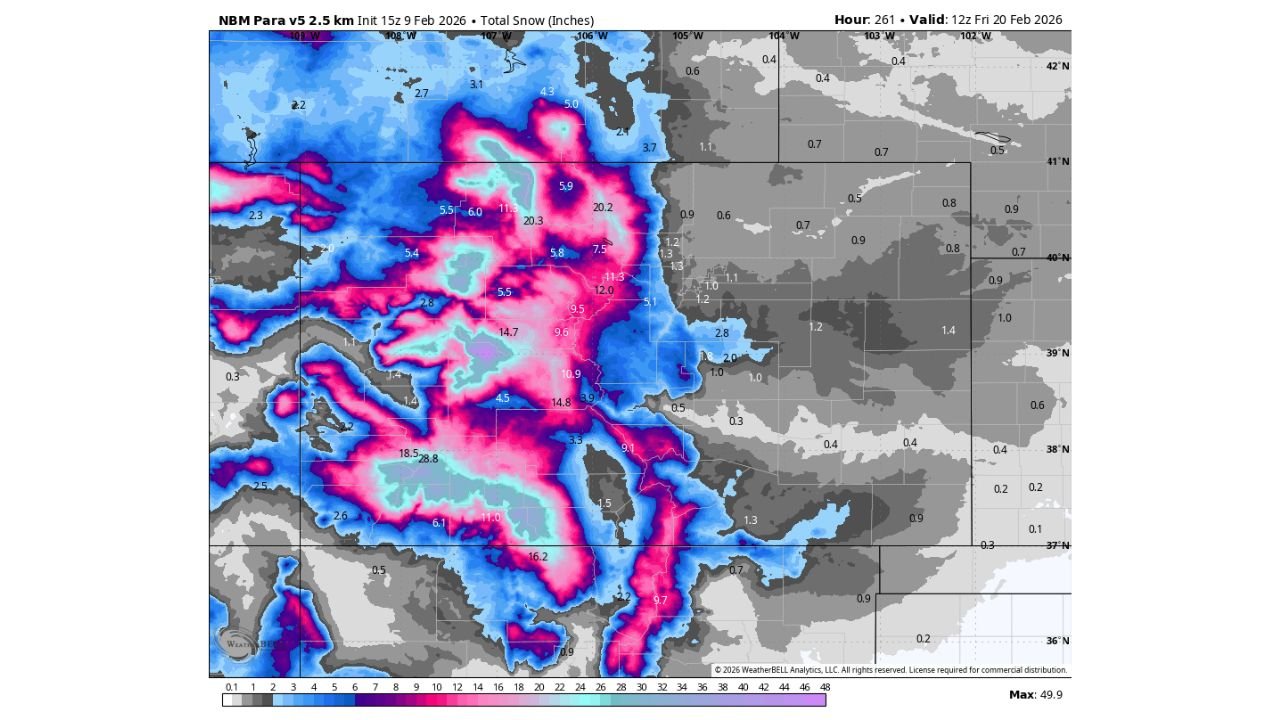
COLORADO — A highly active winter pattern is lining up for Colorado’s mountain regions, with multiple waves of snow expected over the next 10 days, delivering much-needed accumulation to high elevations across the state. Forecast snowfall guidance shows repeated mountain-focused systems capable of producing significant totals, especially along west- and southwest-facing terrain. However, this is a sharply divided pattern, as the Denver–Boulder Front Range is likely to miss out on meaningful moisture, remaining entrenched in severe drought while strong winds next week raise fire weather concerns.
Repeated Snow Waves Favor Colorado’s High Terrain
Forecast data highlights a sustained period of snowfall focused almost entirely on Colorado’s mountains, with several systems stacking snow over time rather than relying on a single major storm. The most persistent accumulation is expected across western and central mountain ranges, where colder air and upslope flow will repeatedly interact with incoming Pacific moisture.
Snow totals increase rapidly with elevation, and over the 10-day window, some high mountain locations are projected to see well over a foot of cumulative snowfall, with localized pockets potentially exceeding that mark where bands repeatedly redevelop. This pattern is ideal for building snowpack depth and improving mid- to late-winter conditions in the high country.
Snowfall Concentrated West of the Front Range
Despite the active mountain pattern, the forecast sharply cuts off snowfall east of the Continental Divide. Snowfall projections show very limited accumulation across eastern Colorado, including the Denver and Boulder metro areas, where totals remain minimal or nonexistent.
This west-heavy distribution reflects storm tracks that favor orographic lift in the mountains while leaving downslope flow and dry air in place across the plains. As a result, moisture struggles to spill eastward, reinforcing dry conditions along the Front Range.
Denver and Boulder Remain Locked in Severe Drought
While mountain snowfall is welcome news, it does little to alleviate conditions across the Denver–Boulder corridor, where severe drought continues. The lack of measurable precipitation over the next 10 days means soil moisture deficits are unlikely to improve, and vegetation remains vulnerable.
This ongoing dryness is particularly concerning given the time of year, as snowpack typically contributes to gradual moisture recharge. Without it, drought impacts may linger deeper into the spring season across eastern Colorado.
Strong Winds Next Week Increase Fire Weather Concerns
Adding to the concern, forecast guidance indicates periods of strong wind next week, particularly across lower elevations and the Front Range. With dry fuels already in place, gusty conditions could elevate fire danger, even outside of peak wildfire season.
These winds may also contribute to rapid snowmelt in lower foothills, further limiting any marginal moisture benefits and reinforcing dry conditions east of the mountains.
A Classic Mountain-Focused Winter Pattern
This setup represents a classic Colorado winter split pattern, where mountains benefit from repeated snow while the plains remain largely dry and windy. While the snow is excellent news for water supply at higher elevations and mountain recreation, it highlights the growing contrast between Colorado’s western slopes and its eastern plains.
Forecasters will continue monitoring whether any late-period systems can shift east enough to bring moisture into the Front Range, but for now, confidence remains high that the next 10 days strongly favor the mountains.
As Colorado navigates this uneven winter pattern—heavy mountain snow paired with persistent Front Range dryness—ChicagoMusicGuide.com will continue tracking how weather trends impact travel, outdoor plans, and regional conditions. For continued updates on snow forecasts, wind risks, and drought developments across Colorado and beyond, visit ChicagoMusicGuide.com.