North Carolina and South Carolina Drought Relief Begins, But Maps Show 5–15% of Monthly Rainfall Deficit Erased So Far
CHARLOTTE, NORTH CAROLINA — Recent rainfall across North Carolina and South Carolina has provided a modest but meaningful dent in ongoing drought conditions, trimming roughly 5–15% of the monthly rainfall deficit in many areas. While the precipitation was a positive step forward, updated drought maps show that the Carolinas still require multiple additional rain events over the next 30 days to fully eliminate moisture shortages.
Meteorologists stress that drought conditions do not develop overnight — and they do not disappear overnight either. The latest data underscores just how much rain is still needed to return the region to normal soil moisture levels.
How Much Rain Is Still Needed to End the Drought?
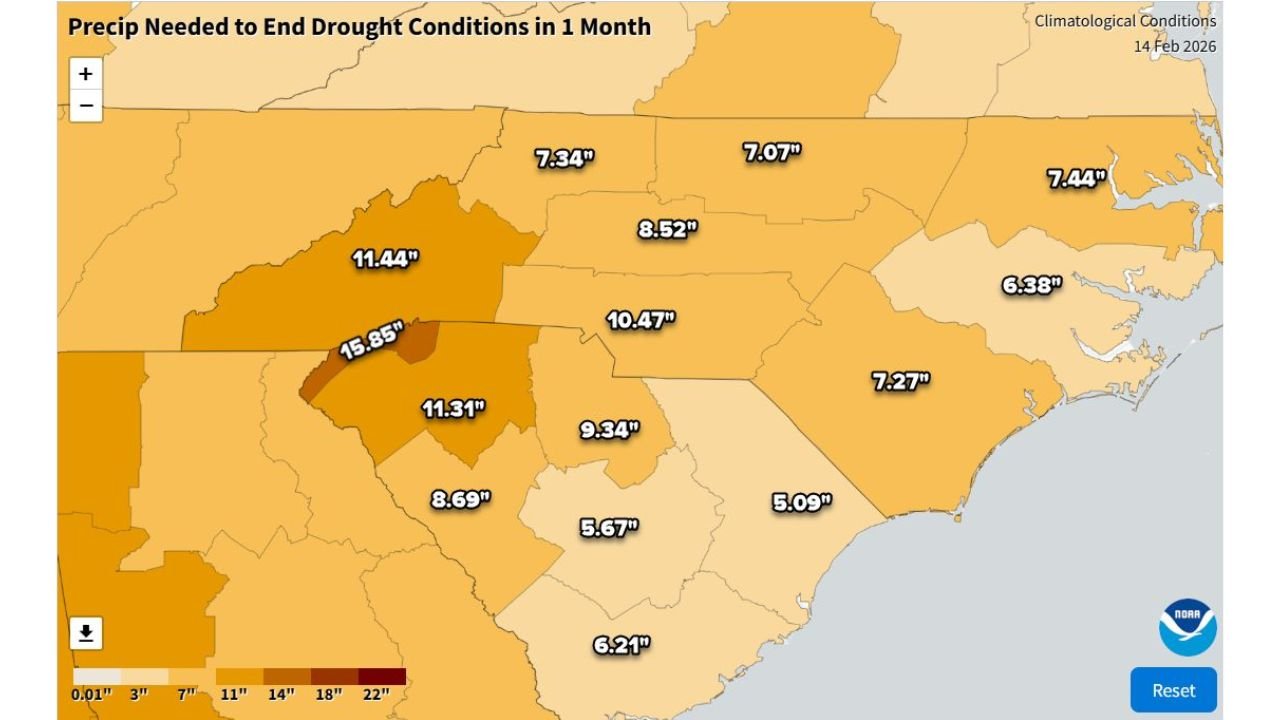
According to updated climatological data, several areas across the Carolinas require substantial rainfall totals within the next month to fully erase drought impacts.
Estimated precipitation needed over the next 30 days includes:
North Carolina:
- Up to 7.34 inches in portions of central NC
- Around 7.07 inches in northern areas
- Approximately 7.44 inches near parts of the coastal plain
South Carolina:
- Around 5.09 to 6.21 inches in coastal and southern regions
- Between 8.69 and 9.34 inches in interior sections
- Over 11 inches in parts of western South Carolina
- A localized maximum exceeding 15.85 inches in drought-stricken interior zones
These figures highlight the scale of the moisture deficit. Even after recent rainfall, large portions of the region remain significantly below what is needed for full recovery.
Recent Rainfall: A Helpful but Incomplete Boost
Rainfall totals from the most recent system show widespread accumulation across both states. Many communities saw around 0.5 to 1.0 inches, while isolated pockets recorded over 2 inches.
However, compared to the 5–15 inch deficits shown on the drought map, that rainfall only chipped away at a fraction of the overall shortfall.
Meteorologists estimate that yesterday’s rainfall likely addressed only about 5–15% of what is needed across much of North Carolina and South Carolina. That means several additional rainfall events of similar magnitude would be required to meaningfully reverse drought impacts.
Why Multiple Rain Events Are Needed
Drought recovery is not simply about one heavy rainstorm. Sustained improvement requires:
- Replenishing topsoil moisture
- Restoring deeper groundwater reserves
- Refilling rivers, reservoirs, and lakes
- Supporting agricultural recovery
One or two heavy downpours may temporarily improve surface conditions, but without consistent precipitation, drought conditions can quickly re-emerge.
Forecasters suggest that 4 to 7 additional rain days similar to the recent event over the next month would be necessary to bring widespread improvement.
Regional Impacts Remain Ongoing
Across Charlotte, Raleigh, Columbia, Greenville, and surrounding communities, the impacts of prolonged dryness are still visible in soil conditions and water resources. Agricultural interests, in particular, will depend on steady rainfall over the coming weeks.
While the latest rainfall offered a promising start, experts caution against assuming the drought threat has passed.
The encouraging news is that recent systems show the atmosphere is capable of delivering beneficial rain. The key question now is whether that pattern continues frequently enough to erase the remaining deficits.
As drought recovery efforts continue across North Carolina and South Carolina, ChicagoMusicGuide.com will monitor updated rainfall totals, drought maps, and long-range forecast trends. For continued coverage of weather impacts affecting the Carolinas and surrounding states, visit ChicagoMusicGuide.com.