Falcon Dam, Texas Hits 106°F in February, Potentially Setting All-Time U.S. Meteorological Winter Heat Record
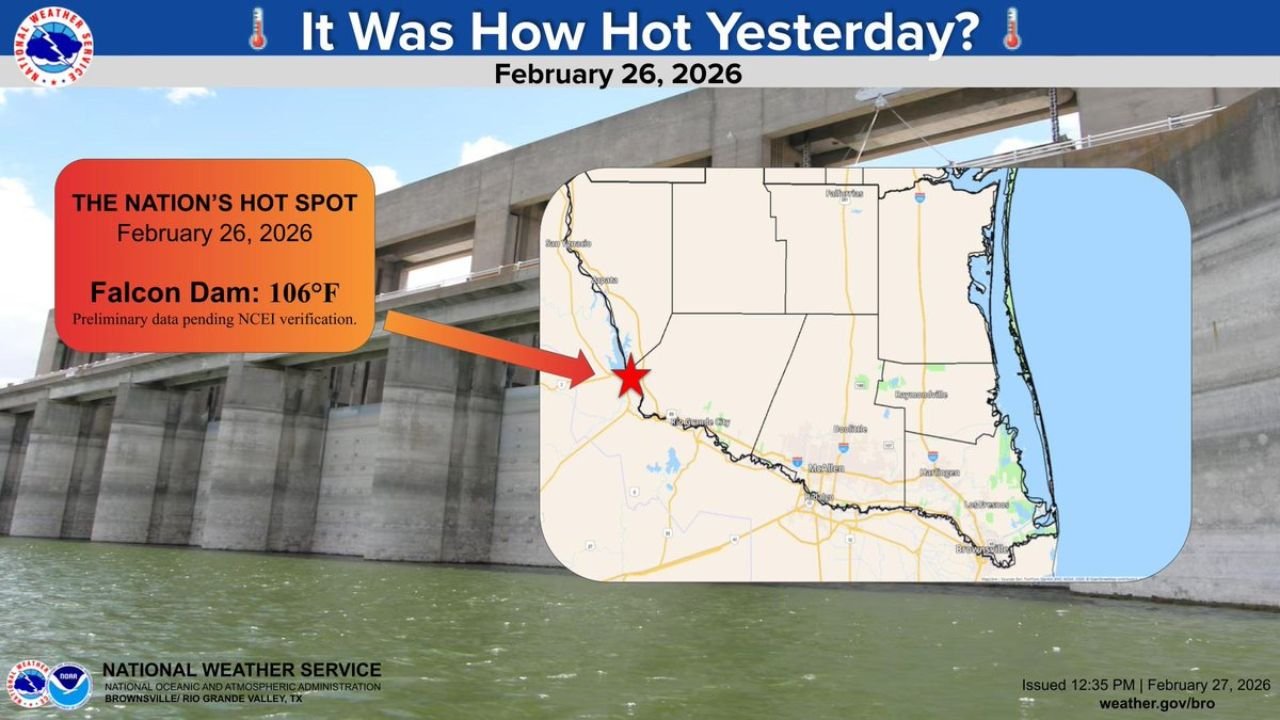
FALCON DAM, TEXAS — Deep South Texas may have just rewritten U.S. winter weather history. Preliminary data from a COOP observation site shows that Falcon Dam in the Rio Grande Valley soared to 106°F on February 26, 2026 — a temperature that could mark the hottest reading ever recorded in the United States during meteorological winter (December through February).
The figure is still pending official verification by the National Centers for Environmental Information (NCEI), but if confirmed, it would be a remarkable milestone for winter climate extremes.
The Nation’s Hot Spot on February 26
According to preliminary reports, Falcon Dam was officially the nation’s hot spot on February 26.
The location sits along the Rio Grande in Deep South Texas, near the U.S.–Mexico border, west of McAllen and Brownsville. The region is well known for intense summer heat — but triple-digit temperatures in late February are exceptionally rare.
Reaching 106°F during meteorological winter pushes the boundaries of what is typically expected this time of year.
Why This Is So Unusual
Meteorological winter spans:
- December
- January
- February
Climatologically, most of the U.S. is still in its cool season during this period. Even in southern Texas, February highs typically fall well short of extreme summer thresholds.
A 106°F reading in February suggests:
- Strong upper-level ridging
- Exceptional dry air and sunshine
- Downsloping or compressional warming
- Unseasonably intense heat buildup
This level of heat rivals mid-to-late summer conditions — not late winter.
Deep South Texas: A Climate Outlier
The Rio Grande Valley often leads the nation in warmth during winter months. Locations like:
- Falcon Dam
- McAllen
- Brownsville
regularly top temperature charts during mild winter spells.
However, triple-digit heat in February elevates this event from “warm spell” to potential record-breaking anomaly.
If verified, the 106°F mark could stand as the hottest meteorological winter temperature ever observed anywhere in the continental United States.
What It Means for Broader Weather Patterns
This extreme warmth aligns with a broader pattern of amplified ridging across parts of the southern U.S.
Such ridges:
- Suppress cloud formation
- Promote subsidence (sinking air)
- Intensify solar heating
- Limit cooling from frontal systems
When persistent, they can allow temperatures to surge well beyond seasonal norms.
While much of the country has been tracking pattern volatility — including severe weather potential and mid-March cold shifts elsewhere — Deep South Texas experienced the opposite extreme.
Preliminary, But Potentially Historic
It’s important to note that this reading remains preliminary and subject to federal verification.
Data from Cooperative Observer (COOP) sites must be reviewed and certified before official record status is granted.
Still, the reported 106°F stands out as a staggering number for February.
If confirmed, Falcon Dam’s late-winter scorcher will likely enter the record books as one of the most extraordinary off-season heat events in U.S. weather history.
Stay with ChicagoMusicGuide.com as we continue monitoring verification updates and the evolving early spring weather pattern nationwide.