Colorado Faces Potential All-Time March Records as Late-Week Blowtorch Sends Extreme Heat Surge Across the Central United States
DENVER, COLORADO — A powerful upper-level ridge building across the western and central United States could send temperatures soaring to near-record or even record-breaking levels across Colorado between Wednesday, March 18 and Saturday, March 21. Forecast ensemble guidance suggests that all-time March temperature records may be in play statewide as a significant “blowtorch” pattern develops late next week.
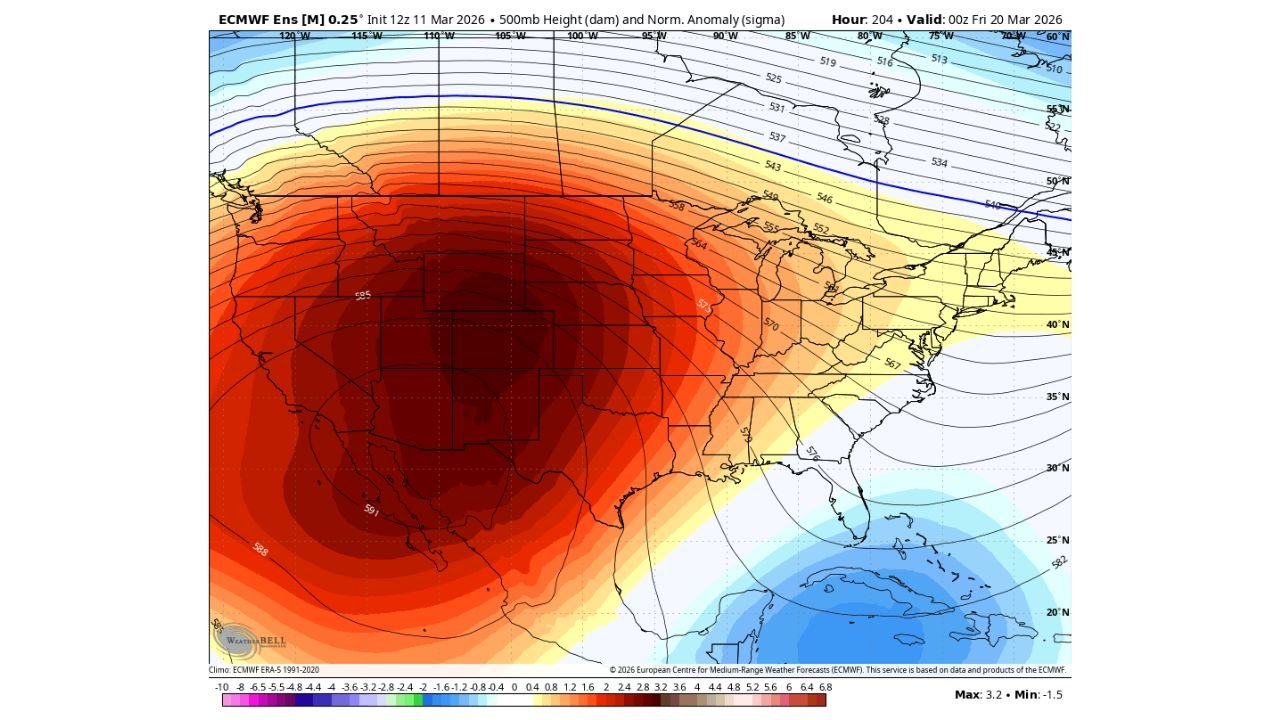
Meteorological data from the ECMWF ensemble model indicates an intense 500mb ridge centered over the Southwest and expanding into the Rockies and High Plains, creating an anomalously warm air mass that may exceed what many weather apps are currently projecting.
Strong Ridge Dominates the Western and Central U.S.
The forecast map valid March 20, 2026, shows deep red shading across Arizona, New Mexico, Utah, Nevada, and Colorado, signaling significantly above-normal atmospheric heights. These higher heights correspond to strong subsidence, sinking air, and compressional warming — key ingredients for extreme surface heat.
The anomaly values suggest deviations of more than +2 to +3 sigma above normal, which is statistically significant for mid-March. Such signals often correlate with temperatures pushing well beyond seasonal averages and occasionally into record territory.
In Colorado, especially along the Front Range and eastern plains, this setup could allow temperatures to surge far above typical March highs, which normally range in the 40s and 50s.
All-Time March Records in Play Across Colorado
Forecasters note that when upper-level ridges of this magnitude develop in March, daily records are frequently threatened. However, the upcoming pattern may go further, potentially challenging all-time March records in multiple Colorado cities.
From Denver to Colorado Springs, and possibly extending into Fort Collins and Pueblo, the combination of strong solar heating, downslope flow, and dry air could push highs into territory rarely seen this early in the season.
The social media commentary accompanying the model output emphasizes that typical high-end forecasts may even be underestimating the magnitude of the warmth. When ensemble guidance consistently signals extreme anomalies days in advance, it often indicates a high-confidence heat event.
Heat Expands Beyond Colorado
While Colorado appears near the center of the anomaly bullseye, the heat dome extends broadly across the central United States.
The ridge axis spreads eastward into:
- Kansas
- Nebraska
- Oklahoma
- Parts of Texas
- Portions of the Upper Midwest
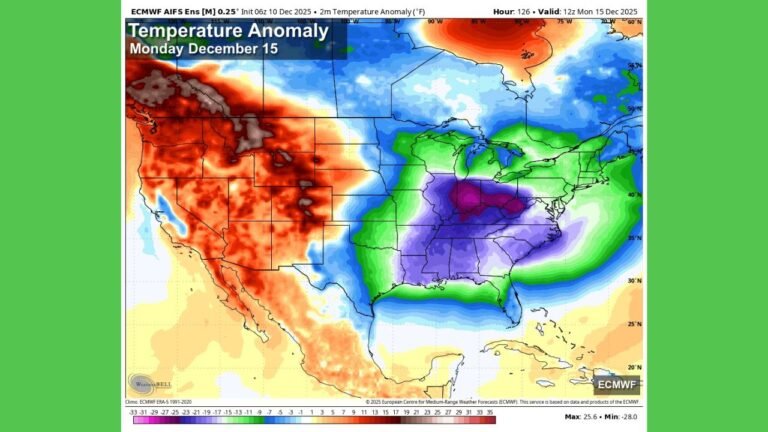
Meanwhile, cooler anomalies remain positioned over the southeastern U.S. and parts of eastern Canada, sharpening the north-south temperature gradient.
This configuration reflects a classic amplified jet stream pattern, with warm air surging northward across the Rockies and High Plains.
Why This Pattern Matters in Mid-March
Mid-March is typically a transitional period in Colorado, where late-season snowstorms are still possible. A ridge of this strength not only suppresses storm development but also accelerates snowmelt in lower elevations and increases early-season fire weather concerns in drier regions.
Persistent warmth over several consecutive days — from March 18 through March 21 — can compound the impact, especially if overnight lows remain well above normal. Extended anomalous warmth this early in the season is less common than isolated warm days.
Meteorologists caution that while forecast models may adjust slightly in magnitude over the coming days, the overall signal for a significant heat surge across Colorado remains strong.
As late-week approaches, residents across Colorado should monitor updated forecasts for potential record-breaking highs and related impacts.
For continued updates on major weather developments and significant climate patterns affecting states across the United States, visit ChicagoMusicGuide.com.