Washington, D.C. Ties Largest 24-Hour Temperature Drop in History With Stunning 51° Plunge as East Coast Cities See 30–50° Swings
WASHINGTON, D.C. — In a dramatic and historic weather reversal, the nation’s capital experienced a staggering 51-degree temperature drop in just 24 hours, tying the largest single-day temperature plunge ever recorded in city history.
According to historical records dating back to 1929, temperatures fell from 84°F at 3 p.m. yesterday to 33°F at 3 p.m. today, matching a record set nearly a century ago.
A Record That Dates Back to 1934
The only other time Washington saw such an extreme 24-hour collapse occurred on January 28–29, 1934, when temperatures plunged from 65°F at 5 p.m. to 14°F at 5 p.m. the following day — also a 51-degree drop.
That means this week’s temperature crash ties a mark that has stood for over 90 years.
Weather data ranking the top 24-hour drops shows the current event now sits at the very top of the list alongside 1934, surpassing other historic swings such as:
- 49° drop in May 1930
- 48° drop in January 1978
- 47° drop in December 1998
Mid-Atlantic and Northeast Also Slammed
Washington wasn’t alone in the temperature whiplash.
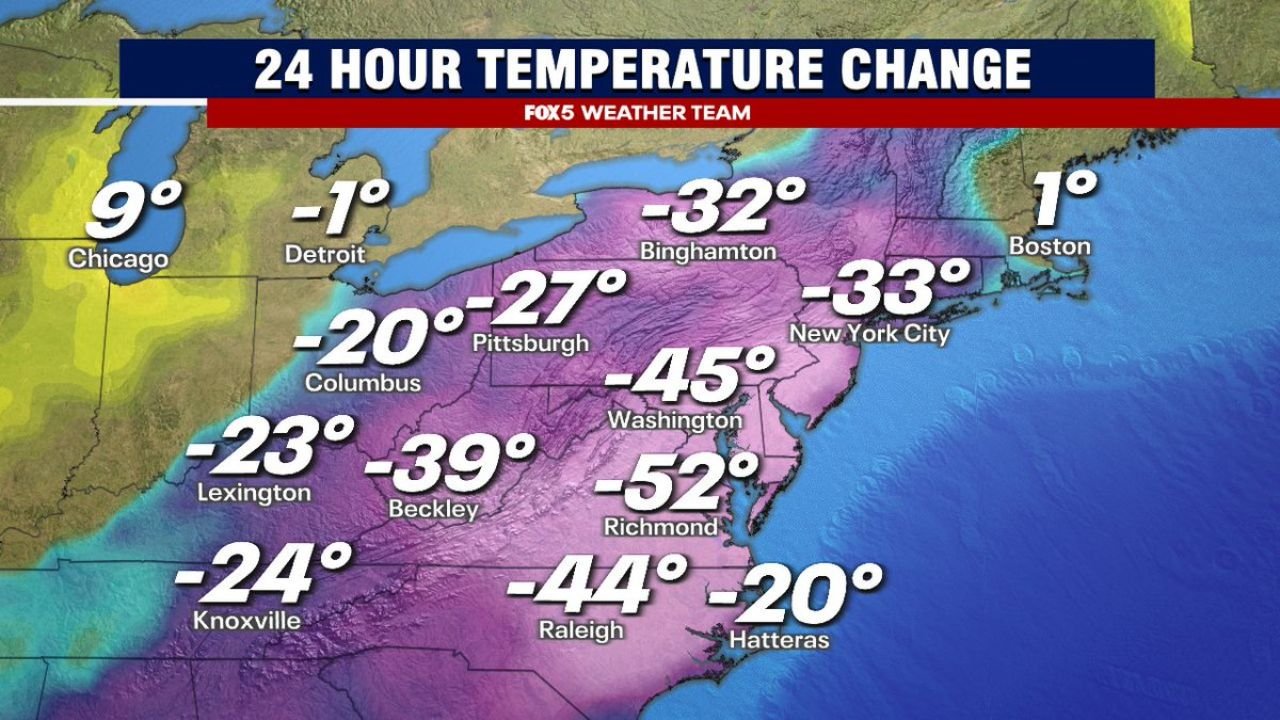
Other cities across the Mid-Atlantic and Northeast reported dramatic 24-hour changes, including:
- Richmond, VA: -52°
- Washington, D.C.: -45° on regional map comparison
- Raleigh, NC: -44°
- New York City: -33°
- Binghamton, NY: -32°
- Pittsburgh, PA: -27°
- Columbus, OH: -20°
Even coastal locations like Hatteras, NC saw a 20-degree plunge, while parts of New England experienced smaller but still notable changes.
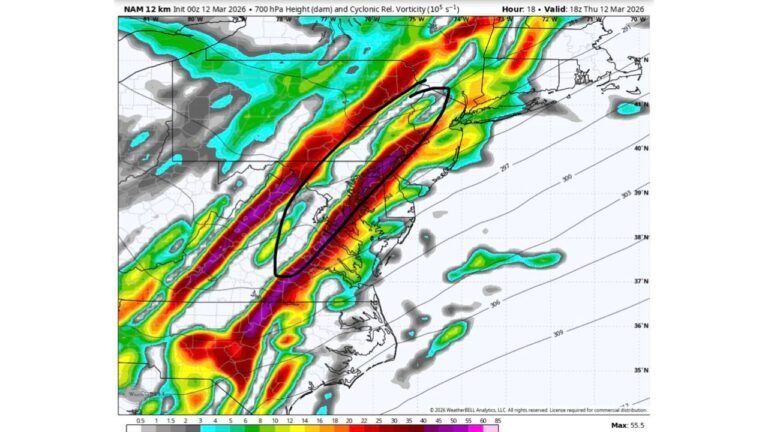
The sharp gradient between warm air ahead of a powerful system and rapidly advancing Arctic air behind it created one of the most intense cold frontal passages the region has seen in years.
From Summerlike Warmth to Winter Chill
The most remarkable aspect of the event is how it unfolded during what had felt like spring warmth. An afternoon reading of 84°F in Washington is more typical of late May or early June — not early March.
Then, within a single day, residents found themselves back in winter coats as temperatures hovered just above freezing.
Such extreme swings are typically associated with exceptionally strong cold fronts paired with deep low-pressure systems, where powerful winds rapidly transport colder air southward.
A Once-in-a-Generation Swing
Meteorologists often describe 30-degree drops as significant. A 40-degree fall is rare. A 50-degree collapse in 24 hours is historic.
For Washington, D.C., this event now stands tied for the largest exact 24-hour temperature drop ever observed — a meteorological benchmark that connects modern-day data with records stretching back nearly a century.
With such volatility already unfolding this season, residents across the Mid-Atlantic are reminded just how quickly conditions can shift during transitional months.
For more major weather updates and record-breaking events across the United States, stay with ChicagoMusicGuide.com.