North Carolina and South Carolina Brace for Earlier Arriving Severe Line With 60 to 70 MPH Wind Threat From Charlotte to Raleigh and Columbia Monday
CHARLOTTE, NORTH CAROLINA — A late-night forecast update indicates the main line of severe storms expected Monday across North Carolina and South Carolina is picking up speed, meaning an earlier arrival is now likely from the western Piedmont through the coastal plain.
The primary threat remains damaging winds of 60 to 70 mph, with isolated tornadoes possible as the line moves east through the morning and early afternoon.
Earlier Timing Across the Carolinas
High-resolution model projections show the leading edge of the line advancing faster than earlier forecasts suggested.
Around 8 AM, storms are pushing into western North Carolina and upstate South Carolina, affecting areas near:
- Asheville, North Carolina
- Greenville, South Carolina
- Spartanburg, South Carolina
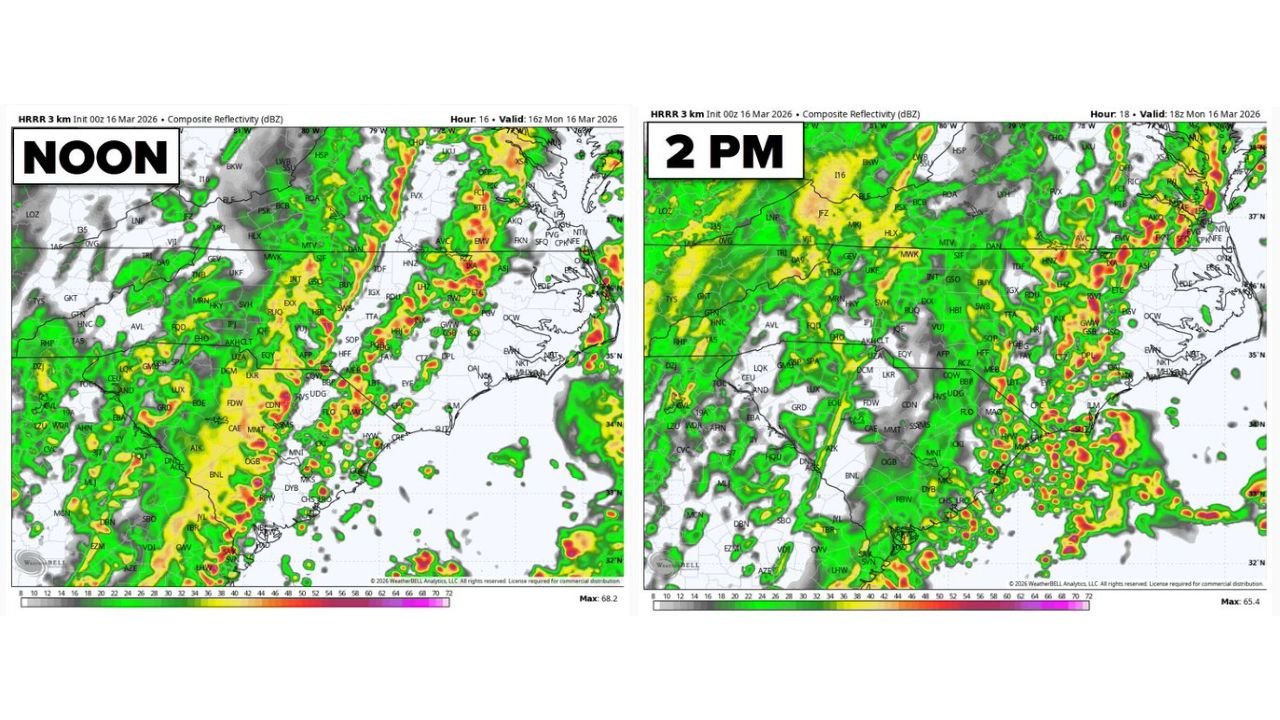
By 10 AM, the line intensifies while moving into the Charlotte metro and surrounding communities.
At noon, storms stretch from central North Carolina into parts of central South Carolina, impacting:
- Charlotte, North Carolina
- Greensboro, North Carolina
- Columbia, South Carolina
By 2 PM, the strongest storms shift toward eastern North Carolina and the coastal plain, including:
- Raleigh, North Carolina
- Fayetteville, North Carolina
- Wilmington, North Carolina
- Myrtle Beach, South Carolina
The faster progression means much of the severe threat will clear western areas sooner than originally anticipated.
Damaging Winds the Main Concern
Wind gusts between 60 and 70 mph are expected within the strongest segments of the line.
These gusts are capable of:
- Downing trees and power lines
- Causing scattered power outages
- Producing minor structural damage
- Making travel hazardous for high-profile vehicles
Given the linear storm structure, widespread straight-line wind damage is more likely than discrete supercell activity.
Isolated Tornado Risk Still Present
Although damaging wind is the primary hazard, isolated tornadoes cannot be ruled out.
Embedded circulations within the squall line could briefly spin up tornadoes, especially across:
- Central North Carolina
- Eastern North Carolina
- Northeastern South Carolina
Any tornado development would likely be short-lived but capable of producing localized damage.
Threat Ends by Late Afternoon
The encouraging news is that the severe threat should diminish by late afternoon into early evening as the line pushes offshore.
Western North Carolina and western South Carolina will likely see improving conditions first, followed by central and eastern sections later in the day.
What Residents Should Do
Residents across North Carolina and South Carolina should:
- Secure loose outdoor items
- Prepare for possible power outages
- Stay alert for warnings during the morning and early afternoon
With the line accelerating, early-day impacts are now more likely than evening ones.
Stay with ChicagoMusicGuide.com for continued updates as the severe weather moves through the Carolinas and exits the coast.