Dry Weather Pattern Expands Across Texas, Oklahoma, Kansas, Nebraska, and Colorado While Midwest States Including Illinois and Indiana See Quieter Stretch
CHICAGO, ILLINOIS — A noticeable shift in the national weather pattern is developing across the central United States, with a broad stretch of drier-than-normal conditions spreading across Texas, Oklahoma, Kansas, Nebraska, Colorado, and parts of the Plains, while the Midwest including Illinois, Indiana, Michigan, and Ohio enters a quieter period following an active start to March.
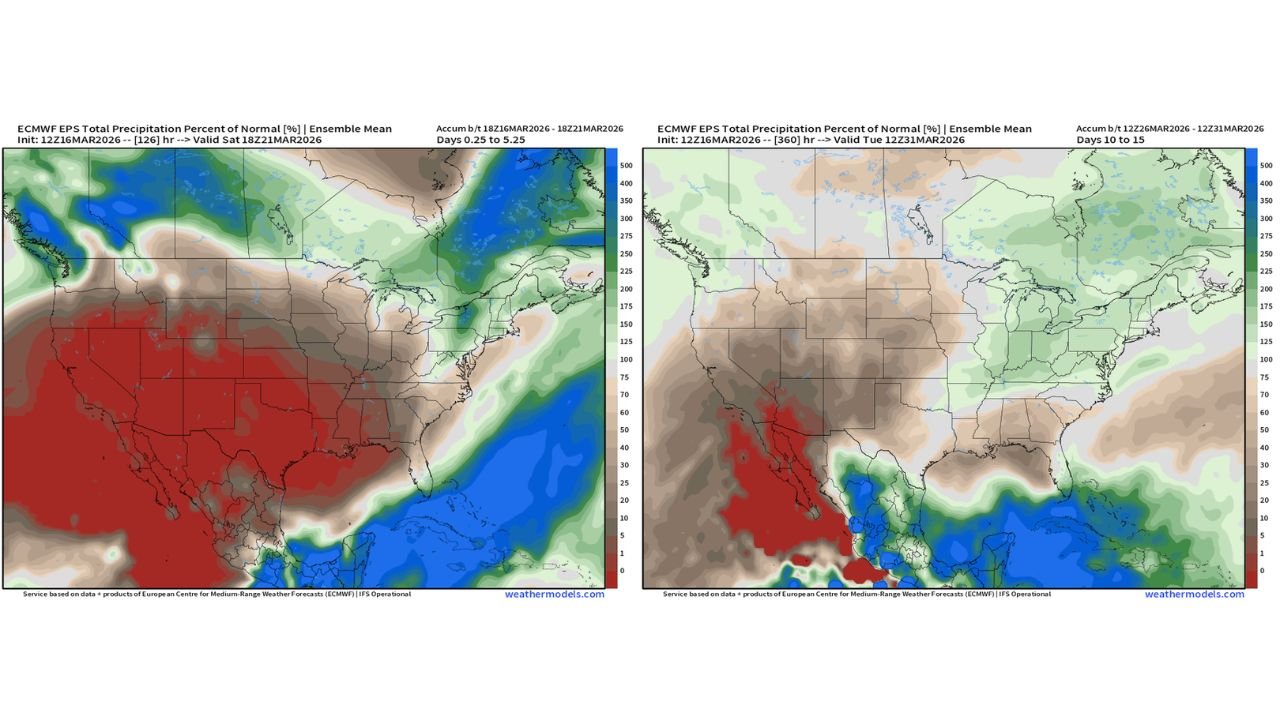
New precipitation outlook data shows that the central part of the country is likely to experience below-normal rainfall through the second half of March, creating a temporary pause in the storm systems that recently produced widespread severe weather across the region.
This dry stretch is expected to allow outdoor work and travel to proceed more easily across much of the central and eastern agricultural belt, although conditions may shift again toward the end of the month.
Central United States Facing Widespread Below-Normal Rainfall
Weather pattern analysis shows the most significant dry signal developing across the Southern Plains and central Plains, particularly in Texas, Oklahoma, Kansas, Colorado, and New Mexico.
Precipitation outlook maps indicate rainfall totals in these regions may fall well below seasonal averages, with some areas projected to receive only a small fraction of normal rainfall over the next several days.
The driest conditions appear centered across western Texas, southern New Mexico, and northern Mexico, where precipitation levels are projected to remain extremely limited compared with normal mid-March patterns.
Parts of Arizona and Nevada also appear within the drier zone, suggesting a broad dry ridge stretching across the southwestern United States.
Midwest States Including Illinois and Indiana Enter a Calmer Weather Window
While the southern Plains face the most pronounced dry conditions, the Midwest region including Illinois, Indiana, Michigan, Wisconsin, and Ohio is expected to experience a stretch of relatively calm weather compared with the active storm period earlier in March.
Precipitation projections show near-normal to slightly below-normal rainfall totals across these states over the next several days.
Cities across the region, including Chicago, Indianapolis, Detroit, and Cleveland, may experience fewer storm systems moving through compared with the earlier weeks of the month.
The calmer pattern will likely bring several days of more stable conditions across the eastern agricultural belt, allowing time for outdoor work and seasonal preparations.
Heavier Rainfall Concentrated Along Gulf Coast and Southeastern United States
While the central part of the country dries out, precipitation maps show above-normal rainfall continuing along portions of the Gulf Coast and the southeastern United States.
Higher precipitation totals are projected across areas including:
- Florida
- Southern Georgia
- Parts of the Carolinas
- The Gulf of Mexico coastal region
These areas appear within zones showing higher-than-normal precipitation signals, suggesting a continuation of active weather systems near the Gulf and Atlantic moisture corridors.
Moisture from the Gulf of Mexico continues to influence the southeastern United States even as drier air expands farther inland across the Plains.
Weather Pattern Could Shift Back to Active Conditions Late in March
Although the current outlook points to a quieter stretch of weather across the central United States and Midwest, longer-range pattern analysis suggests the eastern agricultural belt may return to a more active weather pattern toward the end of March.
The period of calmer conditions is expected to be temporary, with additional storm systems potentially returning as atmospheric patterns shift later in the month.
For now, however, much of the central Plains and Midwest corridor from Texas through Illinois and Indiana appears set for a break from the recent severe weather activity.
As weather patterns continue to evolve across the United States, readers can follow ongoing storm coverage, national forecasts, and regional weather updates by visiting ChicagoMusicGuide.com for the latest developments.