Tornado Threat Across North Carolina, South Carolina, Virginia, Georgia, and Florida Fizzles With Only Two Tornado Reports Confirmed
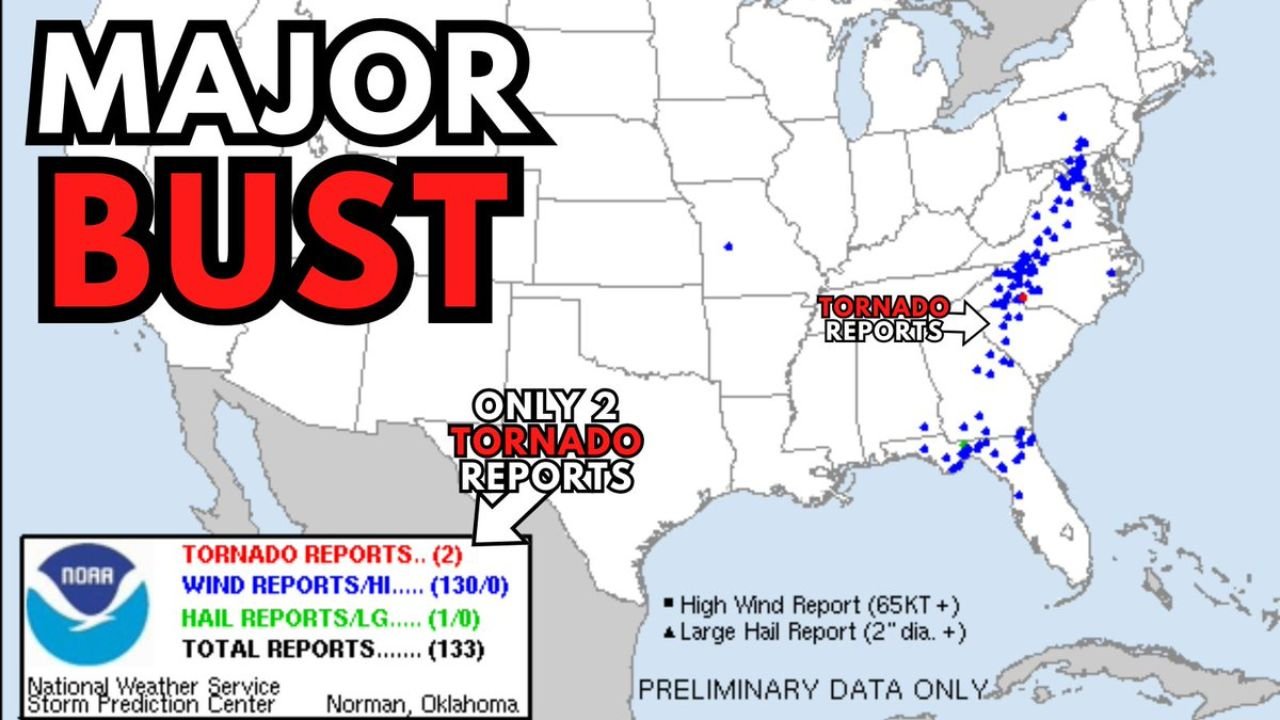
NORMAN, OKLAHOMA — A severe weather setup that had raised concerns for a potential tornado outbreak across North Carolina, South Carolina, Virginia, Georgia, and Florida ultimately produced only two tornado reports, according to preliminary storm data released by the National Weather Service Storm Prediction Center.
The storm system moved along the East Coast corridor, producing numerous severe thunderstorm reports across the Carolinas, Virginia, Georgia, and parts of Florida, but the feared tornado outbreak never developed.
Instead, the majority of storm reports involved damaging winds, with scattered incidents also involving hail.
Storm Reports Dominated by Wind Damage Across the Southeast
Preliminary storm reports show a total of 133 severe weather incidents tied to the storm system across the southeastern United States.
Of those reports:
- 130 were damaging wind incidents
- 1 hail report
- 2 tornado reports
The wind damage reports were widely distributed across North Carolina, South Carolina, Virginia, Georgia, and Florida, where fast-moving thunderstorms produced strong gusts capable of knocking down trees and power lines.
Clusters of wind reports appeared especially concentrated across eastern North Carolina and coastal Virginia, where storms moved rapidly along the Atlantic coastal corridor.
Additional reports were recorded across South Carolina and Georgia, where strong thunderstorms continued moving northeast through the afternoon and evening.
Only Two Tornado Reports Confirmed Despite Elevated Risk
While earlier concerns had focused on the possibility of a larger tornado outbreak along the East Coast, preliminary data shows that only two tornado reports were recorded during the event.
Both reports were scattered within the broader severe weather zone stretching through the Southeast and Mid-Atlantic region.
The limited number of tornado reports contrasts sharply with the large number of wind-related incidents, highlighting how the storm system produced intense thunderstorms without widespread tornado development.
The map of storm reports shows blue markers representing wind incidents extending from Florida through Georgia, the Carolinas, and into Virginia.
Morning Rain Played a Key Role in Storm Development
Early rainfall across parts of the Southeast and Mid-Atlantic helped stabilize portions of the atmosphere before the main storm system arrived later in the day.
The early precipitation limited the amount of instability available for storms to intensify as they moved across the region.
Without stronger instability, thunderstorms struggled to develop the rotation needed to produce widespread tornado activity, even though severe storms still formed across the region.
This combination led to strong thunderstorms capable of damaging winds but far fewer tornadoes than initially feared.
Storm System Tracked Along Atlantic States From Florida to Virginia
The severe weather activity developed along a corridor stretching from the Gulf Coast through Florida and Georgia, then northeast into South Carolina, North Carolina, and Virginia.
Storm reports show the most concentrated areas of activity occurring across:
- North Carolina
- South Carolina
- Virginia
- Georgia
- Florida
The storms followed a typical south-to-northeast track along the Atlantic side of the United States, producing severe wind reports in multiple counties across the region.
Although tornado reports remained limited, the storms still produced numerous damaging wind events, which caused scattered damage across several communities.
Preliminary Storm Data Still Being Reviewed
The current totals represent preliminary storm reports, which means the numbers may change as additional damage assessments are completed across affected states.
However, the early data clearly shows that the storm system produced far fewer tornadoes than initially expected, while still generating a large number of damaging wind incidents.
Storm report verification will continue over the coming days as officials review damage surveys across the Southeast and Mid-Atlantic states.
Severe weather events like this highlight how storm systems can evolve rapidly and produce different impacts across regions. For ongoing coverage of severe weather events and major storm developments across the United States, visit ChicagoMusicGuide.com for the latest updates.