Washington, D.C. and Maryland Close Out Coldest Winter Since 2002–03 as 2025–26 Season Earns “Severe” Rating Across Mid-Atlantic
WASHINGTON, D.C. — With meteorological winter now officially in the books, the numbers tell a striking story across Washington, D.C., Maryland, and the greater Mid-Atlantic: the 2025–26 winter season was the coldest since 2002–03, marking a dramatic return to sustained cold not seen in over two decades.
For the first time since 2009–2010, all three core winter months — December, January, and February — finished colder than normal.
Cold Dominated From Start to Finish
Unlike winters punctuated by brief Arctic blasts, this season delivered consistent cold across the region.
Key highlights include:
- Coldest December–February stretch since 2002–03
- First winter since 2009–10 with all three months below normal
- Long-duration snow cover despite modest snowfall totals
The persistence of cold air masses prevented repeated thaws, allowing snow and ice to linger longer than typical winters in the Mid-Atlantic.
Snowfall Below Normal — But Stayed on the Ground
Despite the colder pattern, snowfall totals in Washington, D.C. were not exceptionally high.
If no additional snow is recorded, the seasonal total of 10.6 inches would finish approximately 3.1 inches below normal.
However, what stood out was not the total snowfall — it was the longevity of snow cover.
A combination of:
- Prolonged cold temperatures
- Limited melting periods
- Compacted “snowcrete” surfaces
Allowed snow to remain on the ground longer than usual. That persistent snowpack amplified the wintry feel across the region.
Severe Winter Rating Reflects Impact
The Midwest Regional Climate Center rated the 2025–26 season as a Level 4 out of 5 — classified as “Severe.”
That rating was driven largely by:
- Sustained cold anomalies
- Long-lasting snow cover
- Repeated Arctic intrusions
Even without blockbuster snowstorms, the extended cold created impacts similar to historically harsh winters.
Snowfall Distribution Across the Region
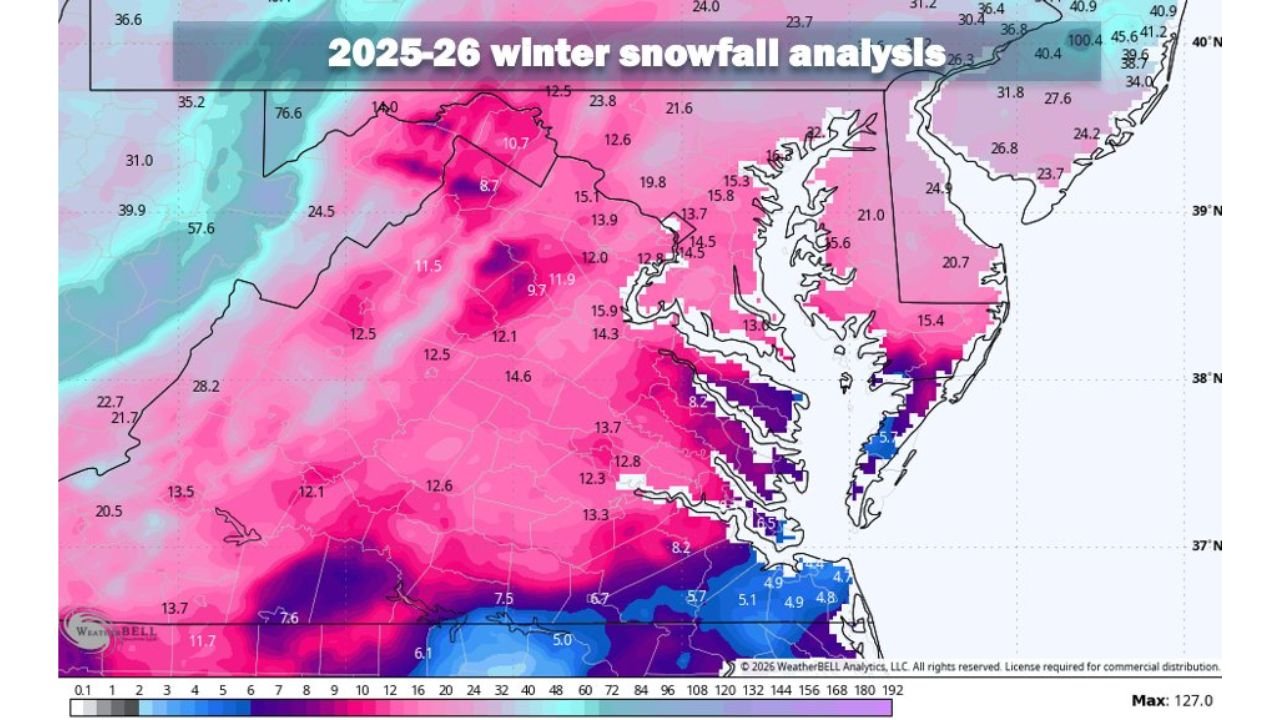
Seasonal snowfall analysis shows significant variation across the Mid-Atlantic:
- Higher totals in parts of western Maryland and higher elevations
- Moderate totals around Washington, D.C. and central Maryland
- Lower totals closer to southern coastal Virginia
Northern and interior areas saw more consistent snowfall events, while coastal sections experienced mixed precipitation and reduced accumulations.
A Throwback Winter for the Capital Region
Climatologically, winters in the Mid-Atlantic over the past decade have skewed milder. The 2025–26 season bucked that trend.
Residents across D.C., Maryland, and northern Virginia experienced:
- Frequent freezing temperatures
- Extended snow cover
- Fewer mid-winter warm spells
It was a winter that felt traditional — cold, persistent, and stubborn.
Looking Ahead
With spring underway, attention now turns to how quickly the region rebounds from a colder-than-average season.
While snowfall totals alone may not rank among historic years, the sustained cold and prolonged snow cover ensure that 2025–26 will be remembered as one of the harshest winters in recent decades for Washington, D.C. and the surrounding Mid-Atlantic region.
Stay with ChicagoMusicGuide.com for continued weather analysis and seasonal breakdowns across the United States.