Washington, D.C., Maryland and Northern Virginia Shift from Severe to Moderate Drought — But Dry Trend Threatens Progress Through Late March
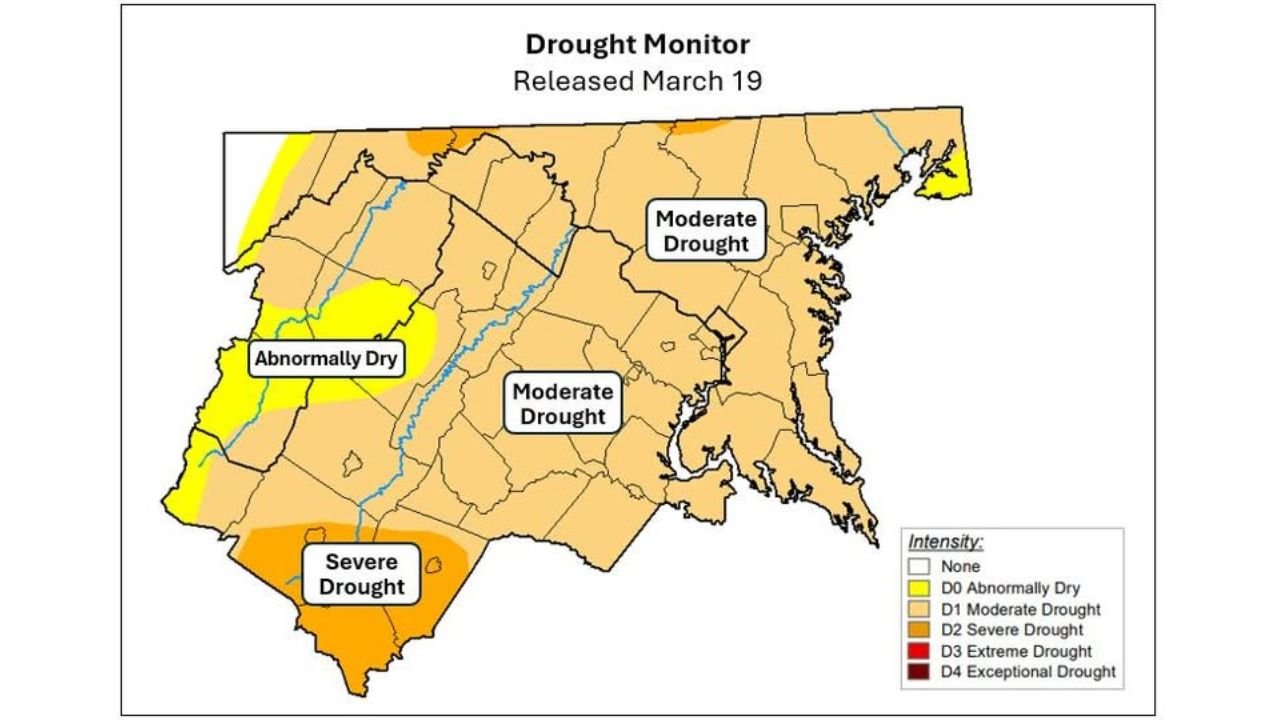
WASHINGTON, D.C. — The latest federal Drought Monitor report shows improving but still concerning conditions across Washington, D.C., Maryland, and Northern Virginia, as much of the region remains locked in Moderate Drought (D1) despite meaningful rainfall earlier this month.
While this marks an improvement from the Severe Drought (D2) conditions that gripped much of the area from late December through mid-February, forecasters caution that the drought is stabilizing — not ending.
Moderate Drought Still Dominates the D.C. Region
According to the March 19 update:
- Most of Washington, D.C. remains in Moderate Drought
- Large portions of central and southern Maryland are classified as Moderate Drought
- Parts of Northern Virginia also remain under D1 conditions
The most severe drought conditions (D2) have been pushed southward, now concentrated primarily across southern portions of Virginia.
Rainfall Helped Stabilize Conditions
Recent precipitation has played a key role in preventing further deterioration.
Since:
- March 1, the region has received approximately 2 to 2.5 inches of rainfall
- January 1, totals have reached roughly 7 to 8 inches
That rainfall helped slow the decline in soil moisture and surface water levels after 2025 closed as the driest year locally since 2016.
However, the recovery remains incomplete.
Drying Trend Emerging Again
Despite the early-March rainfall boost, the region has slipped slightly below normal in precipitation during the latter half of the month.
Forecast models indicate:
- Below-normal precipitation likely through the remainder of March
- Limited storm systems capable of producing widespread soaking rainfall
If that trend continues, drought improvement could stall — or even reverse.
Abnormally Dry and Severe Pockets Remain
The Drought Monitor also highlights:
- Abnormally Dry (D0) conditions in parts of western Maryland
- Severe Drought (D2) lingering across portions of southern Virginia
These classifications underscore that while the broader D.C. metro has seen some relief, drought intensity varies across the Mid-Atlantic.
Why This Matters Heading Into Spring
As the region moves deeper into spring:
- Vegetation demand increases
- Soil moisture becomes critical for agriculture
- Water supply monitoring intensifies
Without sustained rainfall events, Moderate Drought conditions can persist longer than expected — especially following a historically dry year.
Bottom Line for the Capital Region
The latest update confirms progress:
- Severe drought has eased in much of the D.C. metro area
- Moderate drought remains widespread
- Dry weather in late March may slow recovery
In short, conditions are stabilizing — but the drought is far from over.
Residents across Washington, D.C., Maryland, and Northern Virginia should expect continued monitoring through early spring as forecasters watch for either renewed rainfall relief or a return to worsening dryness.
Stay with ChicagoMusicGuide.com for continuing updates on drought conditions and regional climate trends across the United States.