March 2026’s Record-Shattering Heat Wave Is Winding Down — But Not Before Breaking or Tying More Than 1,100 Daily Temperature Records Across the United States
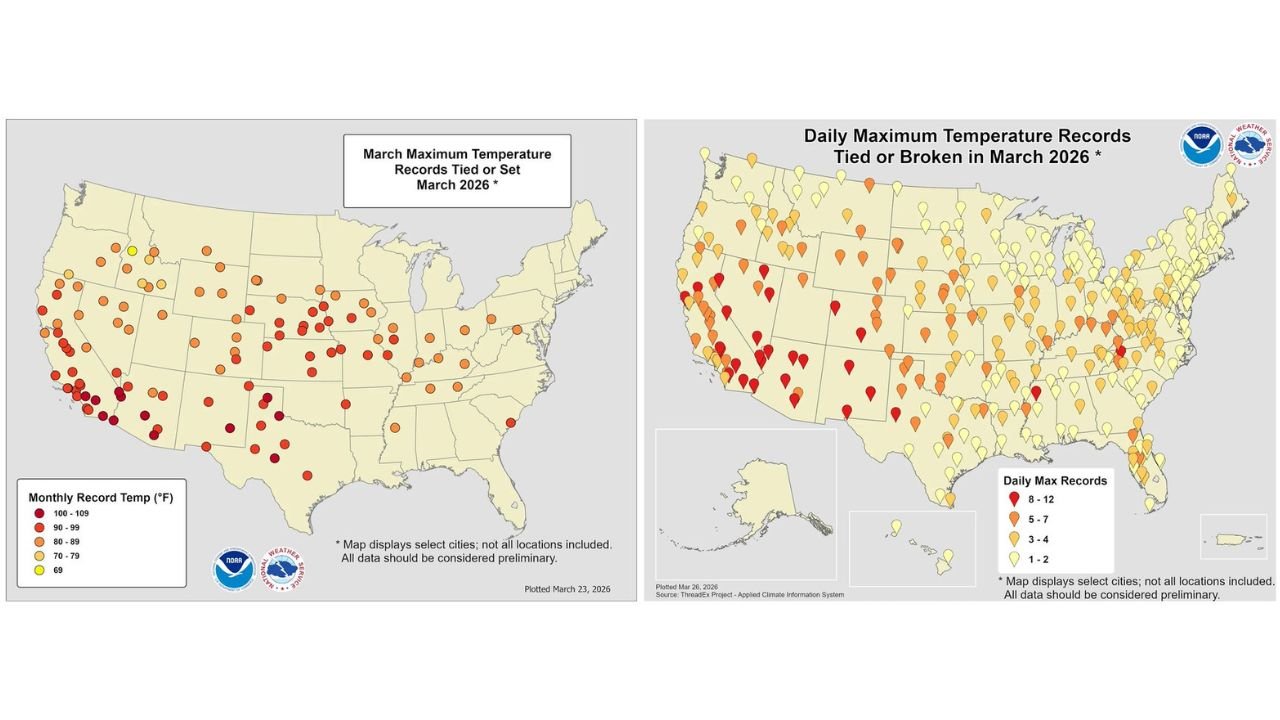
PHOENIX, AZ — The thermometers are finally starting to back off — but the record books will never look the same. The most significant March heat wave in recent memory is winding down across the United States, and the numbers that the National Weather Service has compiled tell a story that goes far beyond a few warm afternoons. From California to the Carolinas, more than 1,100 daily temperature records have been broken or tied since March 1, 2026 — with the most explosive stretch of heat concentrated between March 15 and March 26.
The Numbers Behind This Historic Heat Event
The NWS data released through March 26, 2026 puts the full scope of this heat wave into clear perspective. These are not estimates — these are confirmed, station-by-station record breaks logged across the country.
The official record count as of March 26, 2026:
- March 15–26 alone: More than 100 monthly records broken or tied — meaning temperatures that have never been recorded in March at those locations in recorded history
- March 15–26 alone: More than 700 daily records broken or tied across the nation
- Since March 1: More than 1,100 daily maximum temperature records broken or tied nationwide
To understand the weight of those numbers — a monthly record means the hottest temperature ever recorded at that station in the entire month of March, going back decades in many cases. When you break 100 of those in 11 days, you are not dealing with a warm spell. You are dealing with a historic atmospheric event.
Where the Heat Hit Hardest: Monthly Records Map
The NWS March Maximum Temperature Records map, plotted March 23, 2026, shows the geographic distribution of monthly records broken or tied across the nation. The concentration and intensity of record-breaking temperatures is impossible to miss.
Monthly record temperature breakdown by region:
- Southwest — California, Arizona, Nevada, New Mexico: The deepest red on the map. Multiple stations recording monthly records in the 100–109°F range — temperatures that have never been seen at those locations in any March on record. This is the epicenter of the event.
- Pacific Coast — Southern California corridor: Dense clustering of 90–109°F monthly records stretching from the Central Valley south through the desert regions. Some of the most extreme readings of the entire event logged here.
- Southern Plains — Texas, Oklahoma: Multiple stations with monthly records in the 90–99°F range, with some locations pushing into the 100–109°F tier.
- Central U.S. — Kansas, Missouri, Colorado: Widespread monthly records in the 80–89°F range — well above typical March climatology for this region.
- Midwest and East: Monthly records in the 70–89°F range scattered from the Great Lakes to the Mid-Atlantic — significantly warmer than normal for mid-March but less extreme than the West.
Daily Records Map: The Breadth Is Stunning
The NWS Daily Maximum Temperature Records map, plotted March 26, 2026, tells the story of just how widespread this event was on a day-by-day basis. The map covers virtually the entire continental United States with record-breaking pins — from the Pacific Coast to the Atlantic seaboard.
Daily record concentration by zone:
- California, Arizona, Nevada — Core heat zone: Multiple locations logging 8–12 daily records broken at a single station during March 2026. That means some weather stations broke their all-time daily high temperature record on 8 to 12 separate days within a single month.
- Southwest and Southern Plains: Dense coverage of 5–7 daily records per station — sustained heat that did not relent for days at a time.
- Central and Northern Plains — Colorado, Kansas, Nebraska, the Dakotas: Widespread 3–4 daily records per station, indicating multiple consecutive days of record-level warmth.
- Midwest, Great Lakes, Southeast, Northeast: Broad coverage of 1–4 daily records — virtually no part of the country escaped March 2026 without at least one record high temperature day.
Heat Wave Record Summary Table
| Metric | Count | Time Period | Significance |
|---|---|---|---|
| Daily Records Broken/Tied | 1,100+ | March 1–26 | 🔴 Historic |
| Daily Records — Peak Window | 700+ | March 15–26 | 🔴 Extreme |
| Monthly Records Broken/Tied | 100+ | March 15–26 | 🔴 Unprecedented |
| Core Heat Zone | CA, AZ, NV, NM | Full March | 🔴 100–109°F range |
| Eastern U.S. Impact | Widespread | March 15–26 | 🟠 Significant |
| Forecast Confidence | NWS Confirmed | Station Data | ✅ Official |
State-by-State Impact
🔴 California, Arizona, Nevada, New Mexico — Ground zero for this event. Monthly records in the 100–109°F range confirmed. Multiple stations logging 8–12 individual daily records during March alone. Historically anomalous warmth for the region.
🟠 Texas, Oklahoma, Colorado, Kansas — Monthly records in the 90–99°F range widespread. Sustained multi-day heat well above March climatology. Agricultural and energy demand impacts likely.
🟡 Missouri, Illinois, Indiana, Ohio, Kentucky — Records in the 70–89°F range. Warm but less extreme. Multiple daily records broken during the March 15–26 peak window.
🟡 Mid-Atlantic and Southeast — Virginia, Carolinas, Georgia, Florida — Scattered daily records in the 1–4 per station range. Warmer than normal throughout the month.
🟢 Northeast — New York, New England — Lightest impact on the map. Some daily records in the 1–2 range but generally less affected than the rest of the country.
Not Over Yet — Southwest Still in the Heat
Despite the overall wind-down, NWS is warning that some record heat will remain through the weekend, particularly across areas of the Southwest. Residents in Arizona, Nevada and Southern California should continue checking their latest local forecast at weather.gov as this pattern completes its final push before temperatures return closer to seasonal norms heading into the final days of March.
The heat wave is ending. The records it set are permanent.
Data Sources: NWS March Maximum Temperature Records Map — Plotted March 23, 2026 | NWS Daily Maximum Temperature Records Map — Plotted March 26, 2026 | ThreadEx Project — Applied Climate Information System | National Weather Service
The Heat Wave Is Ending — But the Next Pattern Is Already Building
More extreme weather events are always on the horizon. Stay informed at ChicagoMusicGuide.com — your source for breaking heat wave coverage, NWS record data and severe weather alerts across the Southwest, the Plains and the entire United States.