Charlotte and the Greater Carolina Piedmont Woke Up to a Light Freeze and Frost This Morning With Lows Dropping Into the Upper 20s Across the Region and at Least One or Two More Frost Events Likely Before Mid-April
CHARLOTTE, NC — Spring may be on the calendar — but this morning’s thermometers across the Charlotte metro and the greater Carolina Piedmont did not get the memo. A light freeze and frost settled across the region overnight, sending temperatures into the upper 20s and low 30s at dozens of monitoring stations from Gastonia to Concord and from the South Carolina line northward into the foothills. For gardeners who jumped the gun on spring planting, this morning was a hard lesson. And the data is now showing that at least one to two more close calls for frost are likely before April 15th — the unofficial safe date for the Charlotte region.
What Temperatures Actually Fell To Across the Metro This Morning
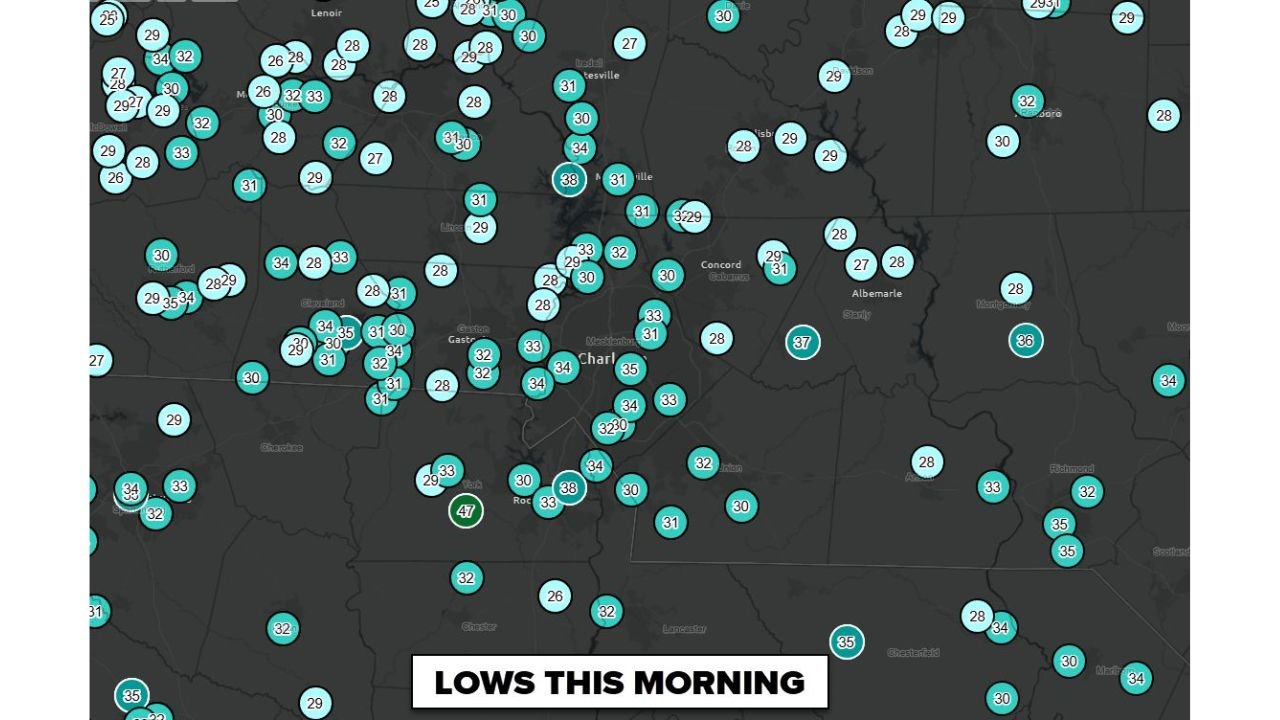
The overnight low temperature map across the Charlotte metro area tells a detailed and specific story about exactly how cold it got — and the numbers are notable for late March.
The coldest readings recorded this morning:
The harshest readings of the night came from the western and northwestern portions of the metro where rural terrain and open fields allow temperatures to fall the furthest on clear, calm nights. Multiple stations in this zone recorded lows of 26°F, 27°F and 28°F — well below the 32°F freezing mark and into territory that causes significant damage to unprotected tender plants and newly emerged spring growth.
Charlotte’s urban core and immediate suburbs generally ran a few degrees warmer than the surrounding rural areas — a classic example of the urban heat island effect — with readings in the 33°F to 38°F range at several stations closer to uptown and the densely developed corridors along I-77 and I-85.
Concord and the Cabarrus County area recorded lows in the 28°F to 31°F range — cold enough for a hard freeze at the lower end of that spread.
Gastonia and the Gaston County corridor saw some of the coldest readings in the entire metro footprint, with multiple stations dropping to 28°F to 31°F and some outlying rural spots touching the upper 20s.
Rock Hill and the South Carolina side of the metro recorded lows ranging from 30°F to 38°F — with the warmest readings near the more developed areas along the I-77 South corridor.
Albemarle and the Stanly County area to the east recorded 27°F to 28°F — among the coldest readings in the broader regional dataset this morning.
Charlotte’s Frost Calendar — And Why April 15th Is the Number That Matters
Here is the context that every Charlotte-area gardener and homeowner needs to understand about this morning’s freeze — and about what is still coming.
Charlotte’s average last freeze date is March 28th. Today is March 30th — meaning this morning’s freeze came right at the statistical edge of what the historical record considers the typical end of the freeze season for the area. The freeze happened, but it happened within the normal window.
Charlotte’s average last frost date, however, is around April 11th — nearly two weeks later than the last freeze date. The distinction matters because a frost — temperatures between 32°F and 36°F — can still damage tender plants even without a hard freeze below 32°F. The frost damage threshold is higher and easier to reach than full freeze conditions.
The rule of thumb for the Charlotte area is to wait until April 15th before putting frost-sensitive plants, vegetables or annuals in the ground with confidence. That date sits comfortably past both the average last freeze and average last frost dates — and provides a reasonable buffer against the late-season close calls that the data says are still coming.
At Least One to Two More Frost Events Are Still Ahead
This morning was not the last frost threat for the Charlotte metro. Based on the current seasonal pattern and the region’s historical climatology, at least one to two more close calls for frost are expected between now and April 15th.
This is not an unusual situation for the Carolina Piedmont. Even in years when March brings warmth and early spring conditions, the atmosphere frequently delivers one or two additional cold snaps in the first two weeks of April before temperatures reliably settle above frost thresholds for the season.
The April 1st through April 10th window is historically the most common timeframe for those late-season frost events in the Charlotte area. Gardeners who are eager to get spring planting underway should treat this two-week window with the same caution they would apply to mid-March — because the risk is still real.
Charlotte Metro Morning Low Temperature Summary
| Area | Low Temperature Range | Freeze/Frost Status | Risk to Plants |
|---|---|---|---|
| Western Metro — Rural Zones | 26°F to 28°F | 🔴 Hard Freeze | Severe damage to unprotected plants |
| Gastonia / Gaston County | 28°F to 31°F | 🔴 Freeze | Significant damage possible |
| Concord / Cabarrus County | 28°F to 31°F | 🔴 Freeze | Significant damage possible |
| Albemarle / Stanly County | 27°F to 28°F | 🔴 Hard Freeze | Severe damage to unprotected plants |
| Charlotte Urban Core | 33°F to 38°F | 🟡 Frost/Near Frost | Light to moderate damage |
| Rock Hill / SC Metro | 30°F to 38°F | 🟠 Frost to Freeze | Moderate damage possible |
| Average Last Freeze Date | March 28th | Historical average | Within normal window |
| Average Last Frost Date | ~April 11th | Historical average | Still within frost season |
| Safe Planting Date | April 15th | Rule of thumb | 1-2 more events possible |
What This Means for Carolina Gardeners Right Now
If you planted tender vegetables, annuals or tropical plants in the last week — inspect them this morning for frost damage. Leaves that appear water-soaked, wilted or darkened after a freeze are showing classic cold injury symptoms. Some plants will recover with a few warm days. Others will need to be replaced.
If you have not planted yet — hold off until at least April 15th for anything frost-sensitive. The data is clear that more close calls are coming. Tomatoes, peppers, basil, impatiens and other warm-season plants have no cold tolerance and will not survive another 28°F night without protection.
If you have plants already in the ground — keep row cover, old bed sheets or frost cloth on hand and ready to deploy on short notice. The next frost event could arrive with 24 to 36 hours of warning. Having protection materials already staged saves scrambling when the forecast drops overnight.
Frost Season Is Not Over for Charlotte and the Carolina Piedmont — Not Even Close
More cold mornings are ahead before the safe planting window opens on April 15th. Stay informed at ChicagoMusicGuide.com — your source for frost and freeze alerts, gardening weather guidance and daily temperature coverage across Charlotte, the Carolina Piedmont and the entire United States.