Michigan Faces Multiple Rounds of Severe Storms Thursday With Damaging Winds and Isolated Tornado Risk From Grand Rapids to Detroit Overnight
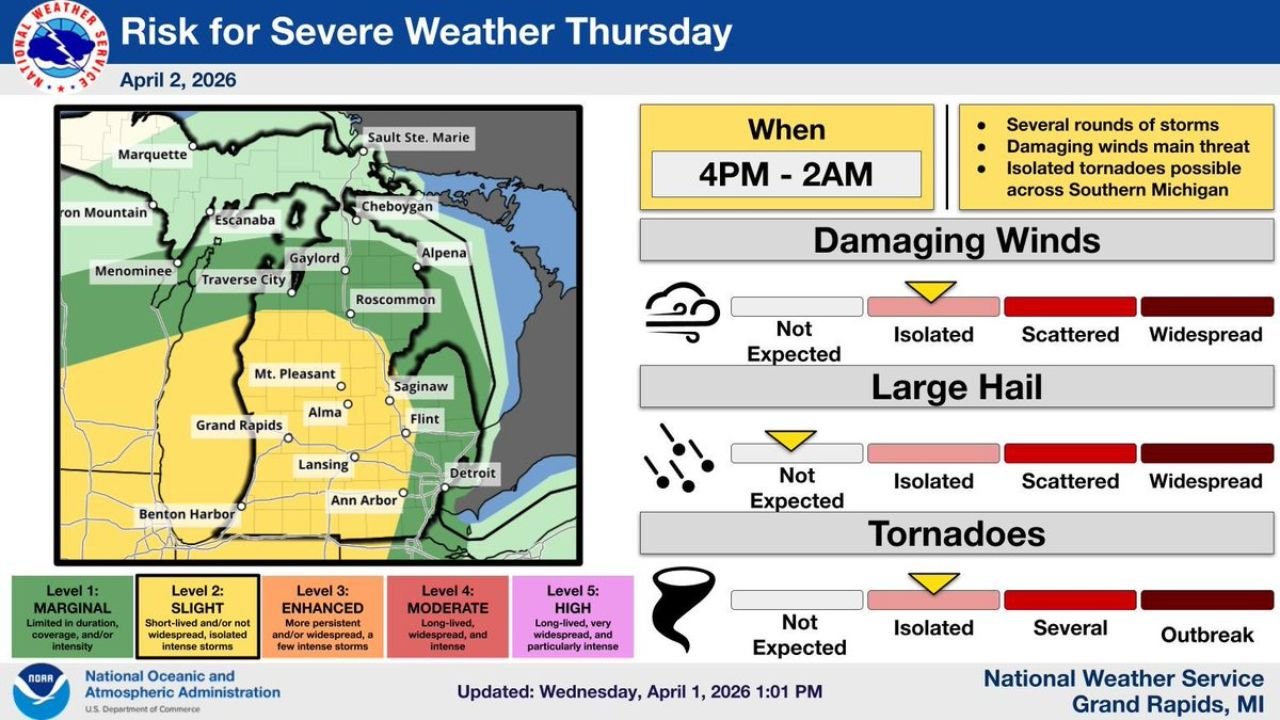
MICHIGAN — A developing severe weather pattern is expected to bring multiple rounds of thunderstorms across Michigan Thursday afternoon through late Thursday night, with the greatest concern centered on damaging winds, isolated tornadoes, and heavy rainfall. The threat window spans from approximately 4 PM through 2 AM, covering a large portion of the state including Grand Rapids, Lansing, Ann Arbor, and Detroit.
Severe Storm Risk Expands Across Southern and Central Michigan
Forecast data highlights a broad area of southern and central Michigan under a heightened severe weather risk, including cities such as Grand Rapids, Lansing, Flint, Saginaw, Ann Arbor, and Detroit. This region falls within a Slight to Enhanced risk zone, indicating the potential for organized and impactful storms.
The most active corridor is expected to stretch from western Michigan near Grand Rapids eastward toward Detroit, where atmospheric conditions will support stronger storm development. Areas farther north, including regions near Gaylord and Alpena, remain under a lower risk but could still experience scattered storms.
The widespread nature of this setup suggests that multiple communities across Michigan could be impacted over several hours, rather than a single, isolated storm event.
Damaging Winds Expected to Be the Primary Threat
Among the various hazards, damaging straight-line winds are expected to be the most consistent and widespread threat across Michigan. Storms could produce strong wind gusts capable of downing trees, causing power outages, and creating hazardous travel conditions.
As storms organize and potentially form into clusters or lines, the risk for scattered to widespread wind damage will increase, particularly during the evening hours when storm intensity is expected to peak.
Residents in Grand Rapids, Lansing, and Detroit should be prepared for sudden wind increases as storms move through, especially during the overnight period when visibility is reduced.
Isolated Tornadoes and Large Hail Also Possible
In addition to damaging winds, the environment will support the possibility of isolated tornadoes, particularly across southern Michigan where instability and wind shear are more favorable.
While tornadoes are not expected to be widespread, the setup allows for brief but potentially impactful tornado development, especially within stronger storm cells or embedded within storm lines.
Large hail is another concern, with storms capable of producing hailstones large enough to cause damage to vehicles, roofs, and outdoor structures. These hazards may occur alongside heavy rainfall, increasing the overall severity of the event.
Storm Timing and Overnight Impacts Raise Concern
The timing of this event—from late afternoon into the overnight hours—adds an additional layer of concern. Storms developing during this period can become more dangerous due to reduced visibility and the likelihood of people being indoors or asleep when warnings are issued.
The expectation of multiple rounds of storms means that some areas could experience repeated impacts, including heavy rainfall leading to localized flooding, followed by strong winds and additional storm activity.
Cities including Detroit, Ann Arbor, and Flint may see storms arrive later in the evening, while areas in western Michigan such as Grand Rapids could be impacted earlier in the timeline.
What Residents Across Michigan Should Do to Prepare
With a prolonged severe weather window in place, residents across Michigan should ensure they have multiple ways to receive weather alerts, especially overnight. This includes enabling emergency notifications on mobile devices and monitoring local forecasts.
Identifying a safe shelter location ahead of time is critical, particularly in areas where tornadoes could develop quickly. Even though the tornado risk is isolated, the potential for damaging winds and large hail makes preparation essential for all residents in the affected regions.
As this severe weather setup unfolds across Michigan, staying informed will be key to minimizing risk. For continued updates on storm threats, regional forecasts, and weather developments, visit ChicagoMusicGuide.com.