John Williams Surprises the Hollywood Bowl With a Wheelchair Entrance, Conducting the Imperial March During a Three-Night Movie Music Tribute in Los Angeles
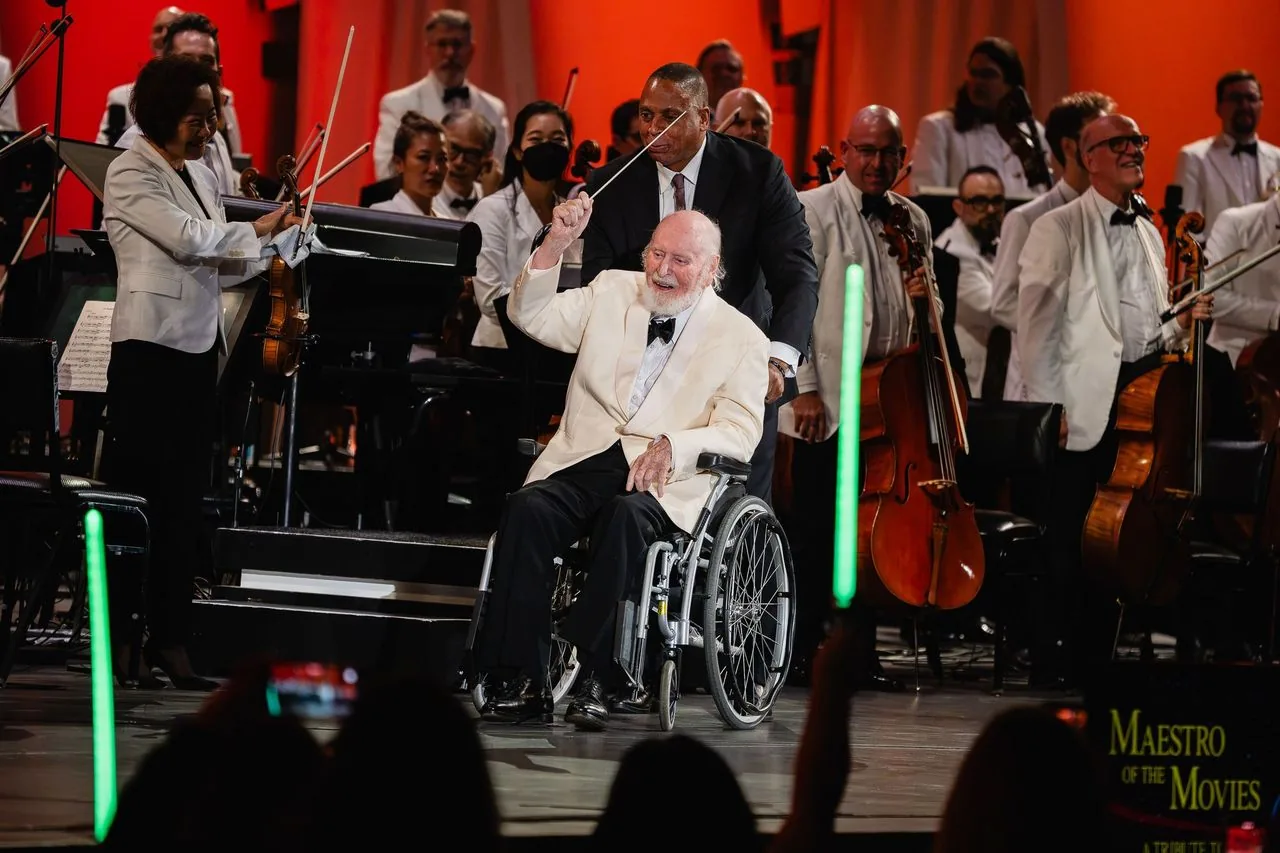
LOS ANGELES, CA — John Williams turned a familiar Hollywood Bowl tradition into an unforgettable surprise when he appeared onstage during the venue’s annual tribute to his music. The audience had already spent the evening hearing the scores that made him a legend, but the biggest moment came when Williams emerged in a wheelchair and conducted one of his most famous cues.
The performance was part of “Maestro of the Movies: A Tribute to John Williams,” which ran Sept. 4-6, 2026. Before the surprise entrance, the concert unfolded as both a showcase of beloved film music and a celebration of the composer’s life, career, and influence across generations of moviegoers.
Bryce Dallas Howard turned the concert into a musical biography
This year’s program leaned more heavily than usual into storytelling. Actress and director Bryce Dallas Howard hosted the evening and introduced selections with memories and anecdotes that framed Williams not just as a composer, but as the mind behind some of cinema’s most enduring sounds.
Instead of letting the orchestra do all the talking, the concert used Howard’s narration to connect the music to the moments that made it famous. She recounted how the shark’s menacing two-note motif in “Jaws” came together, how Williams landed the “Star Wars” assignment, and what inspired the themes for “Raiders of the Lost Ark.”
That approach gave the audience more than nostalgia. It added context to music many people already know by heart, while emphasizing the imagination and wit that shaped Williams’ most recognizable work. The result was part concert, part retrospective, and part tribute to the man behind the melodies.
The orchestra played a career-spanning set of familiar favorites
The Los Angeles audience heard music from across Williams’ catalog, including excerpts from “Close Encounters of the Third Kind,” the barrel chase from “Jaws,” selections from “Harry Potter,” “The Throne Room and Finale” from “Star Wars,” and the “Superman March.” The program also included selections from “Lincoln,” “Jurassic Park,” and “Schindler’s List.”
Other highlights included his “Olympic Fanfare” and the full 13-minute finale from “E.T. the Extra-Terrestrial.” The concert used film clips and montages throughout, but this year the visual element felt especially prominent, with behind-the-scenes footage and career imagery helping place the music in a wider historical arc.
Williams’ career achievements framed the setlist as more than a nostalgia trip. The program reminded the crowd that he has received 54 Academy Award nominations, a staggering mark that helps explain why his music has become woven into movie history itself.
Film clips and behind-the-scenes footage deepened the nostalgia
Many of the pieces were paired with scenes from the films, but the concert also added behind-the-scenes material that made the experience feel more personal. Those images helped connect the sound of the orchestra to the process and people behind the movies.
That layer mattered because Williams’ music already carries strong associations for fans. Hearing the “Jaws” theme can summon a shark before a single image appears, and the opening bars of “E.T.” or “Jurassic Park” can instantly bring back the first time a viewer sat in a theater and felt wonder, fear, or awe.
By expanding the visual presentation, the Bowl showed how much of Williams’ legacy exists in shared memory. The music did not simply accompany clips; it reminded the audience of the exact emotions tied to each film and the generations that have carried those feelings forward.
Williams’ rare appearance became the night’s defining moment
The most emotional part of the evening came when Williams finally appeared. At 94, and after missing last year’s concert because of illness, his participation was not something the crowd could assume in advance. When he arrived, the reaction was immediate and overwhelming.
Williams took the podium to conduct “The Imperial March” from “The Empire Strikes Back,” and the Bowl answered with a roar. Thousands of lightsabers lit up the amphitheater as Darth Vader’s theme rang out under the open sky. By the time the final notes ended, the audience was already standing.
Williams smiled, waved, and soaked in the applause. It was a simple entrance, but the emotional weight came from the recognition that this was one of the defining figures in film music receiving the kind of gratitude usually reserved for the artists who changed people’s lives.
A Hollywood Bowl tradition that connects generations of fans
The annual Williams concerts have become one of the Hollywood Bowl’s most beloved traditions because they reach more than just classical music fans. They bring together longtime listeners, film lovers, children seeing the music live for the first time, and adults who grew up with these scores in movie theaters.
That mix gives the event its special atmosphere. Kids wave lightsabers beside fans who remember hearing these themes decades ago, and the entire crowd shares a few hours of collective recognition. The music feels familiar to one generation and freshly discovered by the next.
Williams’ work has lasted because it is tied to emotions as much as to films. From wonder and adventure to dread, heartbreak, and triumph, his scores helped define how audiences remember stories. At the Hollywood Bowl, that legacy was not abstract. It was visible in the cheers, the lights, and the standing ovation that followed his surprise appearance.
Chicago's music scene, one story at a time — Chicago Music Guide.