Foo Fighters Roar Through a Three-Hour B.C. Place Set in Vancouver, Mixing 1995 Deep Cuts, 2026 Songs and Crowd-Favorite Stadium Anthems
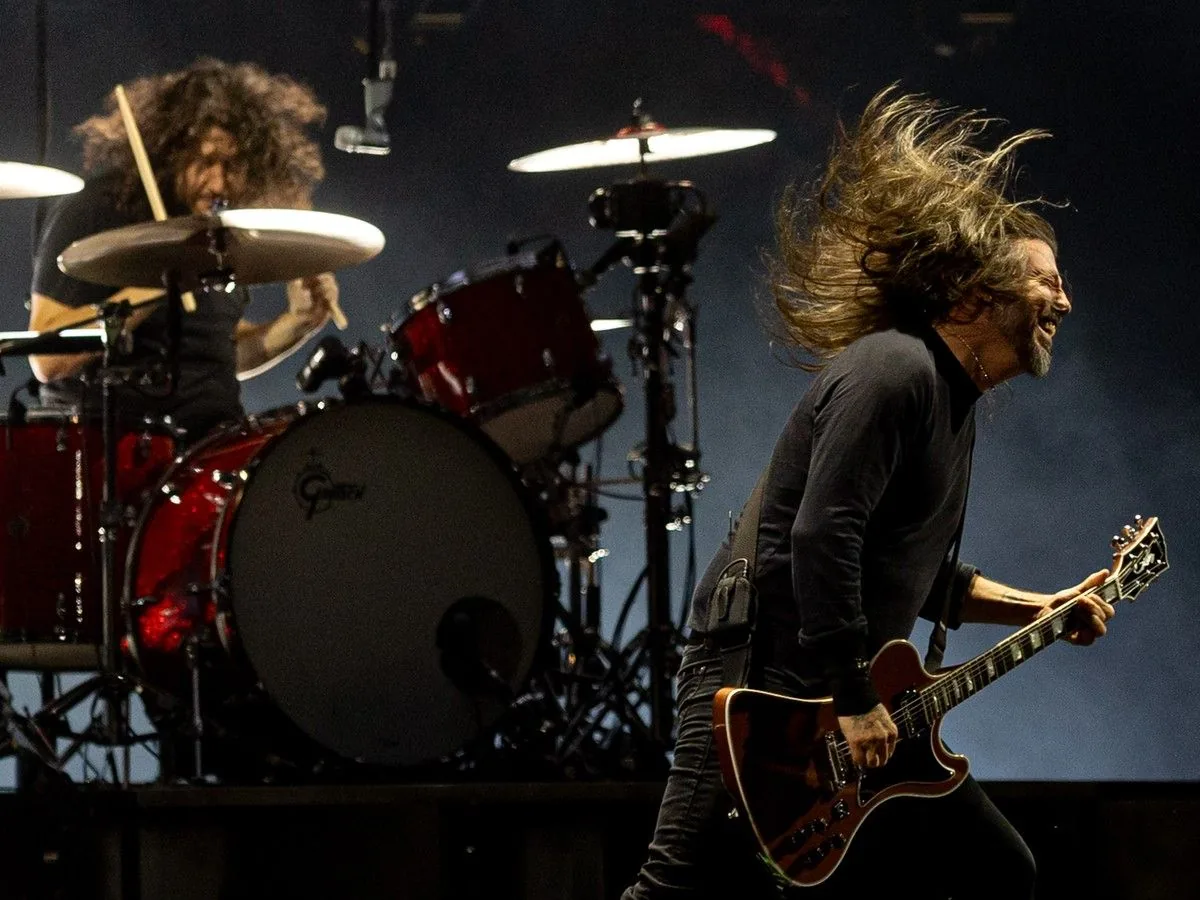
VANCOUVER, BC — The Foo Fighters turned B.C. Place into a loud, high-energy celebration on Sunday night, using their final Canadian stop on the Take Cover Tour to cover nearly every era of the band’s run. The performance stretched for about three hours and drew more than 50,000 fans, many of whom sang along from the opening notes.
Dave Grohl and his bandmates leaned into spectacle without losing the sense of a rock show built for a crowd. From the first burst of All My Life, the audience was on its feet, and the stadium filled with the kind of singalong energy that has long defined the band’s biggest shows.
Queens of the Stone Age set a loud tone before the headliners
Queens of the Stone Age opened the evening with an eleven-song set that matched the volume and swagger of the main event. The pairing made sense to fans familiar with the long-running connection between Josh Homme and Grohl, who has played drums on several Queens of the Stone Age albums.
Homme used the set to push the crowd toward a bigger reaction, urging people to let go of everything else for the night and treat the concert like a shared release. That framing helped build the atmosphere before the Foo Fighters even took the stage, and it gave the stadium show a sense of momentum from the start.
Grohl opens with All My Life and a reminder that rock is the point
Once the lights went down, Grohl’s unmistakable shout cut through the darkness and kicked off a set that wasted no time. All My Life arrived first, and the response was immediate, with tens of thousands of people rising for one of the band’s most familiar hard-charging songs.
Grohl soon checked in with the crowd and asked whether they wanted rock ’n’ roll. When the stadium answered loudly, he replied that it was the band’s specialty. The exchange fit the night’s tone: direct, playful and determined to make the biggest possible noise in the biggest possible room.
A crowd that spanned generations heard songs from 1995 to this year
The audience reflected the breadth of the Foo Fighters’ career. Some fans had followed the band since its earliest days, while others were young enough that they had not been born when the debut album arrived in 1995. The show had to satisfy both groups without turning into a nostalgia exercise.
Instead, the set list moved from This Is A Call, the first song on the group’s first record, to newer material such as Window, which was released this year. Grohl noted that the band had three hours to play 30 years of music, and he joked that the Vancouver stop was far longer than the group’s 1995 show at the Commodore Ballroom.
Acoustic stretches brought the stadium show closer to home
Even with the size of the venue, some of the night’s strongest moments came when the band dialed back the effects. The Foo Fighters leaned into acoustic sections and storytelling, shifting the mood from arena spectacle to something that felt more personal and immediate.
Grohl talked about writing Marigold on a living room couch in the house he shared with Kurt Cobain, giving the song a lived-in origin that grounded the performance. He also joked about the old habit of people throwing Mentos at him during Big Me, warning anyone in the pit not to try it again. Those details made the middle stretch feel intimate even in a packed stadium.
Tributes, solo moments and instrument swaps kept the final stretch unpredictable
One of the night’s most emotional moments came with Grohl’s solo performance of Under You, which landed as a tribute to late Foo Fighters drummer Taylor Hawkins. The song gave the show a reflective pause before the band moved back into its more exuberant mode.
Later, each of the core players got time at center stage, including Nate Mendel, Pat Smear, Chris Shiflett, Rami Jaffee and drummer Ilan Rubin. Grohl explained that, on this tour, every band member had to play a song from a group they were in before joining the Foo Fighters, and the set included references to No Use For A Name, Sunny Day Real Estate, The Wallflowers and The Germs.
One of the biggest cheers came when Grohl and Rubin switched instruments for Tap Dancing in a Minefield, with Grohl moving to drums and Rubin taking the guitar. What could have felt like a gimmick instead played like a showcase of how much skill was on stage.
A three-hour finale showed why the band still fills stadiums
By the end of the evening, the Foo Fighters had delivered a marathon that matched the scale of the venue and the loyalty of the crowd. The show moved from early-era songs to newer releases, from acoustic calm to full-volume catharsis, without ever losing its sense of purpose.
That range is part of why the band remains such a reliable draw. In front of more than 50,000 strangers, the Foo Fighters turned shared memory into a live event, proving that their biggest songs still work because they are meant to be shouted together at full volume.
Chicago's music scene, one story at a time — Chicago Music Guide.