Audrey Niffenegger Revisits the Time Traveler’s Wife With Life Out of Order, a Chicago-Born Sequel About Alba, Climate Fears and a Wider Future
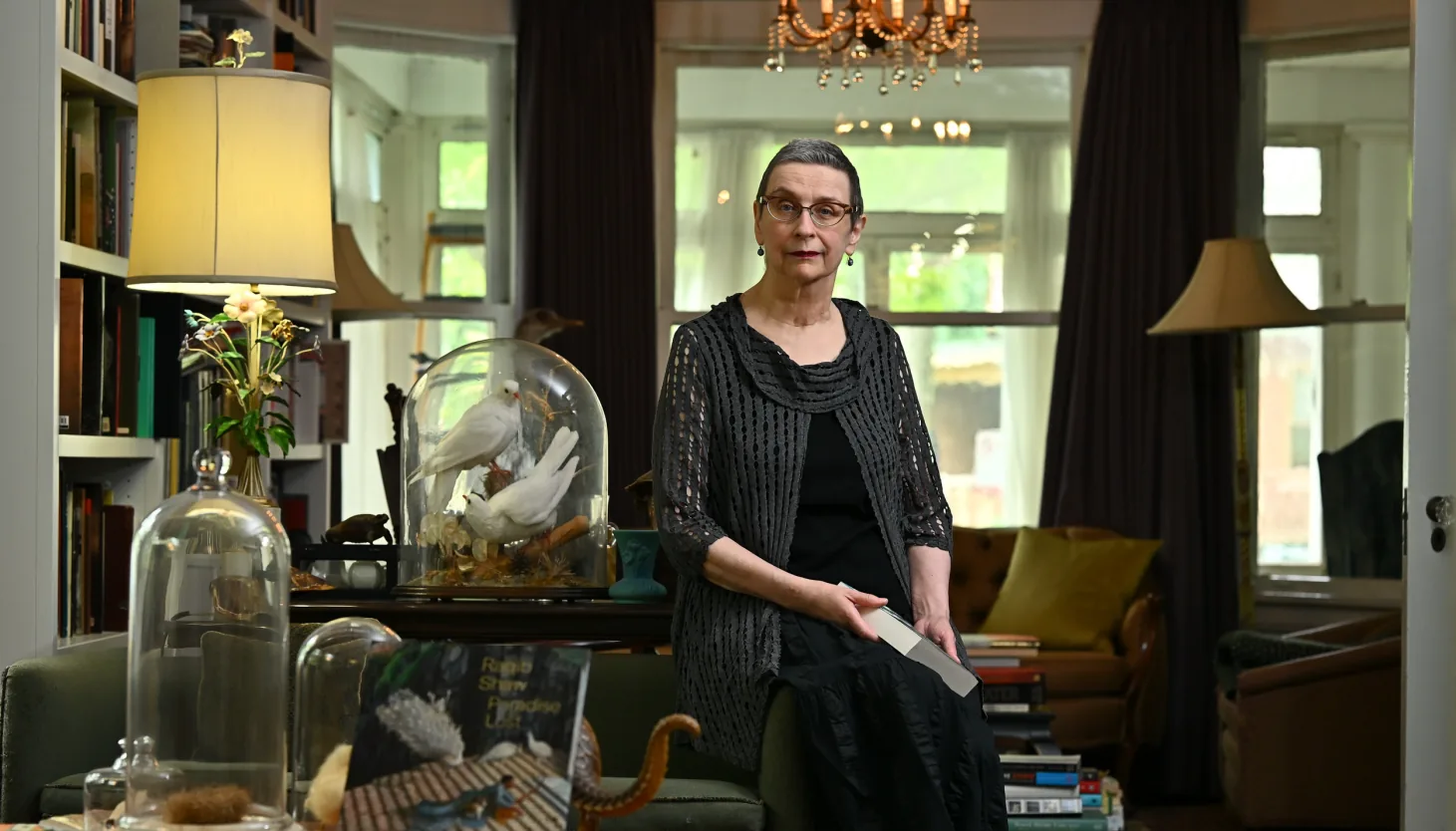
CHICAGO, IL — Audrey Niffenegger is bringing new life to the world of The Time Traveler’s Wife with a sequel that shifts the focus from Claire and Henry to their daughter, Alba. The new novel, Life Out of Order, arrives Oct. 6 from Harper Collins and extends a story that first became a surprise bestseller in 2003.
The original book has already had a long afterlife of its own, moving into film, television and even a musical. Niffenegger says she did not set out to write another chapter in that universe, but once she began drafting new material, she found herself pulled back in.
A publisher request opened the door to a sequel Niffenegger never planned
Niffenegger says the sequel began in 2012, when her publisher asked for leftover material for an e-book version of The Time Traveler’s Wife. She initially believed she had nothing worth publishing, but the request nudged her into writing again.
One new chapter led to another. After she wrote what became “The Yellow House,” she realized the material had enough momentum to become something larger. That shift turned a one-time expansion into a novel that she worked on over the next 12 years.
The writing process was not quick, but it changed her view of the project. Instead of feeling like a side note to the original book, the material began to feel like a new story with its own center of gravity.
Alba DeTamble takes center stage in a second generation of time travel
Life Out of Order moves into the lives of a second generation of time travelers, including Alba DeTamble, who is a violinist and the daughter of Claire and Henry. Niffenegger says she wanted to show what daily life would look like when time travel is no longer a shocking anomaly.
In this version of the universe, time traveling is understood as a known condition rather than a secret surprise. That gave the novelist room to explore different relationships, including Alba’s encounters with herself at different ages and the complicated emotional terrain that comes with them.
The opening pages make clear how disorienting that life can be. Alba describes being unmoored in time, where love, loss, discovery and farewell all exist at once, even if not in any order most people would recognize.
Climate change, AI and martial law shape a more unstable future
Niffenegger says she is “not a futurist,” so she built the novel’s future by starting with what already seems unavoidable. Climate change became one of the story’s anchors because, as she puts it, that much seems certain to remain a problem.
Other details came from possibilities she found harder to predict. The novel opens at a house party in a Chicago under martial law, where young people including Alba are plotting against fascists. Niffenegger says she wrote that scene in 2013, before the resurgence of neo-Nazi politics felt so present.
Artificial intelligence also appears in the book, though she imagines it as a tool for preserving human experience rather than replacing it. Even with those bigger ideas in play, the emotional center remains personal relationships.
Niffenegger kept the story under control by narrowing its point of view
A multigenerational time-travel story could easily sprawl, and Niffenegger says she was careful to avoid that. She limited the first-person point of view to Alba’s immediate family members so the novel would not become overloaded with too many threads.
She compares that problem to the challenge of reading sprawling epics such as War and Peace or Game of Thrones. Too many characters, she argues, can make a story harder to hold together, even when the premise itself is exciting.
That restraint helps keep Life Out of Order focused on the core relationships, especially Alba’s marriages, including one to another time traveler. The book’s scale is broad, but Niffenegger wanted the emotional track to stay readable and immediate.
Her personal life and grief shaped the tone of the book
Niffenegger was writing the novel while her own life was changing. She met and fell in love with her now husband, comics artist Eddie Campbell, as the book was taking shape, and her father died in 2016.
She says that loss made Alba and Henry’s relationship feel more fraught and poignant. That sadness fits with themes that have long run through her work, which she describes as preoccupied with loss, grief, love, sex, death and rock and roll.
For Niffenegger, time itself naturally brings grief into the frame. If a story is about time, she says, then loss is almost impossible to avoid. In that sense, the emotional material in Life Out of Order feels connected to her earlier work rather than separate from it.
At 63, the artist is already moving on to new projects
Now that Life Out of Order is finished, Niffenegger says she misses the companionship of the book she lived with for 12 years. She describes the experience as having characters constantly speaking in her head, and says it feels strange not to wake up with that ongoing mental presence.
She is not slowing down. Niffenegger is writing another sequel, this one tied to her 2018 comic The Night Mobile, and she continues her visual art practice.
She also remains involved with the Artists Book House, a project she started in 2019 in Old Irving Park. The space hosts workshops in binding, calligraphy, typography and zines, reflecting her long-running interest in bookmaking and the physical life of literature.
Looking at her future at 63, Niffenegger says she no longer feels bound to the expectations that shaped her younger years. That freedom, she suggests, may be the most surprising part of this stage of life.
Chicago's music scene, one story at a time — Chicago Music Guide.