Ringo Starr and His All Starr Band Turn MGM Music Hall at Fenway Into a Beatles and Classic Rock Singalong With Crowd Favorites and Sharp Guest Turns
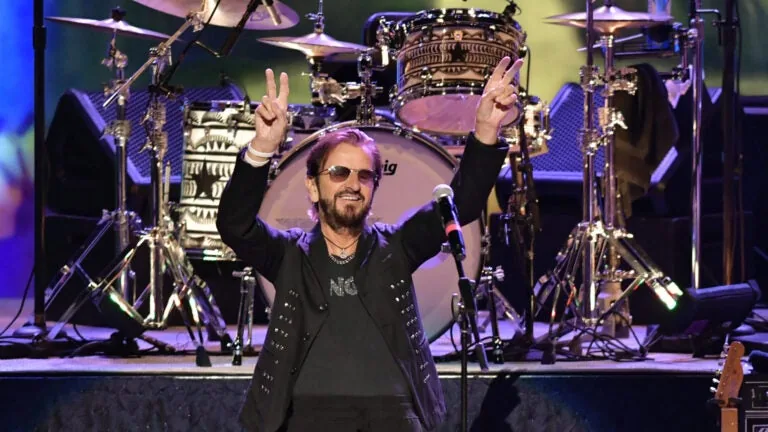
BOSTON, MA — Ringo Starr proved in Boston that age has not dimmed his pull, filling MGM Music Hall at Fenway with a crowd ready for a night of Beatles memories, solo favorites, and well-loved classic rock detours. The 86-year-old drummer and singer arrived with his All-Starr Band and quickly made the evening feel like a shared victory lap through decades of pop music.
He opened with a promise that everyone in the room would know at least one song, and the setlist made good on that idea almost immediately. From the first number, the performance leaned into familiarity without feeling stale, moving between Ringo’s own catalog, Beatles staples, and songs associated with the musicians beside him onstage.
How the All-Starr Band made the show feel like a supergroup celebration
Founded in 1989, Ringo Starr & His All-Starr Band is built around a simple concept: the players on stage are stars in their own right. That structure was on full display in Boston, where the lineup included Toto’s Steve Lukather, Colin Hay of Men at Work, Hamish Stuart of Average White Band, and veteran players Gregg Bissonette, Warren Ham, and Buck Johnson.
The result was less a one-man nostalgia act than a rotating tour through classic rock history. Each performer got space to shine, whether through guitar, bass, saxophone, or vocals, and the band’s range gave the night a loose, jam-session feel. The mix of voices and styles kept the show moving while giving longtime fans a chance to hear familiar songs treated with fresh energy.
From Matchbox to Yellow Submarine, the setlist leaned hard into recognition
The opening stretch reached back to “Matchbox,” the Carl Perkins tune that the Beatles helped popularize early in their career. From there, the show kept pulling from the kind of songs that trigger instant recognition, including Beatles material and solo tracks that still land decades later with an audience that clearly came ready to sing along.
Ringo’s promise that the crowd would know at least one song turned out to be underselling the night. “Boys,” “I’m the Greatest,” and “Yellow Submarine” all brought different shades of nostalgia, from playful call-and-response energy to more swaggering delivery. Even when the vocals or arrangements leaned rough around the edges, the point was not polish. It was collective memory, and the audience seemed to know it.
Steve Lukather, Colin Hay and Hamish Stuart added their own standout moments
The night was built to give the other musicians their due, and several did exactly that. Lukather’s guitar work stayed strong throughout the performance, while Stuart’s bass and Ham’s saxophone locked together especially well on Average White Band’s “Pick Up the Pieces.”
Hay’s voice also drew attention, particularly on “Overkill,” where his delivery remained sharp enough to reach the back of the room. Later, the band used his material and Lukather’s musicianship to keep the pace lively. The whole setup reinforced the idea that the show was not just a showcase for one famous name but a traveling collaboration among players with deep catalogs of their own.
Ringo shifted between drums and frontman duties without losing the room
Even with so much talent around him, Ringo remained the center of gravity. He moved from the drum kit to the front of the stage, sang directly to the audience, and kept the mood light with his trademark peace signs and dry humor. His voice was not the flashiest in the lineup, but it stayed impressively strong for an 86-year-old performer.
His drumming remained one of the most distinctive parts of the night. He played with a steady, unfussy style that helped hold the songs together, while Bissonette added “double drums” on numbers like Toto’s “Rosanna.” Those moments gave the show extra muscle without crowding Ringo out of the spotlight, and his understated playing still carried the kind of ease that made the performance feel relaxed rather than rehearsed.
The set found room for jokes, deep cuts and a few especially loud singalongs
The Boston crowd also got a sense of Ringo’s comic side. He interacted with fans, struggled playfully to read homemade signs, and leaned into the event’s loose, friendly tone. The band also slipped in a bit of misdirection when Lukather joked about a song he had supposedly been working on since he was a teenager before the group plunged into a noisy fake-out.
That gag led into a sharp, crowd-pleasing “Africa,” and the momentum kept building from there. “I Wanna Be Your Man” and “Photograph” stood out as some of the strongest moments, with Ringo sounding fully at ease and visibly enjoying the spotlight. A break for the All-Starrs also opened the door for “Cut the Cake” and a series of classic-rock nods that widened the set’s reach.
With A Little Help From My Friends closed the night on the right note
The finale, fittingly, was “With a Little Help from My Friends,” the song Ringo first recorded in 1967 and one that still fits his image perfectly. By the end of the night, the Boston crowd was still reacting loudly, though the screams during the “Billy Shears” intro may have been a little softer than the ones that greeted the Beatles in their prime.
Even so, the response made the bigger point clear. Ringo Starr remains a durable live attraction because he understands what fans come for: songs they know, a band of capable ringers, and an atmosphere that feels celebratory without pretending to be stuck in the past. In Boston, that formula still worked beautifully.
Chicago's music scene, one story at a time — Chicago Music Guide.

. --- **🎾 What Do You Think?** Did Billie Jean King’s story move you? What moment hit you hardest — her court battles or personal ones? Share your thoughts in the comments at **ChicagoMusicGuide.com**. --- Let me know if you’d like a version of this review embedded with social media reactions or critic round-up links!](https://chicagomusicguide.com/wp-content/uploads/2025/07/Billie-Jean-at-Chicago-Shakes-Serves-Up-an-Uplifting-Complex-Portrait-of-a-Sports-Icon-768x432.jpg)