Potential East Coast Winter Storm Could Impact Pennsylvania, New Jersey, New York, and New England States January 7–9

UNITED STATES — Forecasters are closely monitoring a developing storm pattern that could bring winter weather impacts to Pennsylvania, New Jersey, New York, Massachusetts, and Connecticut between January 7 and January 9, according to long-range model guidance and ensemble trends. While confidence remains moderate at this range, meteorologists say the overall setup is increasingly supportive of a coastal winter storm capable of producing snow, strong winds, and hazardous travel conditions across parts of the Mid-Atlantic and New England.
What Forecasters Are Watching Right Now
Weather models indicate a potential storm system may develop off the East Coast as multiple atmospheric features begin to align. The key elements being analyzed include:
- A strengthening northern jet stream
- Possible interaction with a southern stream disturbance
- Placement of a coastal low-pressure system near the 50/50 benchmark, a critical zone often associated with East Coast winter storms
Meteorologists note that the pattern is not yet perfect, but current projections suggest it may be adequate enough to support storm development, especially if upper-level energy phases at the right time.
Role of the PNA and Large-Scale Pattern
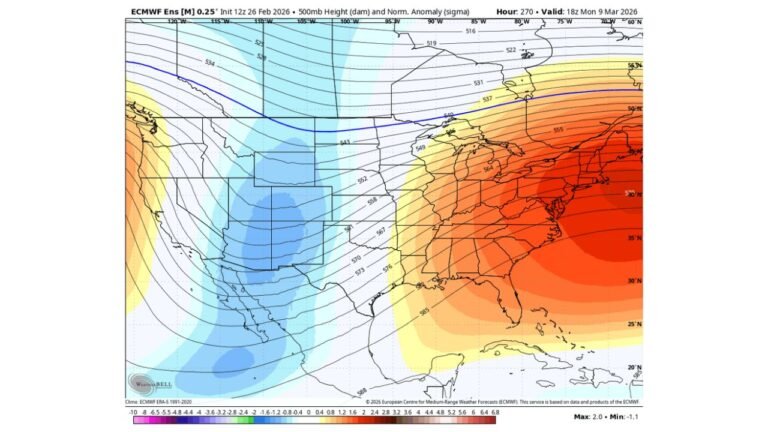
A major factor in determining the storm’s strength and track will be the Pacific–North American (PNA) pattern. Forecasters would like to see a more pronounced positive PNA, which would help:
- Push colder air farther east
- Prevent the storm from tracking too far inland
- Support snow instead of rain across interior and coastal regions
If this feature strengthens and shifts westward, confidence in a more impactful winter storm would increase.
Potential Impact Areas
Based on current guidance, the areas most likely to be affected include:
- Pennsylvania: Risk of accumulating snow, especially central and eastern sections
- New Jersey: Possible snow or mixed precipitation depending on storm track
- New York: Interior and northern regions favored for snow; coastal impacts still uncertain
- Massachusetts and Connecticut: Potential for snow and gusty winds, especially if the system deepens offshore
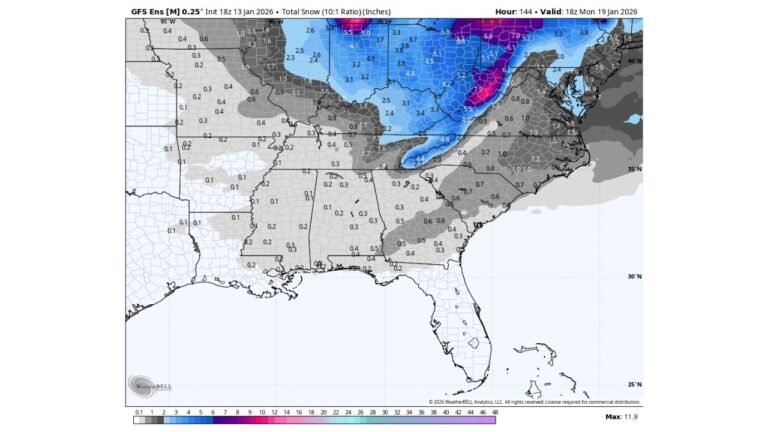
Exact snowfall amounts and precipitation types cannot yet be determined, but forecasters stress that travel disruptions and power outage risks could emerge if the storm strengthens.
Timing Outlook
- January 7: Storm development phase offshore
- January 8: Peak impact window for Mid-Atlantic and southern New England
- January 9: Storm may lift northeast, impacting northern New England or eastern Canada
Small shifts in timing or track could significantly alter which states experience the heaviest impacts.
Confidence Level and Next Steps
This system remains 8–9 days out, meaning there is still substantial uncertainty. However, ensemble guidance consistently signals a storm threat worth monitoring, rather than a one-off or fringe scenario.
Forecasters emphasize that:
- Confidence will improve within the next 3–5 days
- Snow maps and impact forecasts are premature at this stage
- Residents in affected states should stay informed, especially those planning travel during this period
What You Should Do Now
- Monitor updated forecasts through early January
- Begin considering contingency travel plans if you live in or are traveling through the affected states
- Expect forecast adjustments, including potential expansion or narrowing of impacted areas
This developing situation will continue to be watched closely as new data becomes available. Updates will follow as confidence increases and details become clearer.