
Baja California Sur, Sinaloa, Jalisco, and Guerrero Face Rare January Tropical Development Signal Off Mexico’s Pacific Coast
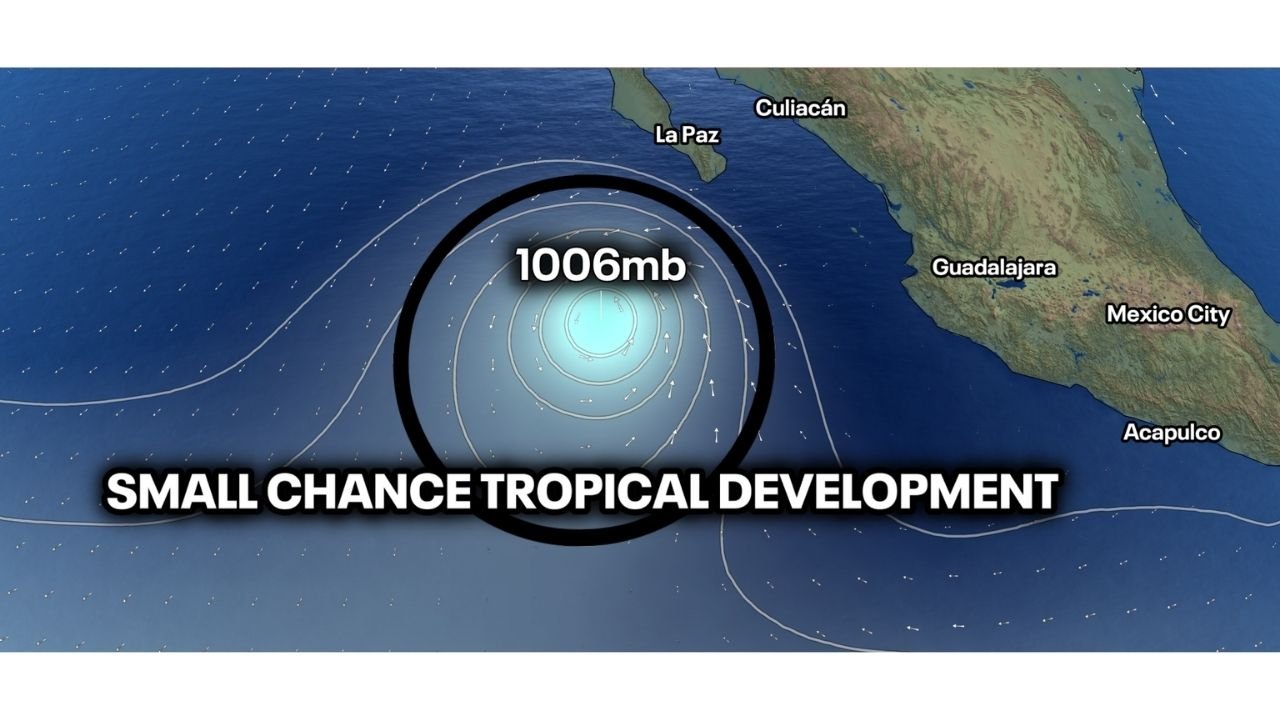
LA PAZ, BAJA CALIFORNIA SUR — A highly unusual weather signal is showing up in forecast guidance this weekend into early next week: a small chance of tropical development in the eastern Pacific off the coast of Mexico, a scenario that would be considered rare for January. While confidence remains limited and the window could be brief, the setup is drawing attention because it suggests a weak surface low could try to organize over still-warm ocean water as an energetic upper-level feature moves into place.
What makes the signal stand out is the time of year. January is not a typical month for tropical systems in the eastern Pacific, and the data shown highlights how uncommon this would be compared to other basins.
Why This Is So Rare In January Over The Eastern Pacific
The information shown notes there has been only one documented tropical system in the eastern Pacific during January, which is why even a small development window is getting attention. In contrast, the same note points out there have been eight tropical systems in the Atlantic during January, with the most recent occurring in 2023—a reminder that out-of-season systems can happen, but they are still the exception rather than the rule.
That rarity is driven by the typical January environment: cooler sea surface temperatures, stronger wind shear, and less sustained tropical moisture. For a system to even briefly resemble something tropical, it generally needs a short-lived overlap of warmer waters, reduced shear, and a favorable upper-level pattern.
What The Forecast Graphics Are Showing Near Baja California Sur And Mainland Mexico
The forecast maps shown (labeled as a “looking ahead” outlook) depict a potential weak circulation developing offshore with a central pressure near 1006 mb and the phrase “SMALL CHANCE TROPICAL DEVELOPMENT.” The placement shown is over the eastern Pacific west-southwest of mainland Mexico, roughly within the broad offshore zone that can influence parts of Baja California Sur (including areas near La Paz) and the west coast of Mexico farther south.
Another panel shows a plume of heavier precipitation offshore, with the axis positioned to the southwest of the mainland—suggesting that even if a compact tropical system does not fully form, the broader disturbance could still enhance:
- Offshore convection and heavy rain bands
- Rough surf and increased wave energy along exposed beaches
- Gusty winds in squalls near the core of the disturbance
- Periods of higher coastal rain chances if bands rotate toward land
Locations referenced on the maps—such as Culiacán (Sinaloa), Guadalajara (Jalisco), and coastal areas nearer Acapulco (Guerrero)—highlight the broader region that would be watching for any west-to-east drift, moisture push, or coastal impacts if the disturbance organizes or shifts closer.
What Would Need To Happen For A “Real” Tropical System To Form
The note attached to the data explains the mechanism clearly: a vigorous upper-level trough may help “spin up” a surface low over warmer ocean waters. That’s an important point because tropical development in unusual months often starts with an upper-level feature providing lift and a seed low, rather than a classic tropical wave environment.
For the system to become more than a brief, messy disturbance, it would likely need:
- Sustained thunderstorms near the center (not just rain bands offshore)
- A tighter, more consistent low-level circulation
- A short period of lower wind shear
- Enough time over water to consolidate before the window closes
Right now, the messaging in the data is cautious and matches what viewers should take away: it’s possible, it’s rare, and it’s not guaranteed. The most responsible framing is that there is a signal for a brief development opportunity, not a confirmed tropical storm.
What Coastal Communities Should Watch This Weekend Into Early Next Week
Even with a low probability of true tropical classification, coastal impacts can still matter—especially when heavier rain and stronger wind pockets develop around a consolidating low. For Baja California Sur, Sinaloa, Jalisco, and Guerrero, the most practical things to watch are:
- Any shift in the projected track toward the coast
- Signs the low is holding together longer than expected
- Increasing rain bands aimed at coastal or near-coastal terrain
- Growing surf and marine hazards for beachgoers and boaters
If the low remains offshore, the main story may stay centered on marine conditions and scattered coastal showers. If it edges closer, localized heavier rain and gusty conditions could become more relevant for travel and outdoor plans in coastal communities.
For music fans and eventgoers, the biggest real-world takeaway is simple: even “small chance” tropical setups can create unexpected downpours, wind bursts, and dangerous surf, which can affect weekend plans, outdoor gatherings, and travel along Mexico’s Pacific coastal corridors. Keep an eye on official local updates as the short window approaches, because these rare setups can change quickly.
Visit ChicagoMusicGuide.com for more weather-driven planning updates, including the kinds of travel and schedule impacts that matter when unusual systems pop up on the forecast map.