
California and Hawaii Face Intensifying Pacific Ocean Heatwave as Scientists Warn It Could Fuel Stronger Storms and Trigger El Niño in 2026
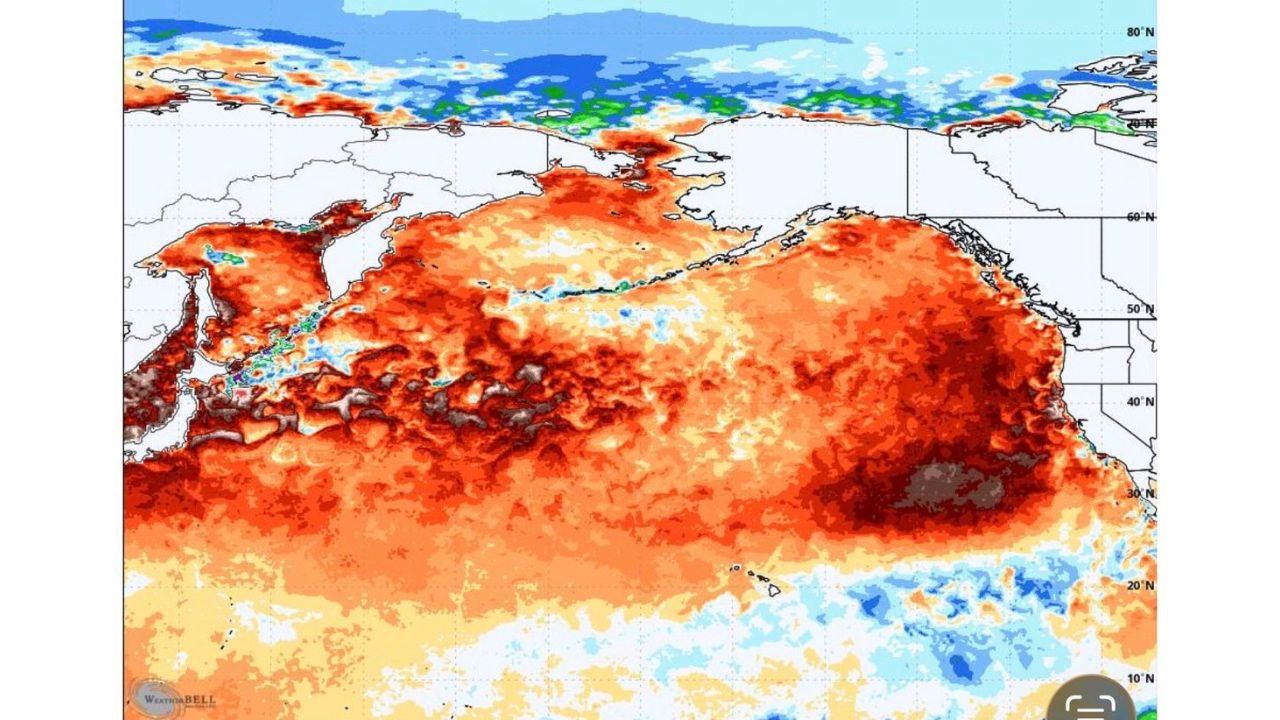
UNITED STATES — A massive marine heatwave in the Pacific Ocean is rapidly intensifying, with newly released data on March 17, 2026, showing unusually warm sea surface temperatures stretching from Hawaii to California. Meteorologists warn this growing anomaly could be fueling stronger storms and may influence broader climate patterns across the Northern Hemisphere in the months ahead.
The data highlights widespread warming across the North Pacific Basin, with large areas of deep red indicating significantly above-average temperatures. Experts say this warming trend is not only impacting ocean ecosystems but is also playing a role in recent storm activity affecting Hawaii and California, including coastal regions of California.
What the Pacific Ocean Heatwave Means for California and Hawaii
The latest analysis shows elevated sea surface temperatures across the North Pacific Basin, particularly between Hawaii and California, where some regions are experiencing extreme anomalies. These warmer waters act as additional fuel for atmospheric systems, potentially leading to more powerful storms, increased rainfall, and unstable weather patterns.
Meteorologists point to recent storm activity near Hawaii and California as a possible result of this warming. Warmer oceans release more moisture into the atmosphere, which can intensify storm systems and contribute to unusual weather events. This may explain why some regions have experienced stronger-than-normal storm systems in recent weeks.
In addition, the warming extends across a vast portion of the Pacific, indicating this is not a localized event. Instead, it is part of a broader climate-driven pattern affecting the entire Northern Hemisphere, raising concerns among scientists monitoring long-term environmental changes.
Impact on Northern Hemisphere Weather Patterns
Beyond California and Hawaii, this Pacific heatwave is contributing to what experts describe as a “bizarre and amplified weather pattern” across the Northern Hemisphere. This includes shifts in jet stream behavior, changes in storm tracks, and more extreme weather variability.
The unusual warming in the ocean disrupts normal atmospheric circulation. As a result, regions far beyond the Pacific — including other parts of the United States — may experience unpredictable weather swings, ranging from heavy storms to sudden temperature shifts.
Scientists emphasize that this type of marine heatwave can have cascading effects. It not only impacts coastal weather but can also influence inland conditions by altering how weather systems develop and move across continents. This interconnected pattern is why meteorologists are closely monitoring the situation.
Potential Link to El Niño Development in 2026
One of the most important questions surrounding this event is whether it could influence the development of El Niño conditions later in 2026, particularly off the coast of Peru. El Niño is a climate pattern known for significantly impacting global weather, including rainfall, droughts, and storm intensity.
Current observations suggest that the warming in the Pacific could play a role in setting the stage for El Niño formation during late summer or fall 2026. However, experts caution that it is still too early to confirm a direct connection.
If El Niño does develop, it could further amplify weather extremes across multiple regions, including California, which often experiences increased rainfall during El Niño years, and Hawaii, which may also see shifts in precipitation and storm activity.
Why Scientists Are Watching This Event Closely
The scale and intensity of this Pacific Ocean heatwave have caught the attention of climate scientists worldwide. Events like this are becoming more frequent, and researchers believe they are linked to broader climate change trends affecting ocean temperatures.
Warm ocean waters not only influence weather but also impact marine ecosystems, fisheries, and coastal environments. Prolonged heatwaves can lead to disruptions in marine life, coral stress, and changes in ocean currents.
For weather experts, the primary concern remains the potential for more frequent and intense storms across California and Hawaii, along with broader atmospheric instability. As the situation evolves, updated data will be critical in understanding how long this heatwave will persist and what its full impact will be.
As this Pacific heatwave continues to expand, its influence on weather patterns across California, Hawaii, and the wider United States is becoming increasingly clear. From stronger storms to the possibility of El Niño development, this evolving situation highlights the growing connection between ocean temperatures and global climate systems. For continued updates on major weather events and climate developments affecting the United States, visit ChicagoMusicGuide.com.