
California, Arizona, Nevada and Utah See Explosion of Record-Breaking Heat as Southwest Braces for Even Hotter Days Ahead
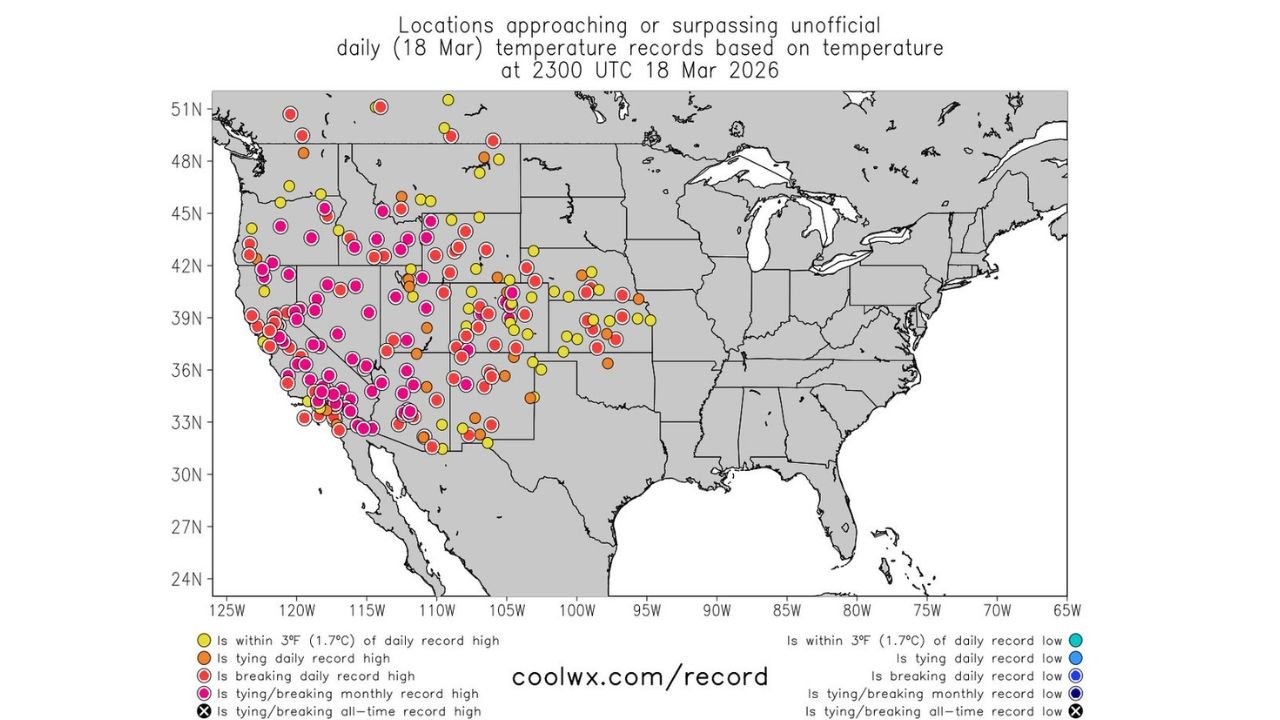
UNITED STATES — A rapidly intensifying heatwave is already rewriting the record books across the western United States, with hundreds of locations in California, Arizona, Nevada, and Utah either breaking, tying, or approaching temperature records—and meteorologists warn this is only the beginning.
New data from March 18 shows an explosive concentration of record heat reports across the Southwest, with conditions expected to grow even more extreme in the coming days.
Southwest Ground Zero for Record-Shattering Heat
The most intense cluster of record-breaking temperatures is centered across:
- California (especially Southern California and Central Valley)
- Nevada (Las Vegas, Reno regions)
- Arizona (Phoenix and surrounding desert areas)
- Utah and western Colorado
Large clusters of markers indicate locations that are:
- Breaking daily record highs
- Tying previous records
- Approaching record thresholds within just a few degrees
Some areas are even approaching monthly or all-time record territory, signaling the severity of this early-season heat event.
California and Arizona See Dense Concentration of Extremes
Southern and central California stand out with one of the highest densities of record-breaking points, particularly around:
- Los Angeles Basin
- San Diego region
- Central Valley cities like Bakersfield and Fresno
Meanwhile, Arizona, especially around Phoenix, is seeing widespread near-record to record-breaking temperatures across multiple locations simultaneously.
Heat Expands Into Interior West and Rockies
The extreme warmth is not confined to coastal or desert regions. It is pushing inland into:
- Idaho (Boise, Pocatello)
- Montana (Billings region)
- Wyoming and Colorado (Casper, Denver)
- New Mexico (Albuquerque, Farmington)
These regions are seeing numerous locations either tying or nearing daily records—unusual for mid-March.
Why This Event Is So Significant
Meteorologists are highlighting the unusual scale of this event:
- Rare to see this many monthly records challenged in a single day
- Widespread coverage from the Pacific Coast to the Rockies
- Early timing in the season, amplifying its impact
The presence of pink and red markers across the map indicates not just isolated events, but a region-wide heat surge affecting hundreds of observation points.
Heat Expected to Intensify Further
Forecasters warn that the current situation is just the beginning. Over the next several days:
- Temperatures across the Southwest are expected to climb even higher
- Additional records are likely to fall
- The geographic spread of extreme heat could expand
This suggests the map of record-breaking locations will likely grow significantly in the coming days.
What’s Driving This Rapid Heat Escalation
The primary driver is a strong and persistent high-pressure ridge over the western U.S., which is:
- Trapping heat across the region
- Preventing cloud formation and cooling
- Allowing temperatures to rise rapidly day after day
This setup creates a feedback loop where heat builds and intensifies over time.
A Warning Sign for the Season Ahead
The scale and intensity of this early heatwave could be a signal of:
- A potentially active and volatile spring weather season
- Increased risk of prolonged heat events heading into summer
- Early stress on water resources and ecosystems in the West
Southwest Heatwave Just Getting Started
With temperatures already breaking records and forecasts pointing even higher, the Southwest is entering a period of escalating and potentially historic heat.
From California to Arizona and beyond, this event underscores how quickly conditions can shift—and how intense those shifts can become—even before spring fully arrives.
Stay with ChicagoMusicGuide.com for continued coverage of this developing heatwave and other major weather events across the United States.