
California, Colorado, Utah, and Illinois Could See Major Winter Storm Setup as Late-January Pattern Shift Emerges
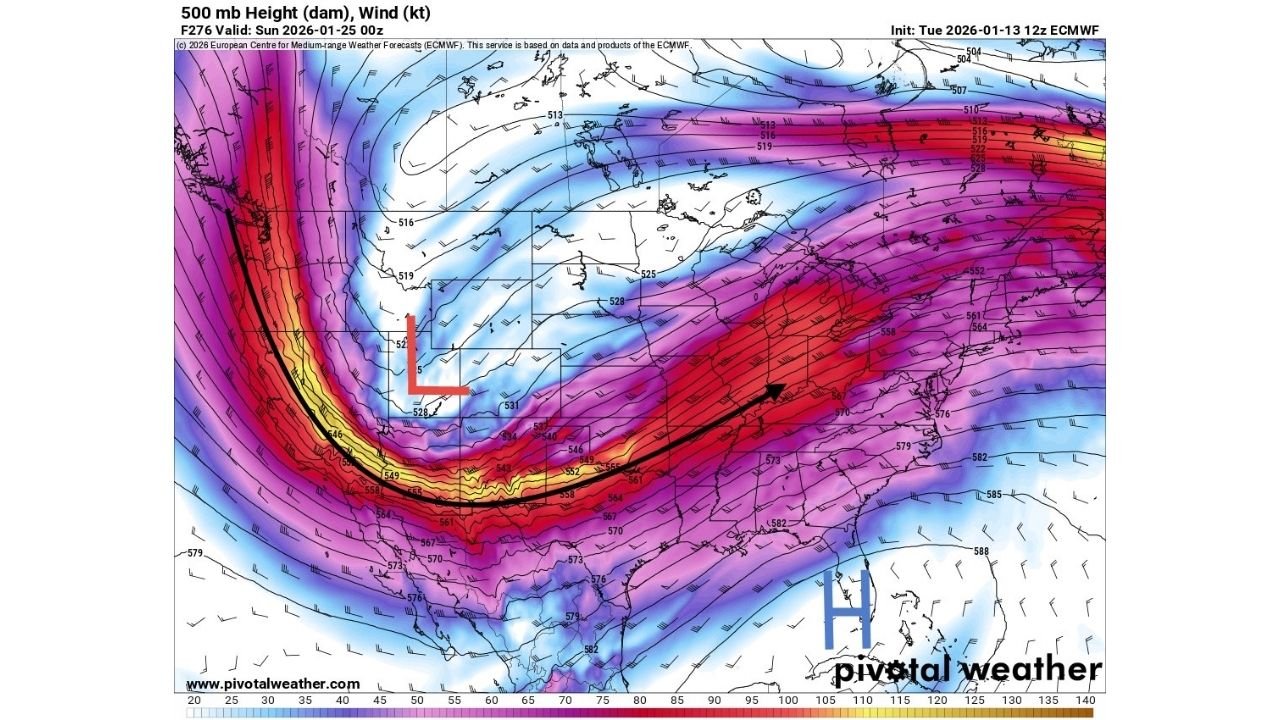
CHICAGO, ILLINOIS — Long-range forecast models are beginning to signal a possible large-scale winter pattern shift across the United States later in January, a development that could open the door for a more organized and impactful storm system affecting California, Colorado, Utah, the Central Plains, and the Midwest, including Illinois. While details remain uncertain, the evolving setup marks one of the more noteworthy pattern signals seen so far this winter.
Why The Current U.S. Pattern Has Limited Major Winter Storms So Far
The atmosphere has been locked into a persistent high-amplitude pattern, which typically favors storminess but has been uneven in how it distributes impactful winter weather. A dominant Pacific ridge over California and the Western United States has kept much of the West comparatively mild and dry, while the Eastern U.S. has remained cooler and more active, dominated by fast-moving systems and clipper-type disturbances.
This configuration has repeatedly prevented cold air, deep moisture, and strong upper-level lift from fully overlapping in the same region — a necessary combination for a true large-scale winter storm. As a result, many regions, including the Midwest and Great Lakes, have experienced frequent winter weather but limited high-end, widespread events.
What A Western U.S. Trough Could Change For California, The Rockies, and The Plains
New guidance is now detecting signs of wave regression, a process that could shift the jet stream configuration enough to introduce troughing over the Western United States. If this scenario verifies, it would allow colder air to finally move into California, Nevada, Utah, and Colorado, while also tapping into Pacific moisture and enhanced lift.
This setup is particularly important because it favors the development of a large storm system over the Interior West, which often acts as a trigger for broader downstream impacts. Historically, when this pattern locks in, it can set off a chain reaction that spreads active weather eastward into the Central U.S. and Midwest, depending on timing and storm track.
How This Pattern Could Affect Illinois and the Midwest If It Evolves Eastward
If the western trough deepens and the jet stream aligns correctly, the Midwest — including Illinois, Wisconsin, Indiana, and Michigan — could transition from clipper-driven systems to a more organized winter storm environment. That would increase the risk for heavier snowfall, stronger winds, and sharper temperature contrasts across the region.
For Illinois, this type of pattern shift raises the possibility of plowable snowfall events rather than scattered light systems. The exact impact zone remains unclear, but the broader signal suggests that the atmosphere may finally support storms with higher ceilings than what has been common so far this season.
What The Ensembles Are Saying And Why Confidence Is Still Limited
Ensemble guidance — which blends many model outcomes — does show support for a pattern change, but agreement remains modest. This tells forecasters that while the signal is real, the atmosphere has not yet committed to a single solution. Small changes in upper-level energy placement could determine whether impacts focus on the West, the Central Plains, the Midwest, or bypass key regions altogether.
What can responsibly be said is that the risk window is opening, and this is the type of setup that bears close watching as January progresses. The potential exists, but the specifics of what, where, and when are still being refined.
As winter continues to evolve, this developing pattern could become the most consequential shift of the season so far — especially if cold air and moisture finally synchronize across multiple regions. ChicagoMusicGuide.com will continue monitoring how this potential winter storm setup unfolds and what it may mean for Illinois, the Midwest, and surrounding states as confidence improves.