
California, Nevada and Arizona Heatwave Breaks March Records as Western U.S. Sees Rare Early-Season Temperature Surge With More Intensifying Ahead
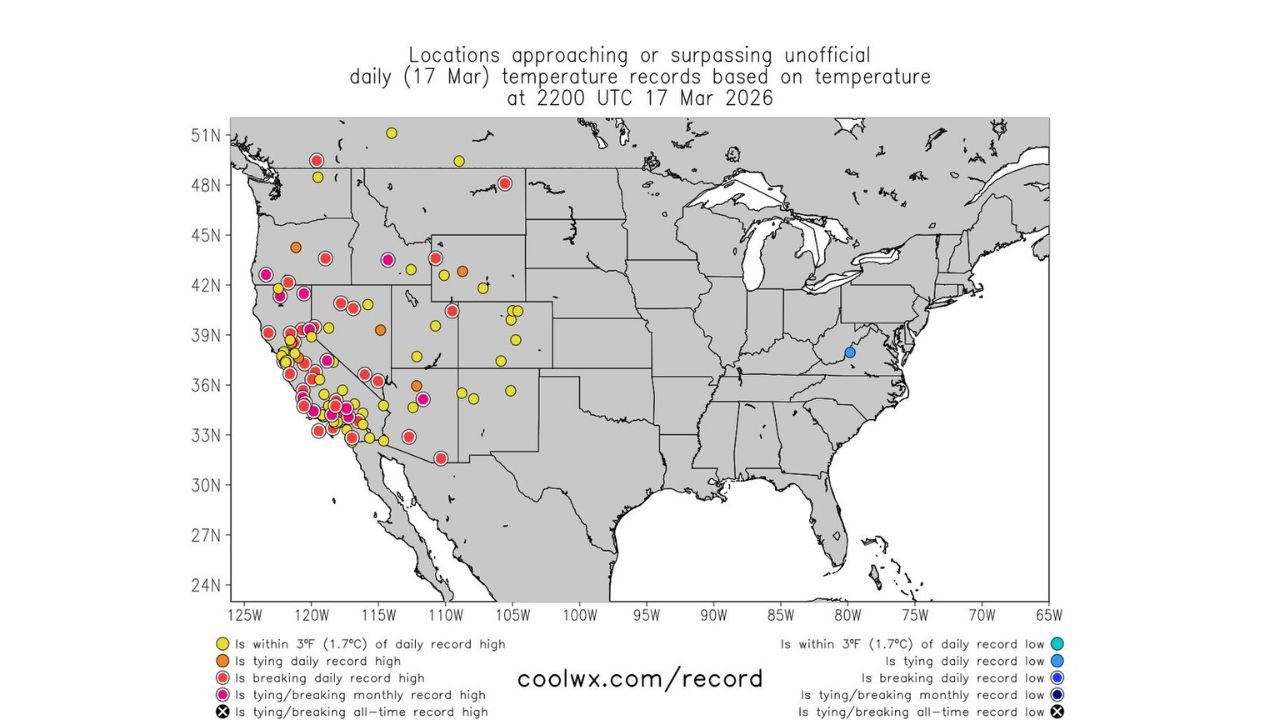
CALIFORNIA — An unusually intense mid-March heatwave has taken hold across the Western United States, with California, Nevada, and Arizona already seeing multiple locations approach, tie, or break daily and even monthly temperature records as of March 17, 2026.
New temperature data shows a widespread cluster of record-breaking readings across the West Coast and Desert Southwest, signaling a rare early-season surge that is expected to expand and intensify in the coming days.
California Leads With Widespread Record-Breaking Temperatures
The most significant heat has been concentrated across California, where numerous locations—especially in central and southern regions—have either broken daily records or pushed into monthly record territory.
Clusters of extreme readings are visible across areas including the Central Valley, Inland Empire, and parts of Southern California, where temperatures surged far above seasonal averages.
Some locations have not only tied daily records but have also challenged or exceeded long-standing March benchmarks, highlighting the unusual intensity of this event for this time of year.
Nevada and Arizona Also See Rapidly Rising Temperatures
The heat is not confined to California. Parts of Nevada and Arizona are also experiencing near-record to record-breaking warmth, with several locations approaching daily highs rarely seen in mid-March.
Cities across southern Nevada and western Arizona are seeing temperatures climb into ranges more typical of late spring or early summer, contributing to a broader regional heat pattern.
Even areas farther inland across the Great Basin are showing signs of elevated temperatures, though the most extreme heat remains focused closer to California and the Southwest.
Record Heat Expands Across the Western United States
Beyond the core areas, record-challenging warmth has extended into portions of Utah, Idaho, and even parts of the Pacific Northwest, though with less intensity.
Scattered locations across these states are nearing daily record thresholds, indicating that the heatwave is broad in scale, even if the most extreme anomalies are concentrated farther south.
The geographic spread of record markers across the map underscores how widespread this event has become across the western half of the country.
Why This Mid-March Heatwave Is So Unusual
This event stands out because of both its timing and intensity. Mid-March typically marks a transitional period, but this year’s pattern has allowed strong high pressure and warm air to dominate the Western U.S.
Such setups can lead to rapid warming and record-breaking temperatures, especially in regions like California where terrain and inland valleys can amplify heat.
The fact that multiple locations are reaching monthly or even near all-time March records makes this event particularly notable.
More Heat Expected as Pattern Strengthens
Forecast guidance suggests that this heatwave is not a one-day event. Instead, temperatures are expected to continue rising and expand geographically later this week, potentially bringing additional record-breaking conditions.
As the pattern strengthens, more areas across California, Nevada, and Arizona could join the list of locations experiencing record or near-record heat.
Early Warning Sign of an Active Warm Season Ahead
This early-season heatwave may also serve as a signal of what could be a warmer-than-normal spring pattern across the Western United States.
With already dry conditions in parts of the region, the combination of above-normal temperatures and limited precipitation could raise concerns heading deeper into the season.
The surge of record-breaking temperatures across California, Nevada, and Arizona highlights how quickly conditions can shift in March. As the heat continues to build, the Western U.S. is entering a period that could redefine early-season temperature expectations.
For continued updates on major weather patterns across the United States, stay connected with ChicagoMusicGuide.com.