
California, Nevada, Arizona, Utah, Colorado, Kansas, Oklahoma, and Illinois Likely to Stay Warmer Than Normal Through Early January as Cold Pattern Remains Delayed
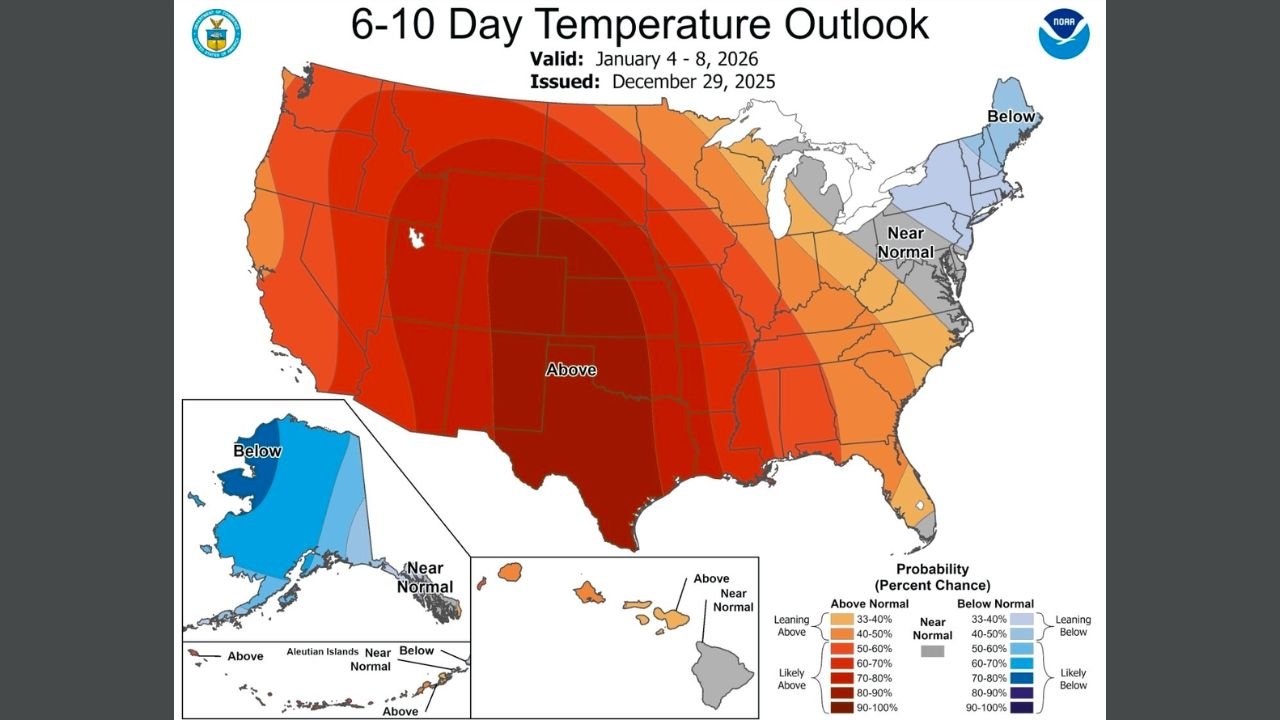
UNITED STATES — Latest temperature outlook maps show that the strongest and most consistent above-normal temperature signals are focused on the Interior West, central Plains, and parts of the Midwest, with colder air repeatedly failing to move in during the first half of January.
The most affected states include California, Nevada, Arizona, Utah, Colorado, Kansas, Oklahoma, and Illinois, where forecast probabilities strongly favor continued mild conditions instead of typical mid-winter cold.
Interior West Shows the Strongest Warm Signal
The highest confidence for above-normal temperatures is centered over the Interior West, especially:
- Nevada
- Utah
- Arizona
- Colorado
- Parts of inland California
Forecast shading indicates 60–90% odds of above-normal temperatures, suggesting a dominant upper-level ridge keeping Arctic air locked north. This setup limits overnight cooling and suppresses prolonged cold spells.
Central Plains Remain Mild Instead of Wintry
Moving east, the central Plains also sit under a strong warm signal, particularly:
- Kansas
- Oklahoma
- Northern and central Texas
These states remain inside a broad zone of above-normal temperatures, meaning January cold outbreaks are being delayed rather than eliminated. Forecast guidance shows no sustained push of polar air during the early-January window.
Illinois Stands Out in the Midwest
Within the Midwest, Illinois is among the most impacted states, sitting firmly on the warm side of the temperature outlook.
Instead of typical early-January cold:
- Daytime highs are expected to trend above seasonal averages
- Prolonged freezing stretches appear unlikely in the short term
- Any colder air that does arrive is expected to be brief and non-extreme
Nearby Midwest states may fluctuate, but Illinois consistently remains within the warmer zone on both outlook maps.
Why the Cold Keeps Getting Pushed Back
Forecast discussion tied to the data explains that:
- Each model run attempts to introduce colder air
- But the cold signal keeps shifting farther into late January
- No abnormal or extreme cold pattern is currently supported
This means winter is delayed, not canceled, but early January will not behave like a typical deep-winter period in these states.
What to Watch Going Forward
For the states listed above, forecasters will monitor:
- Whether the western ridge weakens
- If Arctic air can finally break south later in January
- How long above-normal temperatures persist before a pattern shift
For now, the data clearly favors continued mild conditions across the Interior West, central Plains, and Illinois — with winter cold still waiting its turn.
What do you think — will winter finally show up later in January, or is this mild pattern here to stay for the most affected states like California, Illinois, and the central Plains? Share your thoughts and stay updated with more weather pattern breakdowns at ChicagoMusicGuide.com.