
California Sierra Nevada Braces for 1 to 3 Feet of Snow as Late March Storms Turn Wetter and Colder Into Early April
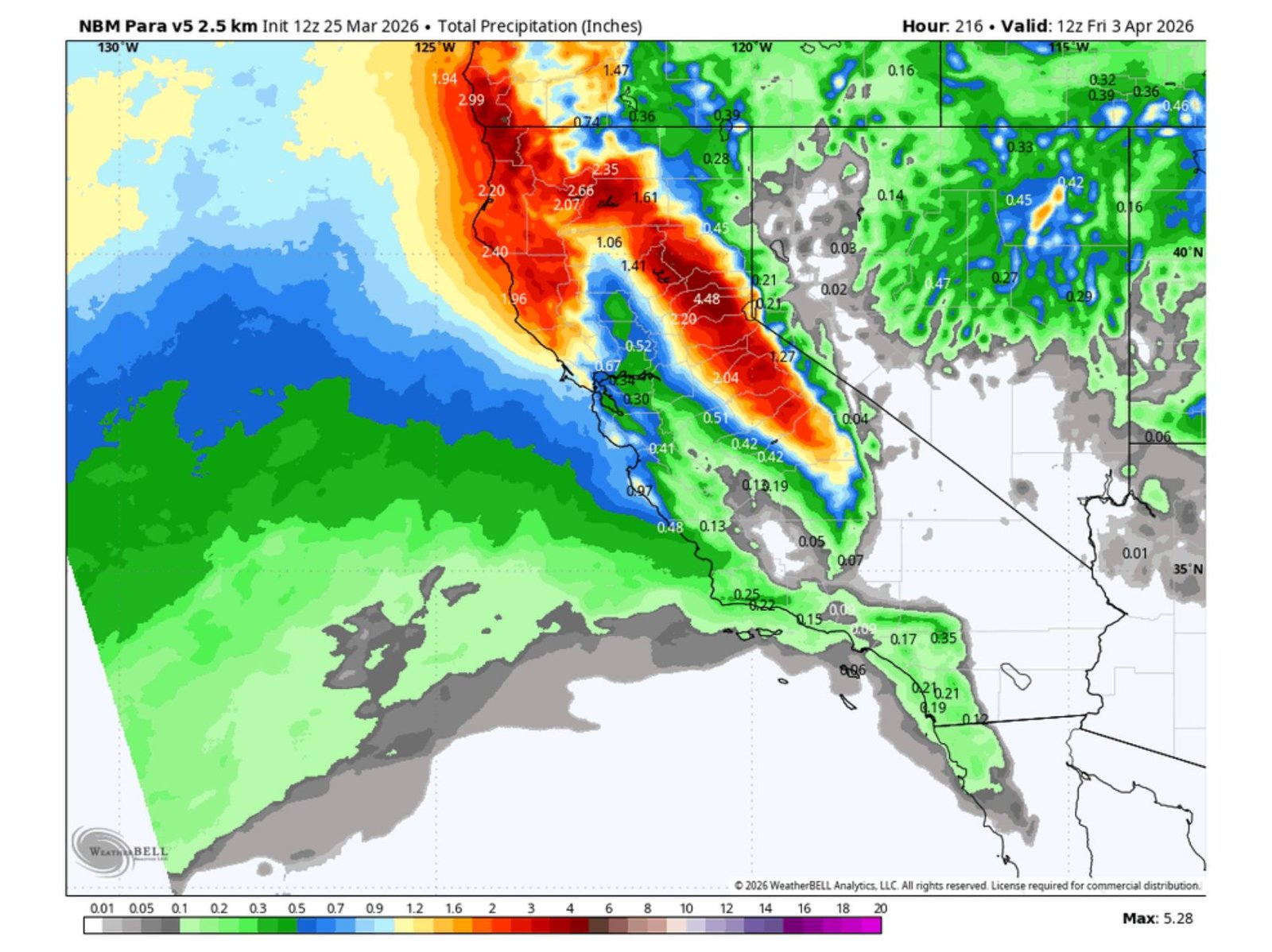
CALIFORNIA — A pair of incoming storm systems is expected to bring a wetter and colder pattern to California, with 1 to 3 feet of snow forecast across the Sierra Nevada mountains between March 31 and April 2. Latest model trends show increasing confidence in heavy precipitation and significant snowfall, particularly across higher elevations.
This developing setup marks a shift toward a more active and impactful late-season winter pattern, with both rain and snow expected across different parts of the state.
Heavy Snow Targets Sierra Nevada Mountains
The most significant impacts are expected across the Sierra Nevada, where forecast models indicate substantial snowfall accumulation ranging from 1 to 3 feet. Higher elevations will see the greatest totals, with snowfall rates potentially increasing as colder air settles into the region.
This type of system is capable of producing travel disruptions, hazardous mountain conditions, and chain controls on major passes, especially during peak snowfall periods. Areas along the central and northern Sierra appear most likely to receive the heaviest snow totals.
The colder trend in recent model runs has increased confidence that precipitation will fall as snow rather than rain in elevated terrain, boosting total accumulation potential.
Widespread Rainfall Across Lower Elevations
While the mountains prepare for snow, much of California’s lower elevations, including parts of the Central Valley and coastal regions, are expected to receive steady rainfall. Forecast maps show a broad swath of precipitation extending from northern California down through central portions of the state.
Rainfall totals could become significant in some areas, particularly where storms track repeatedly over the same region. This raises the possibility of localized flooding or saturated ground conditions, especially in areas that receive multiple rounds of rain.
Southern portions of the state may also see lighter but noticeable precipitation, depending on how far south the storm track extends.
Storm Timing Between March 31 and April 2
The first system is expected to arrive around March 31, followed by a second wave extending into April 2. Together, these systems will create a multi-day precipitation event, increasing the likelihood of both snow accumulation in the mountains and rainfall totals in lower elevations.
Forecast models show consistent signals for continued precipitation over several days, rather than a single short-lived event. This extended duration will play a key role in determining the overall impact of the storms.
As colder air filters into the region, snow levels are expected to drop, allowing snowfall to reach lower elevations than initially expected, further expanding the impact zone.
Model Trends Show Increasing Confidence in Storm Impact
Recent model guidance has been trending wetter and colder, which strengthens the case for significant snowfall totals across the Sierra Nevada. Multiple forecast models show consistent signals of increasing precipitation intensity, particularly along the mountainous spine of California.
Snowfall projections from various models suggest that some areas could see well over a foot of snow, with localized totals approaching or exceeding 2 to 3 feet in favorable terrain.
These trends will continue to be monitored, but current data points toward a high-impact weather event for mountain regions, especially as the storms approach early April.
What This Means for California Residents
For residents and travelers in California, especially those planning to pass through mountain regions, this system could bring challenging conditions and travel delays. Snow-covered roads, reduced visibility, and rapidly changing weather will be key concerns in the Sierra Nevada.
In lower elevations, steady rainfall and cooler temperatures will create a more typical late-season storm environment, though impacts could still include wet roadways and localized flooding concerns.
As this wetter and colder pattern develops, it signals a return to more winter-like conditions in the mountains, even as the calendar moves into April.
As California prepares for this late-season storm system, staying informed will be essential for those traveling or living in affected areas. For more updates on weather patterns, storm systems, and regional forecasts, visit ChicagoMusicGuide.com.