
California Temperature Inversion Traps Fog and Creates Extreme Weather Contrast Across Valley Regions
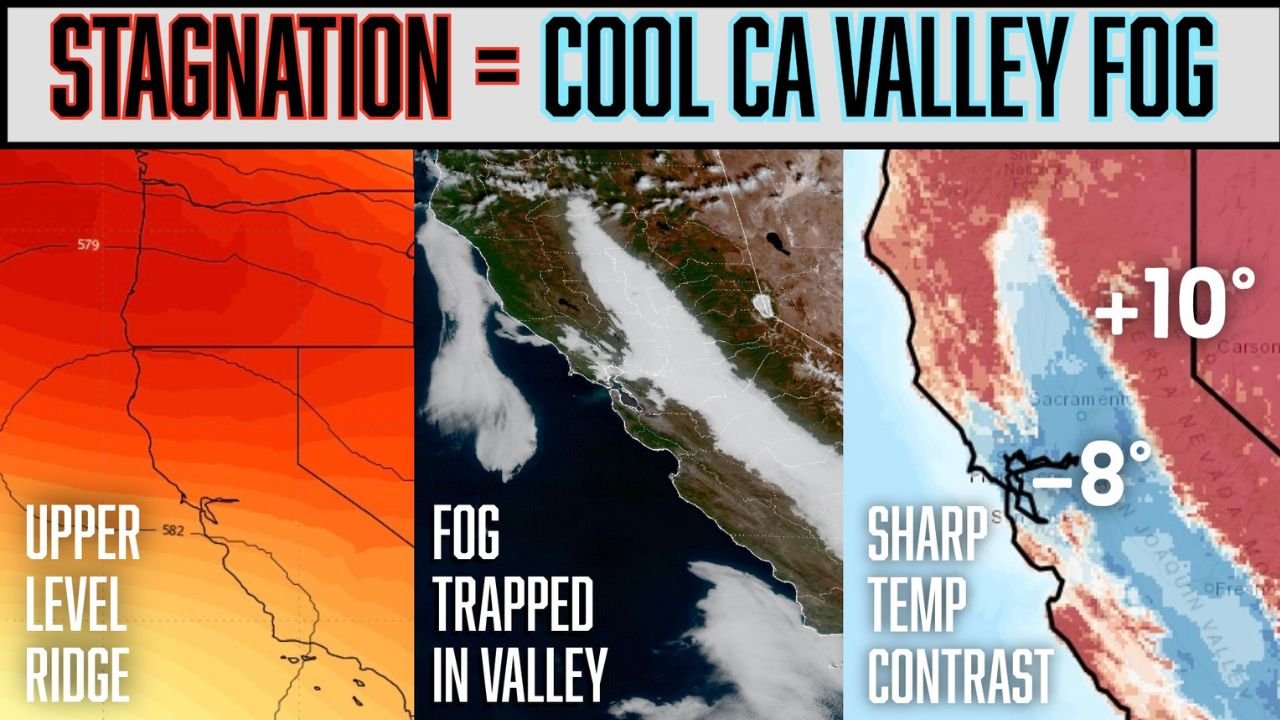
CALIFORNIA — A persistent temperature inversion across the state is trapping dense fog in major valley regions, creating dramatic temperature swings between lowlands and higher elevations.
Meteorologists say an unusually stagnant high-pressure ridge has remained overhead for weeks, preventing normal air mixing and locking cold, moist air near the surface.
As a result, California’s valleys have been running 8 degrees below normal, while surrounding mountains and hills are experiencing conditions over 10 degrees above normal — one of the strongest temperature contrasts seen this month.
Stagnant High Pressure Prevents Air From Mixing
This weather pattern has formed a classic winter inversion:
- Cool air at the surface
- Warmer, unmixed air aloft
- Fog and moisture trapped in the valleys
- Clearer, unusually warm weather at higher elevations
Satellite images show thick fog extending across the Central Valley while hills and coastal regions remain sunny and warm.
Fog Locked in California’s Valleys Brings Unusually Cold Days
The trapped fog has kept valley locations significantly colder than surrounding terrain.
Some effects include:
- Daytime temperatures struggling to warm
- Reduced visibility for drivers
- Slower air movement contributing to air-quality challenges
- Persistent chill even during afternoon hours
Meanwhile, nearby mountain regions are experiencing warmer-than-normal sunshine, creating a temperature gap of nearly 20 degrees over relatively short distances.
Meteorologists Explain Why the Pattern Is So Extreme
This event offers a clear look at how inversions work:
- A stagnant upper-level ridge stops vertical mixing
- Fog becomes locked in the valleys
- Cold surface air cannot disperse
- Warm air above leads to sharp contrasts in temperature
The result is a weather pattern where some California communities are bundled in winter coats while others are enjoying unusually mild December afternoons.
How Long Will the Fog Remain?
Forecast models show the inversion lasting until a strong Pacific storm system enters the region.
Until then, California residents should expect:
- Ongoing dense fog in the valleys
- Continued below-normal temperatures near the surface
- Above-average warmth at higher elevations
- Potential travel impacts during morning and evening hours
Drivers are advised to use caution in fog-prone areas, especially along Central Valley routes.
Stay Updated with ChicagoMusicGuide.com, We will continue to monitor the fog, inversion, and temperature trends across California as the pattern evolves.