
California Winter Storms Dump Over 6 Feet of Sierra Snow as Flooding and Landslides Hit During February 15–19 System
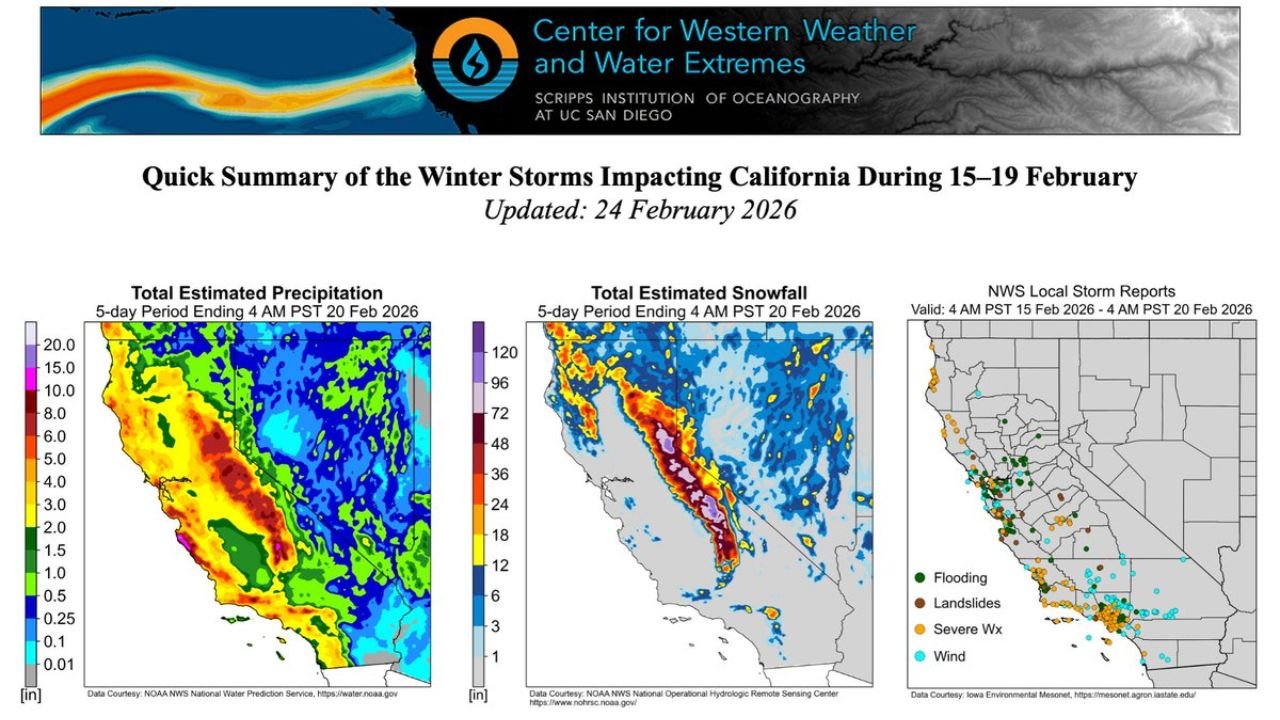
CALIFORNIA — A powerful series of winter storms between February 15 and February 19 delivered extreme precipitation across the state, burying parts of the Sierra Nevada under more than six feet of snow while triggering flooding, landslides, and severe weather reports from the coast to Southern California.
A newly released summary from the Center for Western Weather and Water Extremes at UC San Diego highlights just how widespread and impactful the multi-day storm event became.
Sierra Nevada Sees Exceptional Snowfall Totals
The snowfall map covering the five-day period ending 4 AM PST February 20, 2026, shows a concentrated band of extreme accumulation along the Sierra Nevada mountain range. Several sections of the central and southern Sierra exceeded 72 inches (6 feet) of total snow, with localized areas pushing even higher totals.
The heaviest snowfall corridor stretches from the northern Sierra southward through the central spine of the range. In contrast, lower elevations in the Central Valley saw minimal snow but experienced significant rainfall instead.
These totals mark one of the most impactful February storm sequences for the Sierra this season, dramatically boosting snowpack levels.
Heavy Rainfall Impacts Coastal and Valley Regions
While the mountains were buried in snow, lower elevations faced substantial rainfall. The precipitation map shows widespread totals ranging from 2 to 6 inches across much of coastal and interior California.
Some areas of Central California and portions of the San Francisco Bay Area recorded even higher localized totals. Southern California also saw meaningful rainfall, particularly across parts of Los Angeles County and surrounding regions.
The five-day precipitation graphic indicates a pronounced north-to-south moisture plume, consistent with an atmospheric river setup that delivered sustained rainfall over multiple days.
Flooding and Landslides Reported Statewide
The storm reports graphic covering February 15–20 highlights numerous weather-related incidents across the state.
Clusters of flooding reports appear across Northern and Central California, while landslides were noted in several coastal and foothill regions. Southern California also saw multiple wind-related incidents, especially in areas vulnerable to strong storm gusts.
Additionally, scattered severe weather reports were recorded, though widespread severe outbreaks were not indicated.
The distribution of storm reports underscores how the event was not limited to snowfall alone — communities statewide experienced impacts ranging from urban flooding to debris flows.
Atmospheric River Pattern Drives Multi-Day Impacts
The structure of the precipitation pattern suggests a classic atmospheric river event, where a concentrated band of Pacific moisture feeds into California over several consecutive days.
Such setups often result in:
- Extreme snowfall in high elevations
- Prolonged heavy rainfall in valleys
- Increased risk of flooding and landslides
- Rapid rises in rivers and streams
The February 15–19 sequence fits this pattern, combining heavy mountain snow with persistent rain in lower elevations.
What It Means for California Moving Forward
The substantial Sierra Nevada snowfall provides a major boost to the state’s seasonal snowpack, a critical water resource heading into spring. However, rapid warming in coming weeks could raise concerns about accelerated snowmelt and runoff management.
Meanwhile, saturated soils in parts of Central and Southern California may remain vulnerable to additional storms if new systems arrive before the ground has time to dry.
For now, the five-day event stands as one of the most impactful storm stretches of February 2026, delivering both beneficial snowpack and significant short-term hazards.
As California transitions deeper into late winter, ChicagoMusicGuide.com will continue monitoring major weather systems, snowfall trends, and statewide impacts affecting communities, infrastructure, and regional climate patterns.