
Chicago Opera Theater’s In America’s Embrace Honors Immigrant Composers With Power, Grace, and Purpose
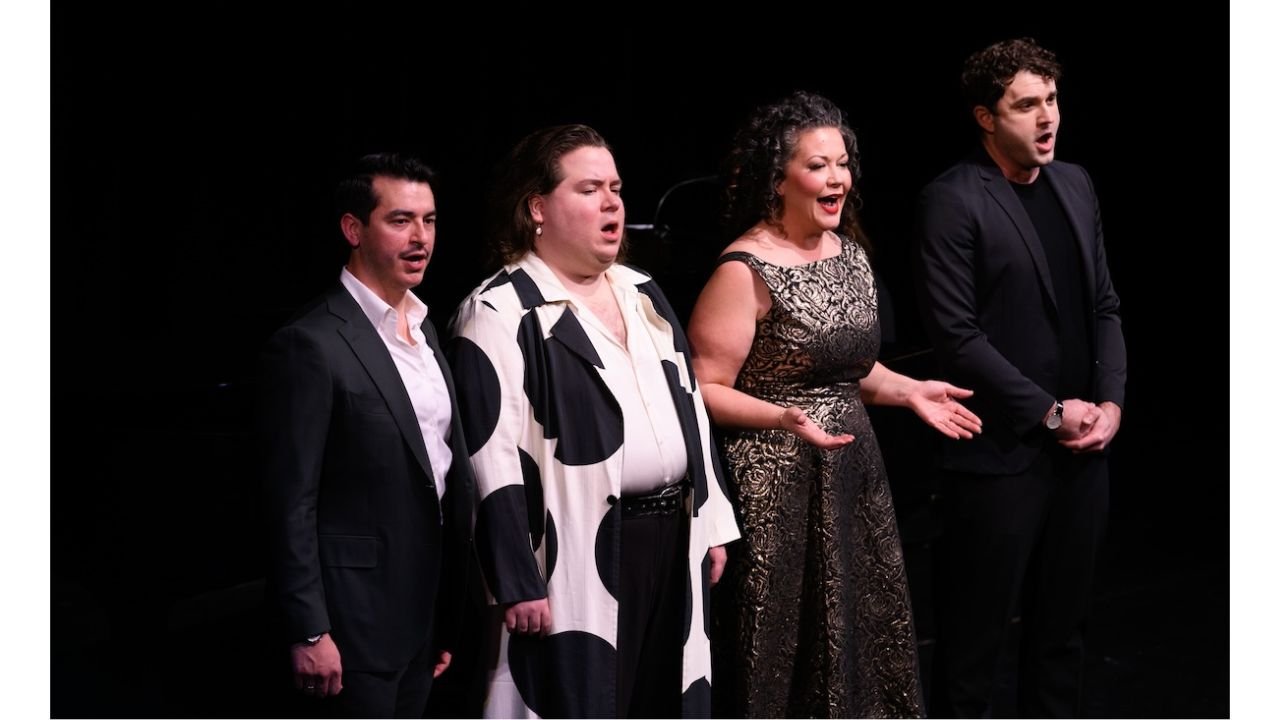
CHICAGO — As the United States approaches the 250th anniversary of its founding, questions about identity, belonging, and broken promises loom large. Chicago Opera Theater confronted those themes directly with In America’s Embrace, a concert devoted to immigrant composers whose music helped define American culture—and whose stories feel newly urgent in the present moment.
Rather than grand staging or spectacle, the evening relied on voice, piano, and history. The result was an emotionally layered program that moved between celebration, melancholy, anger, and hope—often within the same song.
A Program Rooted in American History and Exile
Chicago Opera Theater has built a reputation for programming that interrogates American life, and In America’s Embrace continued that tradition. The concert focused on composers who fled Europe during the rise of fascism or whose immigrant identities shaped their creative voices after arriving in the United States.
Under the direction of pianist and conductor Laurie Rogers, a quartet of singers navigated music spanning Broadway, opera, film, and art song—revealing how deeply immigrant artists are woven into the American musical fabric.
Irving Berlin Opens—and Closes—the Emotional Arc
The program opened with Irving Berlin, whose life story remains one of the clearest examples of immigrant influence on American music. Soprano Tracy Cantin launched the evening with “Let’s Start the New Year Right,” delivering a performance that balanced elegance with warmth. Her unforced soprano and confident stage presence immediately set the tone.
Berlin returned at the end of the program with music that proved devastating in its simplicity. “Give Me Your Tired, Your Poor,” adapted from Emma Lazarus’ New Colossus, landed with unmistakable emotional weight. The closing “God Bless America” drew audible reactions from the audience—not patriotic bombast, but grief, reflection, and longing for the ideals the song once symbolized.
Kurt Weill Takes Center Stage
The heart of the concert belonged to Kurt Weill, whose journey from Weimar Germany to the United States shaped one of the most distinctive musical voices of the 20th century. Five Weill selections traced his evolution and his deep empathy for marginalized communities.
Bass-baritone Alex Soare delivered one of the evening’s most chilling performances with “Let Things Be Like They Always Was” from Street Scene, Weill’s collaboration with Langston Hughes. Soare’s brooding intensity and resonant lower register captured both resignation and quiet fury.
Baritone Schyler Vargas brought dark lyricism to “Johnny’s Song” from Johnny Johnson, while Cantin and Soare shared tender chemistry in “I Remember It Well” from Love Life, revealing Weill’s ability to blend irony, nostalgia, and emotional truth.
A Broad Spectrum of Immigrant Voices
The program extended beyond Weill to composers whose names are less familiar but no less essential. Erich Wolfgang Korngold’s Hollywood-era songs revealed operatic lyricism adapted for the silver screen, with Soare and Cantin offering romantic, polished performances.
Afro-Cuban composer Tania León, a Pulitzer Prize winner, was represented with “Mi Amor Es,” sung with intimacy and warmth. Miguel Sandoval’s “Sin Tu Amor,” performed by Vargas, underscored the concert’s commitment to lifting voices often omitted from mainstream repertory.
After intermission, selections by Igor Stravinsky, Lukas Foss, Aleksandra Vrebalov, and André Previn broadened the scope further. Cantin’s interpretation of “I Want Magic” from Previn’s A Streetcar Named Desire stood out for its psychological depth, capturing Blanche DuBois’ fragile inner world with haunting restraint.
A Performance Built on Music, Not Spectacle
In America’s Embrace succeeded precisely because it avoided excess. There were no elaborate sets, projections, or narrative framing. Instead, the performers trusted the music—and the audience—to do the work.
The singers delivered performances worthy of any major opera house, and Rogers’ piano playing anchored the evening with clarity, drama, and sensitivity.
Why This Concert Mattered
In a time when immigration and national identity are deeply politicized, In America’s Embrace served as a reminder that America’s cultural legacy is inseparable from the voices of immigrants. The concert did not offer easy optimism—but it offered truth, memory, and reverence.
Chicago Opera Theater deserves credit not only for honoring the past, but for insisting that these stories remain part of the present conversation.
In America’s Embrace was performed January 18 at the Studebaker Theater.
For more Chicago opera reviews, concert highlights, and in-depth coverage of performances shaping the city’s cultural scene, visit ChicagoMusicGuide.com. Stay connected with the latest classical music, opera, and live arts events happening across Chicago and beyond.