
Chicago’s 2011 Groundhog Day Blizzard Remembered as One of the Most Powerful Winter Storms in Midwest History
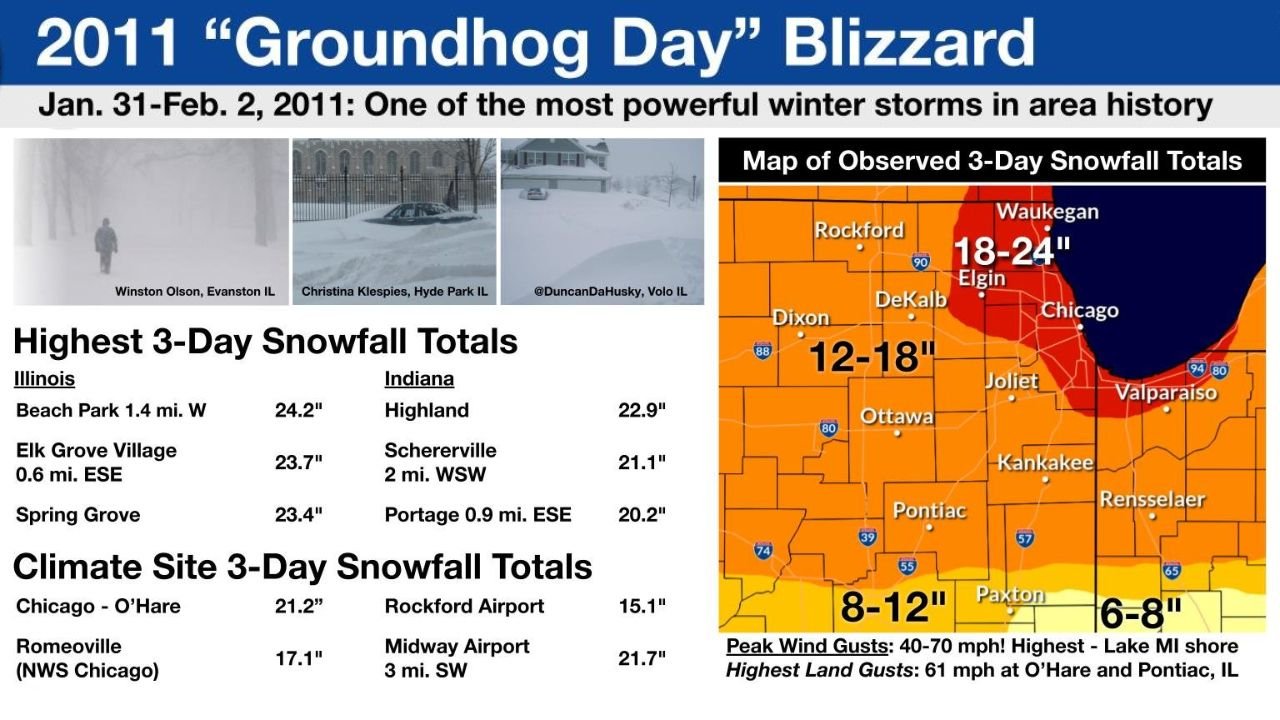
CHICAGO, ILLINOIS — It has been 15 years since the historic Groundhog Day Blizzard of 2011, a storm that paralyzed Chicago and much of northern Illinois with 1 to 2 feet of snow, thundersnow, lightning, and wind gusts over 50 mph, creating conditions rarely seen in the Midwest.
From January 31 through February 2, 2011, the blizzard delivered relentless snowfall and hurricane-force gusts that produced whiteout conditions and snow drifts exceeding five feet, forcing major highways to shut down and leaving thousands stranded across the region.
A Blizzard That Redefined Chicago Winter Storms
The 2011 Groundhog Day Blizzard is still regarded as one of the most powerful winter storms in Chicago-area history. Snow fell continuously for nearly 36 hours, with periods of thundersnow reported as intense snow bands rotated across northeastern Illinois.
Wind gusts frequently exceeded 40 to 50 mph, with peak gusts measured as high as 61 mph at O’Hare Airport and Pontiac, while areas along the Lake Michigan shoreline experienced gusts up to 70 mph. The combination of heavy snowfall and extreme wind created near-zero visibility across the metro area.
Snowfall Totals Reached Historic Levels
Observed snowfall totals from the storm were staggering. Several northern Illinois communities recorded well over two feet of snow, pushing the storm into record territory.
Among the highest reported totals:
- Beach Park, Illinois: 24.2 inches
- Elk Grove Village: 23.7 inches
- Spring Grove: 23.4 inches
- Chicago O’Hare International Airport: 21.2 inches
- Midway Airport: 21.7 inches
- Rockford Airport: 15.1 inches
Snowfall ranged from 18–24 inches across much of the Chicago metro area, with surrounding regions seeing 12–18 inches and even distant locations receiving 8–12 inches, making the storm widespread in both intensity and reach.
Whiteout Conditions and Massive Snow Drifts
What truly set the storm apart was not just the snowfall, but the extreme blowing and drifting snow. Sustained winds turned highways into impassable corridors, and snowdrifts climbed well over five feet high in open and urban areas alike.
Lake Shore Drive became one of the most iconic images of the storm, with vehicles abandoned and buried as drivers were unable to escape worsening conditions. Residential neighborhoods saw cars completely engulfed, sidewalks disappear, and doorways blocked by walls of snow.
A Storm That Shut Down the City
As conditions deteriorated, Chicago effectively shut down. Schools, businesses, and government offices closed for multiple days. Public transit faced severe delays, and emergency responders struggled to reach stranded motorists.
Thousands lost power as heavy, wind-driven snow damaged lines and infrastructure. Airports canceled hundreds of flights, and snow removal efforts continued around the clock for days following the storm.
The blizzard also tested emergency preparedness, prompting long-term changes in snow response planning and public safety messaging across the region.
Why the 2011 Blizzard Still Stands Out
Fifteen years later, the Groundhog Day Blizzard of 2011 remains a benchmark for Midwestern winter storms. Its combination of extreme snowfall, intense wind, lightning, and prolonged duration places it among the most memorable weather events in modern Chicago history.
Meteorologists continue to reference the storm when comparing new winter systems, especially those showing potential for blizzard conditions or widespread disruption.
As winter weather continues to shape life across the Midwest, the legacy of the 2011 Groundhog Day Blizzard serves as a reminder of how quickly conditions can escalate. For more weather history, storm analysis, and regional updates tied to major events and travel impacts, visit ChicagoMusicGuide.com for continued coverage.