
Colorado Snow Cover Hits Record Low Since January 14 as 2026 Season Tracks Below 26-Year Satellite History
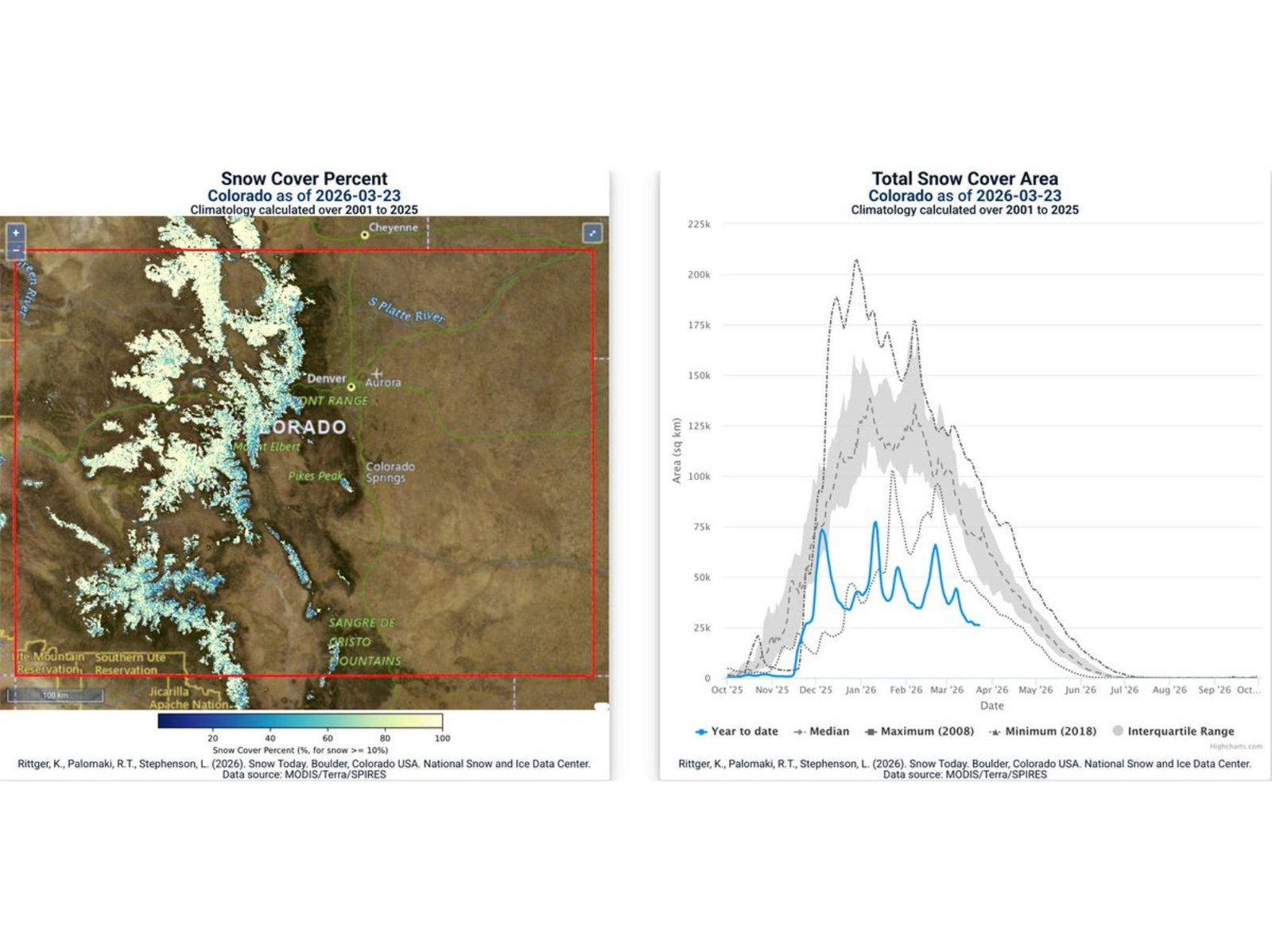
COLORADO — Snow cover across Colorado has been running at record low levels since January 14, 2026, marking the lowest total snow cover area in the 26-year satellite record for this point in the season.
New data as of March 23, 2026 shows significantly reduced snow coverage across much of the state compared to historical norms, continuing a troubling winter trend that has persisted for more than two months.
Snow Cover Percent Map Shows Sparse Mountain Coverage
Satellite analysis of Colorado’s snow cover percent reveals that while snow remains in higher elevations — particularly along portions of the Front Range, central Rockies and parts of the San Juan and Sangre de Cristo Mountains — overall statewide coverage is noticeably limited.
Lower elevations across eastern Colorado, including areas near Denver, Aurora and Colorado Springs, show little to no snow cover. Even in traditionally snow-heavy mountain zones, coverage appears patchy compared to typical late-March conditions.
Total Snow Cover Area Running Well Below Median
A 26-year comparison chart of Colorado’s total snow cover area underscores just how unusual this season has been.
The 2026 year-to-date snow cover line remains near or below the historical minimum for much of the winter. While brief upticks occurred during periodic storm systems, overall snow coverage has consistently trailed the long-term median and fallen significantly short of peak seasonal averages.
Historically, snow cover area across Colorado typically climbs sharply through December and January, often reaching its maximum during mid-winter before gradually tapering off into spring. This year, however, the peak was muted and declined earlier than normal.
Implications for Water Supply
Colorado’s snowpack plays a critical role in supplying water to major river basins across the western United States, including the Colorado River system.
Reduced snow cover can impact:
- Spring runoff timing
- Reservoir levels
- Agricultural water availability
- Drought conditions heading into summer
While snowpack depth and water equivalent measurements provide additional context, total snow cover area remains an important seasonal indicator.
What Happens Next?
Late-season snowstorms in April can sometimes help recover deficits, especially in higher elevations. However, as of late March, the statewide snow footprint remains historically low.
With warmer temperatures increasingly common in spring, opportunities for meaningful recovery typically become narrower as the season progresses.
Colorado will continue to be closely monitored in the coming weeks as the state transitions toward peak runoff season.
ChicagoMusicGuide.com will provide updates as new snow and water supply data becomes available.