
Colorado Wyoming Nebraska and Kansas Face Historic Blizzard Drought as Nearly One Year Passes Without Major Winter Storm
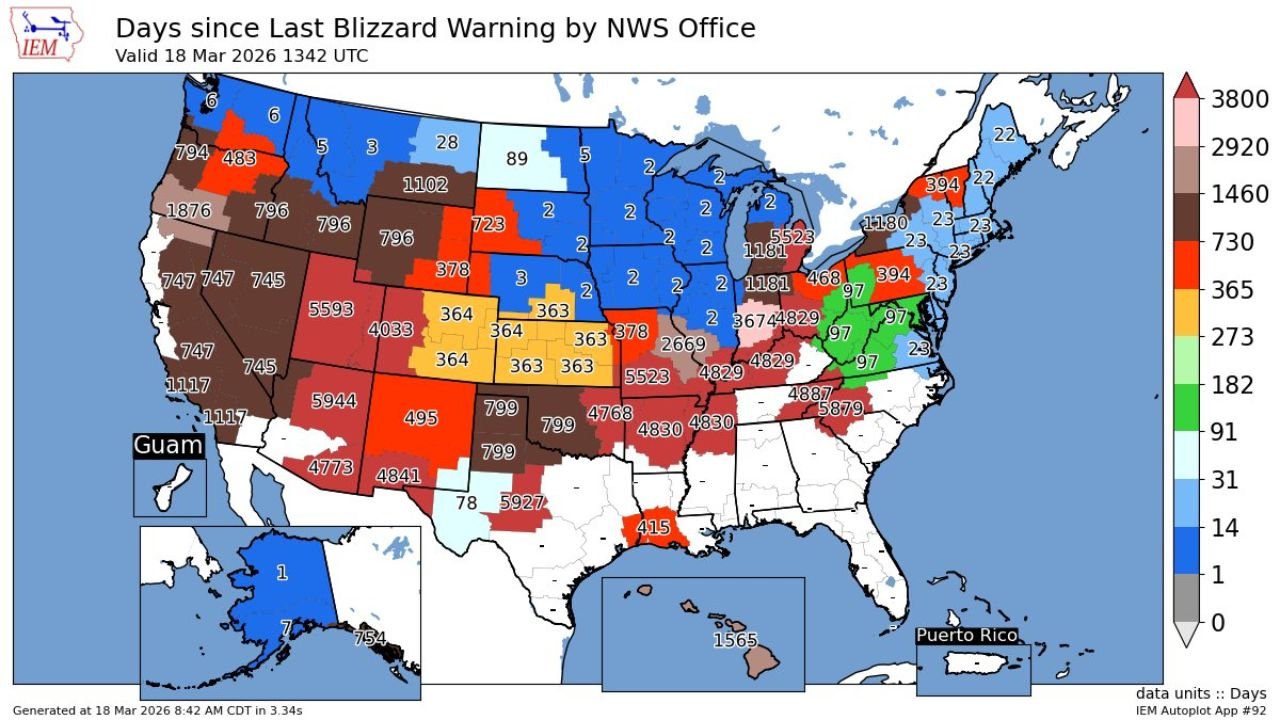
COLORADO — A striking and highly unusual winter trend is unfolding across the central United States, as Colorado approaches an entire year without a single blizzard warning, a rare milestone that is raising concerns among meteorologists and climate observers alike.
According to the latest data, it has now been 364 days since the last blizzard warning was issued in Colorado, and forecasts indicate no immediate return of blizzard conditions, even as winter draws to a close.
Central U.S. Blizzard Drought Expands Beyond Colorado
Colorado is not alone in this developing pattern. Large portions of the central Plains and Rockies, including:
- Wyoming
- Nebraska
- Kansas
are also experiencing extended stretches without significant blizzard activity.
Much of this region is showing 300+ days since the last blizzard warning, highlighting a widespread suppression of major winter storm systems across the heart of the country.
Sharp Contrast With Northern Tier States
While the central U.S. has gone unusually quiet, northern states including:
- North Dakota
- Minnesota
- Wisconsin
- Michigan
have seen far more frequent winter storm activity, with some areas reporting just a few days since their last blizzard warning.
This stark contrast underscores a split winter pattern, where storm tracks have consistently favored the northern tier while bypassing the central Plains.
Western States Also Showing Long Gaps
Parts of the western U.S., particularly:
- Utah
- Nevada
- California
are also showing extended gaps since their last blizzard warnings, with some regions recording hundreds to even thousands of days without qualifying events.
This suggests a broader shift in storm patterns, with fewer systems producing the intense conditions required for official blizzard criteria.
What’s Driving the Blizzard Drought
Meteorologists point to a combination of factors behind this prolonged lull:
- Storm tracks repeatedly shifting north of the central U.S.
- Persistent ridging patterns limiting strong winter systems
- Warmer-than-average conditions reducing snowstorm intensity
Together, these elements have created an environment where classic Plains blizzards have struggled to develop.
Impacts of a Blizzard-Free Winter
While fewer blizzards may seem beneficial on the surface, the absence of these storms can have downstream effects, including:
- Reduced snowpack in key regions
- Potential impacts on water supply heading into spring
- Altered soil moisture levels across agricultural zones
Blizzards, despite their hazards, often play a role in replenishing water resources across the Plains and Rockies.
Winter Ending Without a Major Storm Comeback
With the calendar moving deeper into March, the window for significant blizzard activity is rapidly closing.
Forecast trends show no major systems capable of producing widespread blizzard conditions in the coming days, meaning Colorado could officially surpass the one-year mark without such an event.
A Rare and Noteworthy Climate Signal
Going nearly a full year without a blizzard warning in a state like Colorado is highly unusual and will likely be studied as part of broader climate and seasonal pattern analysis.
As winter fades, this event stands out as a reminder that weather extremes aren’t always about what happens—but sometimes about what doesn’t.
For continued coverage of major U.S. weather patterns and anomalies, stay with ChicagoMusicGuide.com.