
Florida, Alabama, Mississippi, Louisiana, Texas, and California Under Marginal Severe Weather Risk as 2026 Begins
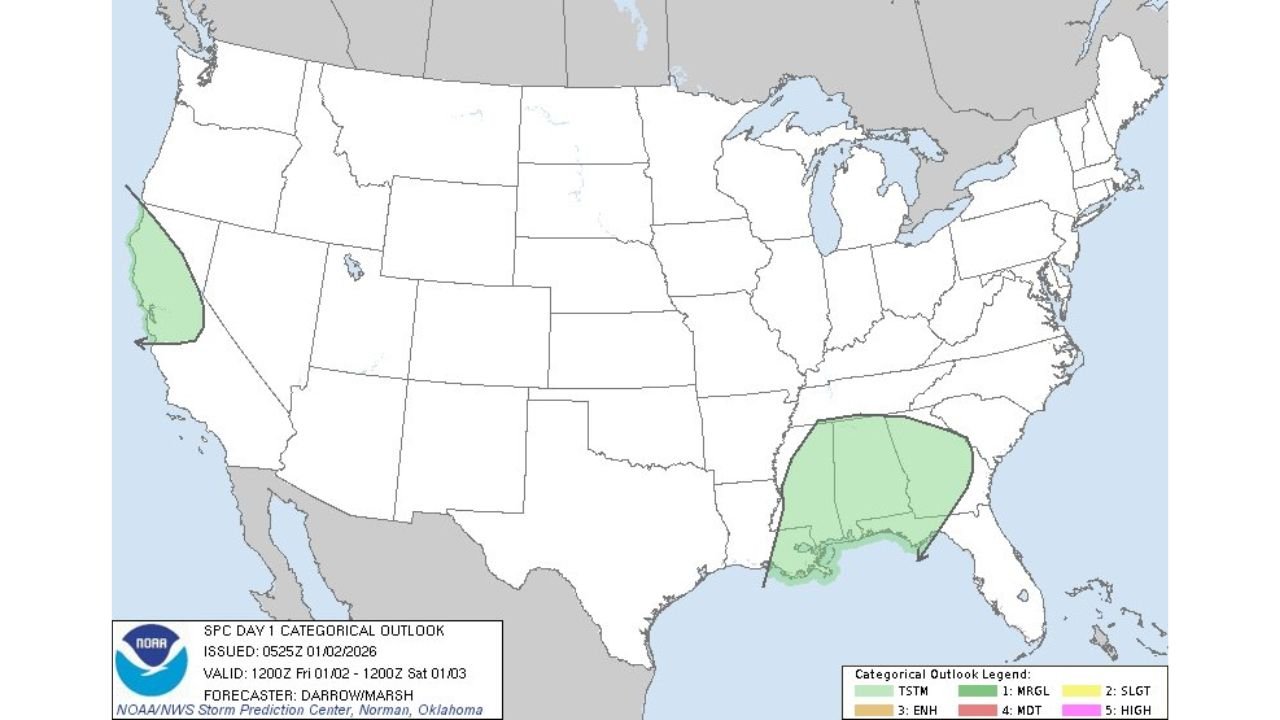
FLORIDA — A developing storm pattern to start 2026 is placing parts of the Gulf Coast and coastal California under a marginal risk for severe weather, according to the latest Day 1 outlook data. While widespread severe storms are not expected, conditions are coming together for isolated thunderstorms capable of producing gusty winds, brief heavy rain, and localized impacts, especially in coastal and near-coastal areas.
What the Outlook Data Shows
The shaded green areas on the outlook map indicate a Level 1 (Marginal Risk) zone. This category is typically issued when atmospheric instability and wind patterns support isolated strong storms, but not a widespread outbreak.
Based on the data:
- Gulf Coast states from eastern Texas through Louisiana, Mississippi, Alabama, and much of Florida are included.
- A separate marginal risk area is highlighted along parts of coastal California.
These areas are being influenced by moisture surges and upper-level disturbances, which can spark thunderstorms even outside peak severe weather season.
Gulf Coast: Isolated Storms, Heavy Downpours Possible
Across the Gulf Coast, warm, humid air near the surface combined with upper-level energy is expected to trigger scattered storms. While most locations will see nothing more than rain and occasional lightning, a few storms could briefly intensify.
Potential impacts include:
- Localized heavy rainfall, leading to ponding on roads
- Isolated strong wind gusts
- Brief disruptions to travel, especially near the coast
Severe weather coverage is expected to remain limited and spotty, but residents should still stay weather-aware.
California: Coastal Showers and Embedded Thunderstorms
In California, the marginal risk is tied to a passing Pacific disturbance. This setup favors coastal showers with embedded thunderstorms, particularly near shoreline communities.
While tornadoes or widespread severe weather are not expected, some storms may produce:
- Small hail
- Short bursts of heavy rain
- Gusty onshore winds
These conditions can be impactful in urban coastal areas where drainage is limited.
Timing and Confidence Level
The outlook covers a short-term window, with the greatest chances for stronger storms occurring during peak heating hours and evening periods. Confidence remains moderate, as marginal risk events can be sensitive to small atmospheric changes.
Most areas within the highlighted zones will not experience severe weather, but the environment supports just enough instability for isolated issues.
What to Watch Next
Forecasters will continue refining the outlook as higher-resolution data becomes available. If storm coverage increases or conditions become more favorable, risk levels could be adjusted, but for now, impacts are expected to remain limited.
As always, staying informed through local forecasts and alerts is the best way to prepare for rapidly changing conditions.
Stay tuned to ChicagoMusicGuide.com for continued weather updates and breaking alerts as this early-2026 storm pattern evolves.