
Florida Cold Snap Triggers Iguana Advisory as Overnight Temperatures Drop Into the 30s Across Central and Northern Areas
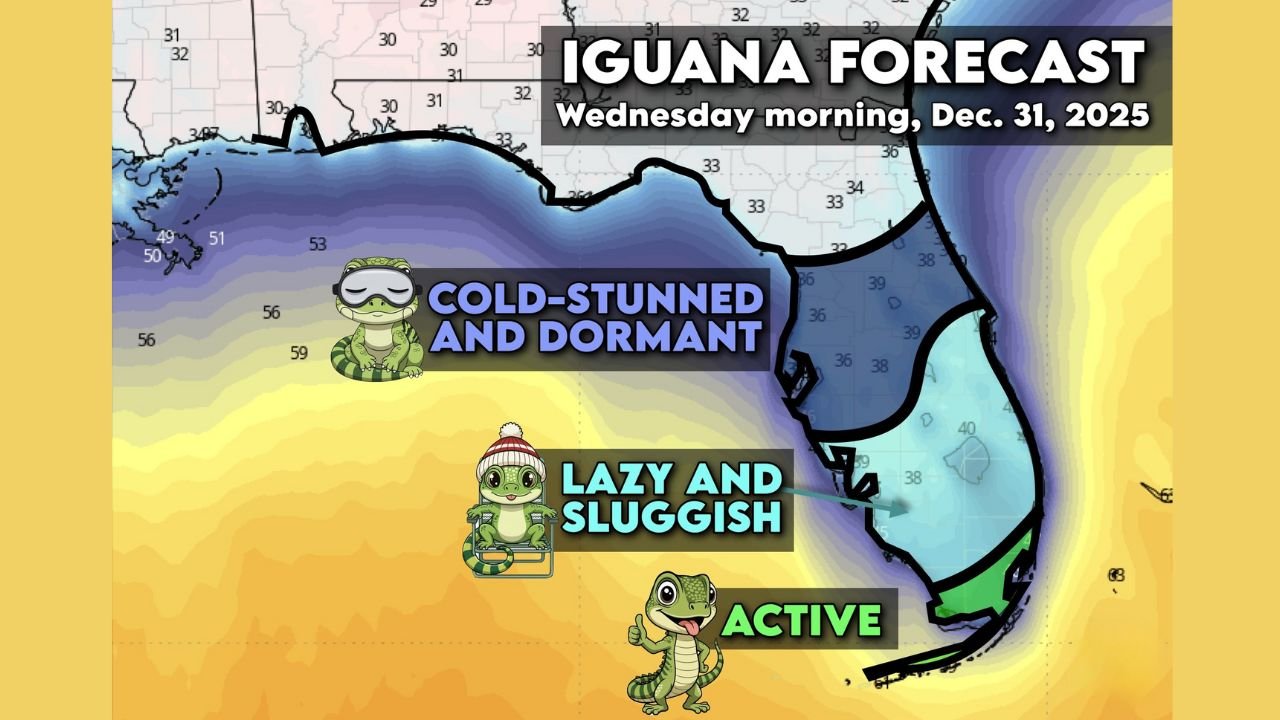
FLORIDA — A sharp overnight temperature drop late Tuesday into early Wednesday, December 31, is prompting an Iguana Advisory across parts of Florida, as cold-sensitive reptiles are expected to become sluggish, dormant, or temporarily immobilized in colder conditions.
According to the temperature forecast shown in the data, much of central and northern Florida will see early-morning temperatures in the upper 30s to lower 40s, with the coldest pockets dipping close to freezing north of the I-4 corridor. These conditions are sufficient to trigger what meteorologists call “cold-stunning” in iguanas.
Why Iguanas Are Affected by This Cold Snap
Iguanas are cold-blooded reptiles, meaning they rely entirely on external heat sources to regulate their body temperature. When air temperatures fall into the 40s, iguanas become slow and lethargic. Below 40°F, they can enter a dormant, immobile state and may lose their grip while resting in trees.
The forecast graphic clearly shows a temperature gradient across Florida:
- Northern Florida: Cold-stunned and dormant conditions likely
- Central Florida (including the I-4 corridor): Lazy and sluggish behavior expected
- Southern Florida: Iguanas remain mostly active
Areas Most Impacted by the Iguana Advisory
Based on the temperature shading and values in the forecast data, the most impacted areas include:
- Central Florida along the I-4 corridor, where several hours of upper-30s to low-40s temperatures are expected
- Interior northern peninsula regions, where colder overnight lows increase the risk of dormancy
- Counties with documented iguana presence, including Alachua, Highlands, Hillsborough, Indian River, and St. Lucie
Farther south — from Tampa Bay toward Cape Canaveral and Lake Okeechobee — temperatures remain marginally warmer, meaning iguanas will likely appear sluggish but not fully dormant.
What Residents Should Expect Wednesday Morning
During the coldest hours just before sunrise Wednesday:
- Iguanas may fall from trees, fences, or rooftops
- Immobile iguanas may appear injured or dead but often recover once temperatures rise
- Wildlife officials advise leaving iguanas alone and allowing them to warm naturally
As daytime temperatures rebound, most affected iguanas are expected to regain mobility.
How Long Will This Pattern Last?
This advisory is tied specifically to the overnight and early-morning cold window shown in the forecast. No prolonged or extreme cold outbreak is indicated beyond this short-lived event, and warmer daytime conditions should quickly improve reptile activity levels.
Have you seen cold-stunned iguanas in your area this morning? Share what you’re noticing and stay updated on unusual weather impacts across the country by following ChicagoMusicGuide.com for the latest weather-driven stories and advisories.