
Illinois, Indiana and Michigan Highlighted in Day 2 Tornado Outlook as Chicago and Great Lakes Region Face Increasing Risk With Potential Strong Storm Upgrade
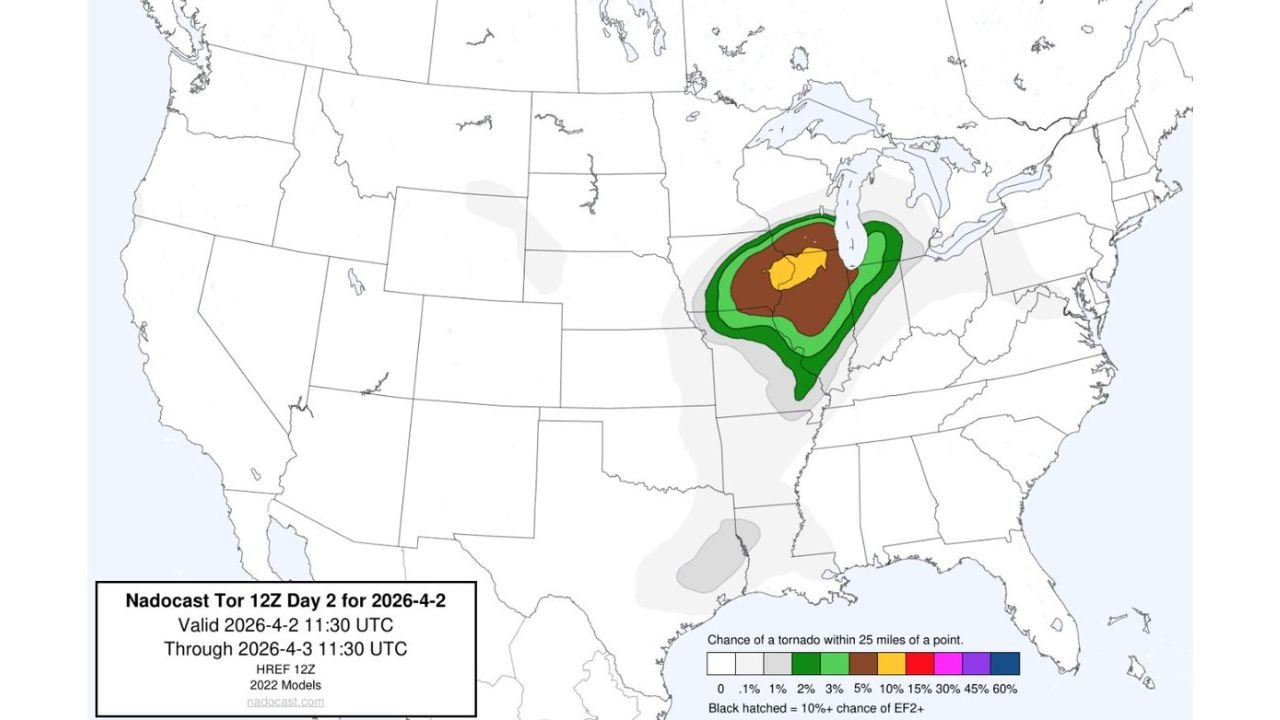
ILLINOIS, INDIANA, MICHIGAN — A developing Day 2 severe weather outlook is placing the Midwest and Great Lakes region, including Chicago, under increasing concern as forecast models highlight a growing tornado risk corridor stretching from Illinois into Indiana and Michigan. Current projections suggest that conditions may continue to intensify, with the potential for an upgrade to higher tornado probabilities as the event approaches.
Core Tornado Risk Zone Expands Across Illinois Into Indiana and Michigan
Forecast guidance shows a concentrated area of elevated tornado potential centered over Illinois, extending into Indiana and southern Michigan. Cities including Chicago, Peoria, Indianapolis, Detroit, and surrounding communities fall within this highlighted zone.
Within this region, the most intense area—indicated by higher probability shading—is positioned across central and northern Illinois into northwest Indiana, suggesting this corridor could see the greatest likelihood of tornado development. The risk then extends northeast toward Detroit and parts of southern Michigan, maintaining a consistent threat as storms track across the Great Lakes region.
This setup reflects a classic Midwest severe weather pattern, where storm systems organize along a favorable track and maintain strength as they move from the central Plains into the Great Lakes.
Potential for Strong Tornadoes Raises Concern Across the Midwest
One of the key takeaways from this outlook is the increasing potential for stronger tornadoes, not just isolated weak events. Forecast signals suggest that atmospheric conditions may support more intense storm structures, particularly if instability and wind shear continue to strengthen.
There is growing indication that tornado probabilities could be upgraded further, possibly reaching a 10 percent significant (EF2+) threshold, which would mark a more serious level of concern across the region. While this has not yet been officially issued, the trend in the data suggests confidence is building in a higher-end severe weather setup.
This raises the stakes for cities like Chicago and Indianapolis, where even a single strong tornado could have widespread impacts due to population density and infrastructure.
Storm Track and Timing Favor Widespread Impact From Illinois to the Great Lakes
The projected storm track shows systems developing to the west and moving east-northeast across Illinois into Indiana and Michigan, following a path that aligns with the core tornado risk zone.
This movement pattern increases the likelihood that storms will remain organized and sustained, rather than weakening quickly. As a result, multiple areas across the Midwest could experience sequential severe weather impacts, including tornadoes, damaging winds, and large hail.
The timing of this setup—likely during the afternoon into evening hours—further enhances the risk, as peak daytime heating will provide the energy needed for storms to intensify rapidly.
Why Chicago and Surrounding Areas Should Pay Close Attention
For Chicago and the surrounding Illinois region, this outlook represents a notable increase in severe weather potential compared to typical spring events. Being positioned near the center of the risk zone means that local conditions could become particularly favorable for tornado development.
Additionally, the extension of the risk into Indiana and Michigan suggests that this is not a localized event but rather a regional severe weather outbreak scenario, where multiple states could be impacted within a relatively short time frame.
Residents across Illinois, Indiana, and Michigan should begin monitoring updates closely, as even small changes in the storm track could shift the highest risk areas slightly north or south.
As this Day 2 severe weather threat continues to evolve across the Midwest and Great Lakes, staying informed will be critical. For ongoing updates on tornado risks, storm developments, and regional forecasts, visit ChicagoMusicGuide.com.