
Indiana and Ohio Face Narrow Tornado Risk Corridor Thursday Evening as Chicago, Illinois Region Watches Storm Development
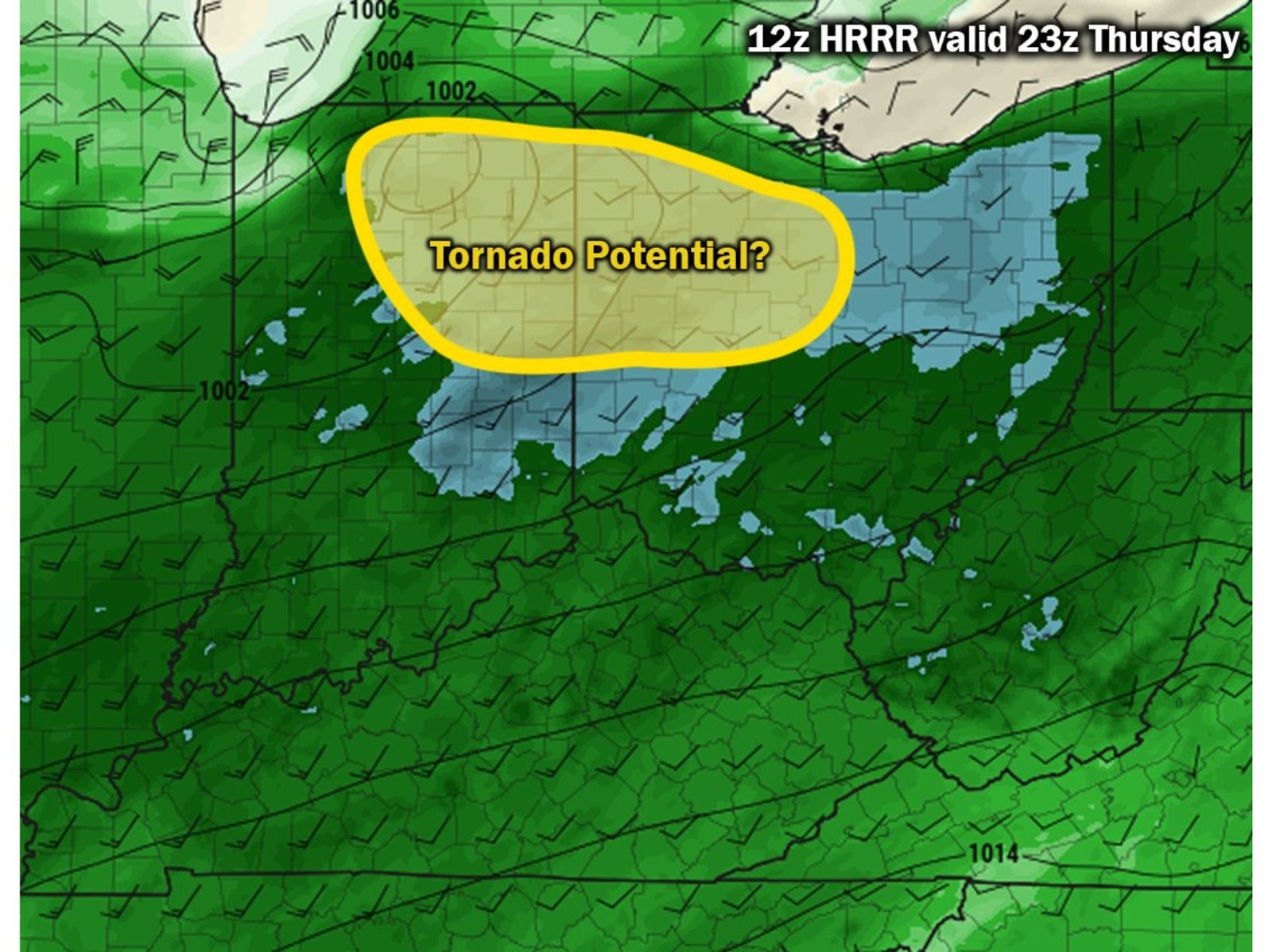
ILLINOIS — A narrow corridor of enhanced tornado potential is being monitored for Thursday evening across parts of northeast Indiana and northwest Ohio, as storms developing near the Chicago, Illinois region move eastward into a more favorable environment. While the overall risk remains uncertain, conditions could briefly support all severe weather hazards if storms organize properly.
Forecasters note that this setup depends heavily on how storms evolve earlier in the day, with several limiting factors that could reduce the overall threat.
Focused Tornado Potential Across Indiana and Ohio
The area of greatest concern appears to stretch across northeast Indiana into northwest Ohio, including regions near Fort Wayne and areas west of Toledo. This zone sits within a narrow atmospheric window where conditions may briefly align for tornado development during the early evening hours.
If storms are able to remain surface-based and organized, they could take advantage of localized wind patterns and instability, increasing the chance for isolated tornado activity. This type of setup often produces short-lived but potentially impactful storms, especially within confined geographic areas.
The presence of a 5% tornado probability with a conditional significant risk indicator reflects the uncertainty but also highlights that a few stronger storms cannot be ruled out.
Uncertainty Hinges on Storm Development Factors
Despite the potential, there are important factors that could limit the overall threat. One concern is whether storms will initiate ahead of the main boundary, as delayed or weak development could reduce the chances of severe weather reaching peak intensity.
Another limiting factor is overmixing of the atmosphere, which can reduce the moisture and instability needed for storms to strengthen. If this occurs, storms may struggle to maintain the structure required for tornado production.
These uncertainties mean that while the environment could briefly support severe weather, the actual outcome will depend on how conditions evolve throughout the afternoon and early evening.
Chicago Region Plays Role in Early Storm Evolution
The Chicago, Illinois region will likely serve as the starting point for storm development before activity shifts eastward into Indiana and Ohio. Early storms forming across northern Illinois will determine how the overall system evolves as it moves into a more favorable environment later in the day.
If storms develop strongly near Chicago and maintain intensity, they could carry that energy into Indiana and Ohio, increasing the risk of severe weather. However, if storms weaken or fail to organize early, the downstream threat may be significantly reduced.
This makes the early afternoon storm behavior across Illinois a key factor in determining the severity of conditions later in the evening.
All Hazards Possible If Conditions Align
If storms are able to fully develop and maintain strength, the environment could support all severe weather hazards, including damaging winds, large hail, and isolated tornadoes. The combination of wind shear and available instability creates a scenario where even a single well-organized storm could produce notable impacts.
However, this remains a conditional setup, meaning that not all areas within the risk zone will experience severe weather. The threat is expected to be localized and dependent on storm evolution, rather than widespread.
Residents across Indiana and Ohio, especially in the highlighted corridor, should remain alert during the early evening hours, when conditions are most favorable for severe storms.
As this evolving weather setup unfolds across the Midwest, staying informed will be critical for communities from Chicago, Illinois to Indiana and Ohio. For continued updates on storm development, tornado risks, and regional weather alerts, visit ChicagoMusicGuide.com.