
Laredo, Texas Soars to 105°F While Ray, Minnesota Plunges to -28°F as February 2026 Delivers Stunning Temperature Extremes Across the U.S.
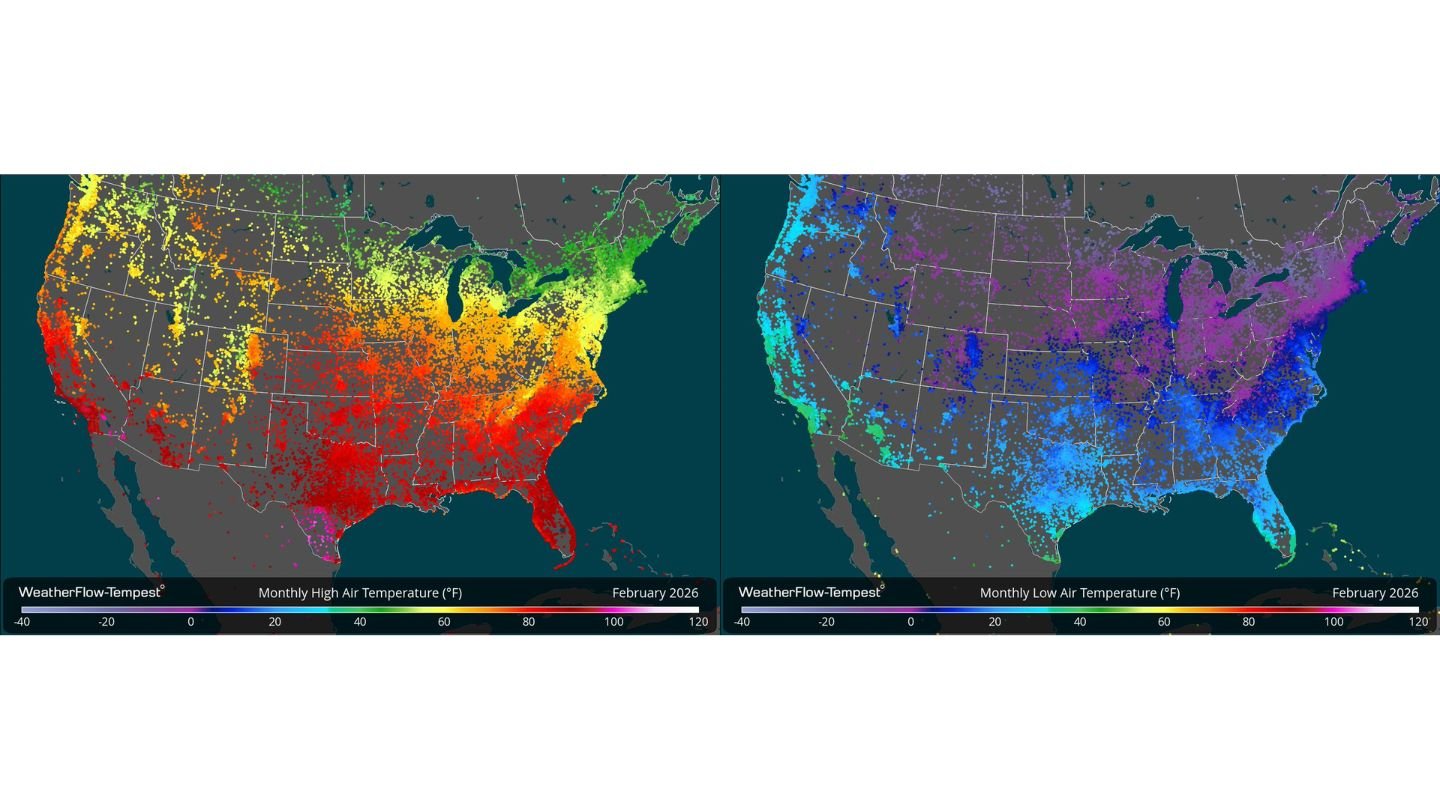
UNITED STATES — February 2026 delivered a dramatic display of temperature extremes across the country, with the highest recorded temperature reaching 105°F in Laredo, Texas, while the coldest reading plunged to -28°F in Ray, Minnesota. The nationwide contrast underscores just how volatile late-winter weather patterns were from the southern border to the northern Plains.
Data collected across a broad weather monitoring network shows a striking divide between persistent warmth in the South and intense Arctic intrusions across the Upper Midwest.
Record-Setting Heat in South Texas
The standout warmth of February came from Laredo, Texas, where thermometers peaked at 105 degrees Fahrenheit. That reading places South Texas among the hottest spots in the nation during the month and highlights how entrenched warmth dominated portions of the Gulf Coast and Deep South.
Monthly high temperature mapping shows widespread readings above 80°F and 90°F stretching from Texas across the Gulf States and into Florida, with clusters of intense heat across southern Texas. This pattern suggests repeated ridging or prolonged warmth influencing the southern tier of the country.
Such heat levels in February are highly unusual and point to strong atmospheric setups favoring above-normal temperatures across the southern Plains and Lower Mississippi Valley.
Deep Freeze Across the Northern Plains
In stark contrast, Ray, Minnesota recorded the coldest temperature in the network at -28°F, illustrating how Arctic air masses continued to plunge southward into the Upper Midwest during the month.
Low-temperature mapping reveals widespread sub-zero readings across:
- Minnesota
- North Dakota
- Wisconsin
- Portions of the Upper Great Lakes region
Many northern locations experienced prolonged cold snaps, with temperatures frequently dipping below zero. The purple and blue shading across the northern states highlights just how expansive the deep freeze was.
The dramatic 133-degree difference between the monthly high in Texas and the monthly low in Minnesota emphasizes the scale of atmospheric variability during February.
Sharp North–South Temperature Gradient
The side-by-side mapping of monthly highs and lows illustrates a pronounced temperature gradient across the United States. While the southern tier baked under unseasonable warmth, the northern Plains and Upper Midwest endured sustained winter conditions.
States such as Illinois, Iowa, Nebraska, and Missouri sat near the battleground between cold northern air and southern warmth, experiencing fluctuating conditions depending on storm tracks and frontal boundaries.
This contrast is typical during transitional winter months, but the magnitude of February’s extremes stands out.
What February 2026 Reveals About Seasonal Volatility
February’s extremes demonstrate how dynamic late-winter weather can be across the United States. Persistent ridging over the southern states likely contributed to the extraordinary warmth in Texas, while Arctic intrusions maintained winter’s grip across northern states.
The combination of:
- Triple-digit heat in South Texas
- Deep sub-zero cold in Minnesota
- A massive north–south temperature divide
made February 2026 one of the more meteorologically striking winter months in recent memory.
As March unfolds, forecasters will be watching whether these extreme contrasts continue or begin to moderate with the seasonal shift toward spring.
For more nationwide weather summaries, extreme temperature updates, and regional climate insights, visit ChicagoMusicGuide.com for continuing coverage.