
Maryland’s Ocean City Earns ‘Blizzard Capital’ Title After Third Blizzard Warning Since 2018 While Washington, DC Sees None
OCEAN CITY, MARYLAND — While Washington, DC has not seen a single blizzard warning since January 22–24, 2016, coastal Ocean City, Maryland has quietly emerged as the state’s unlikely “Blizzard Capital.” Since 2018, the beach town has been placed under three official blizzard warnings, most recently during the February 22, 2026 Nor’easter.
The numbers tell a striking story: Washington, DC – 0 blizzard warnings since 2017. Ocean City, MD – 3 blizzard warnings.
Three Blizzard Warnings in Eight Years
Ocean City was under blizzard conditions during the following storms:
- February 22, 2026 – 10.5 inches of snow
- January 29, 2022 – 12.0 inches of snow
- January 4, 2018 – 11.0 inches of snow
Each event met official blizzard criteria, not just snowfall totals but also sustained winds and visibility reductions.
Meanwhile, the nation’s capital has not received a blizzard warning in over a decade. The last warning for Washington, DC was issued during the historic January 2016 Blizzard, marking a sharp contrast between inland and coastal Mid-Atlantic weather patterns.
The Blizzard of 2026: Coastal Focus Again
During the Blizzard of 2026, radar and precipitation maps showed the strongest snow bands hugging the Delmarva Peninsula, with Ocean City positioned directly in the coastal snow and wind axis.
While snowfall totals in Ocean City reached 10.5 inches, the storm’s true impact came from powerful coastal winds and reduced visibility — hallmark characteristics of blizzard criteria.
Further inland, including parts of Washington, DC, snowfall occurred but without the sustained whiteout conditions necessary to trigger official blizzard warnings.
This pattern mirrors previous coastal Nor’easters where the heaviest wind-driven snow aligns just east of the Interstate 95 corridor.
2022 and 2018: A Pattern Emerges
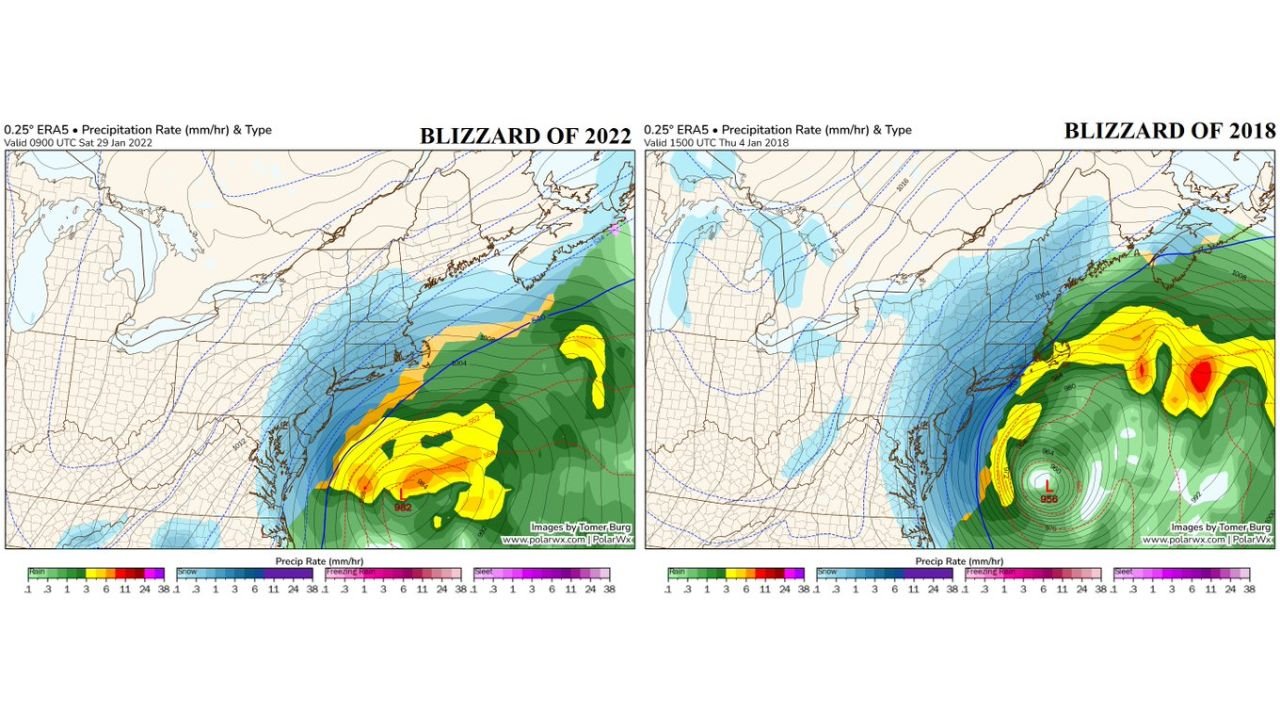
The January 29, 2022 Blizzard delivered approximately 12 inches of snow to Ocean City, with a powerful offshore low pressure system intensifying near the coastline. Precipitation rate maps from that storm show strong deformation bands just offshore, feeding moisture into coastal Maryland.
Similarly, the January 4, 2018 Blizzard — often remembered for its rapidly strengthening coastal low — placed Ocean City under blizzard warnings with 11 inches of accumulation and intense wind gusts.
Both storms featured classic coastal cyclogenesis, where ocean enhancement amplifies snowfall and wind impacts closer to the Atlantic shoreline.
In contrast, inland cities such as Washington, DC remained either on the western fringe of the heaviest snow shield or experienced lower wind impacts, preventing blizzard classification.
Why Ocean City Gets Hit Harder
Meteorologists point to geography. Ocean City, Maryland sits directly along the Atlantic coast, making it highly vulnerable when Nor’easters track just offshore.
When low pressure deepens near the Mid-Atlantic coast:
- Coastal communities receive enhanced snowfall from Atlantic moisture.
- Strong pressure gradients generate higher wind speeds.
- Whiteout conditions become more likely.
Even when snowfall totals are in the 10–12 inch range, the combination of wind and visibility reductions can meet blizzard warning criteria — something less common farther inland.
This explains how Ocean City has recorded three blizzard warnings since 2018, while nearby major metro areas have recorded none.
A Surprising Blizzard Leader in Maryland
The idea that a beach town could be Maryland’s most frequently warned blizzard location may surprise many residents. Yet data since 2017 supports that conclusion.
The comparison is stark:
- Washington, DC: 0 blizzard warnings since 2017
- Ocean City, Maryland: 3 blizzard warnings since 2018
As the 2026 Nor’easter continues to be analyzed, Ocean City once again finds itself at the center of coastal winter storm discussions.
With climate variability and evolving storm tracks, the Mid-Atlantic coastline may continue to see sharper winter extremes than inland areas.
As Maryland residents reflect on the latest blizzard, Ocean City’s growing reputation as a coastal snow hotspot is becoming harder to ignore. For continued coverage of major winter storms, regional weather trends, and Mid-Atlantic impacts, visit ChicagoMusicGuide.com.