
Michigan, Ohio, Wisconsin, Minnesota, and New York Open 2026 With Great Lakes Ice Near Seasonal Average but Unevenly Distributed
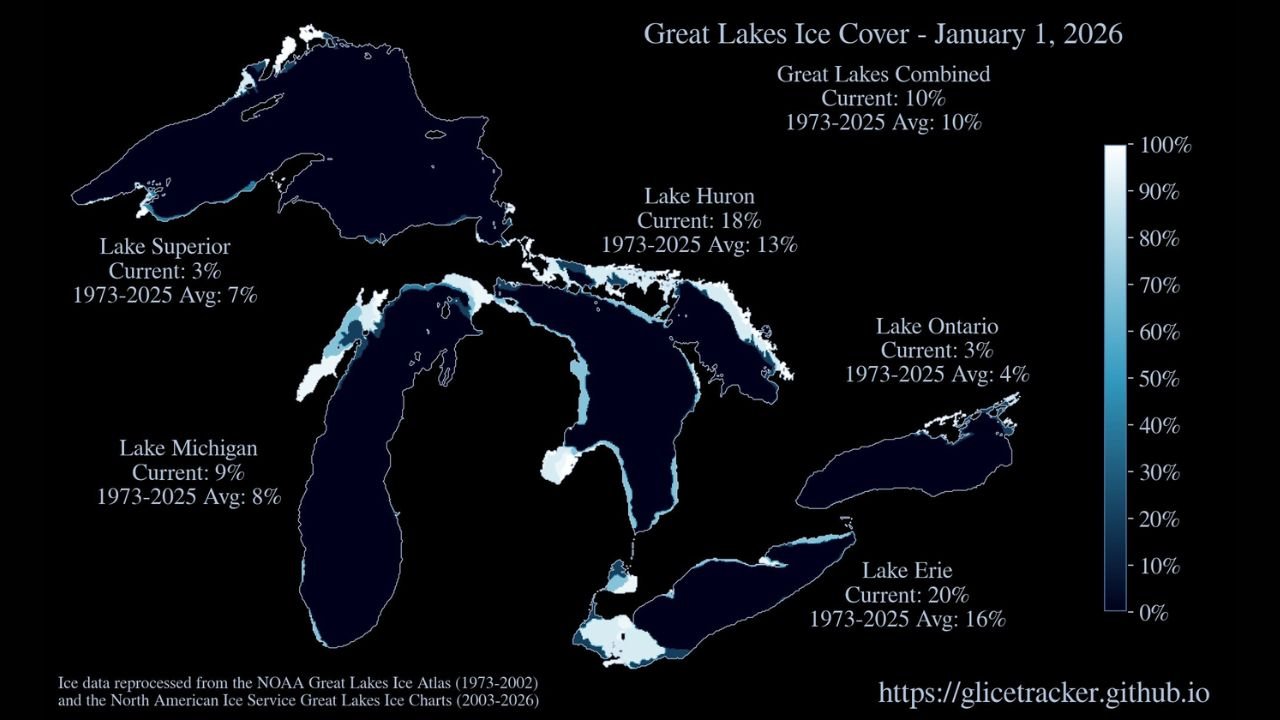
MICHIGAN — The Great Lakes region is entering 2026 with overall ice cover sitting near the long-term seasonal average, but new data shows a sharp contrast between individual lakes, highlighting how uneven early-winter conditions have been across the basin.
Great Lakes Ice Cover Snapshot to Start 2026
As of January 1, 2026, combined ice coverage across the Great Lakes stands at 10 percent, matching the 1973–2025 historical average for this point in the winter season. While the total figure appears typical, lake-by-lake data reveals notable differences in how quickly ice is forming.
- Lake Erie: 20% ice cover, above its long-term average of 16%
- Lake Huron: 18% ice cover, above its average of 13%
- Lake Michigan: 9% ice cover, slightly above its 8% average
- Lake Superior: 3% ice cover, well below its 7% average
- Lake Ontario: 3% ice cover, slightly below its 4% average
Why Lake Erie and Lake Huron Are Leading
The higher ice percentages on Lake Erie and Lake Huron reflect their shallower depths and faster response to sustained cold, allowing ice to establish more quickly during early winter cold spells. Lake Erie, in particular, often becomes the first Great Lake to develop widespread ice during colder seasons.
Why Lake Superior and Lake Ontario Are Lagging
Despite colder air moving through parts of the Midwest and Northeast, Lake Superior and Lake Ontario remain largely ice-free. Their greater depth and thermal storage make them slower to freeze, especially during winters that feature temperature swings rather than prolonged Arctic outbreaks.
What This Means Heading Deeper Into Winter
With the Great Lakes entering January near average ice coverage, future cold intensity and duration will be critical. Sustained cold could allow ice to expand rapidly, particularly on Lakes Michigan and Huron, while brief warm-ups could stall growth on the larger, deeper lakes.
Historically, the most significant ice expansion occurs later in January and February, meaning the current numbers serve more as a baseline than a final indicator of how the 2025–26 winter will rank.
Why Ice Coverage Matters
Great Lakes ice plays a major role in:
- Lake-effect snow intensity
- Marine navigation and shipping
- Shoreline erosion
- Regional temperature moderation
Even small changes in ice extent can influence weather patterns across surrounding states during the heart of winter.
As colder air masses periodically return, ice trends across Michigan, Ohio, Wisconsin, Minnesota, and New York will remain closely watched for signs of whether this winter stays average—or begins to accelerate toward a more ice-heavy season.
For continued Great Lakes weather updates, winter pattern analysis, and regional climate coverage, keep checking back with ChicagoMusicGuide.com.