
Michigan Winter 2025–26 Continues Into February With Widespread Heavy Snow and Some Regions Nearing 200 Inches
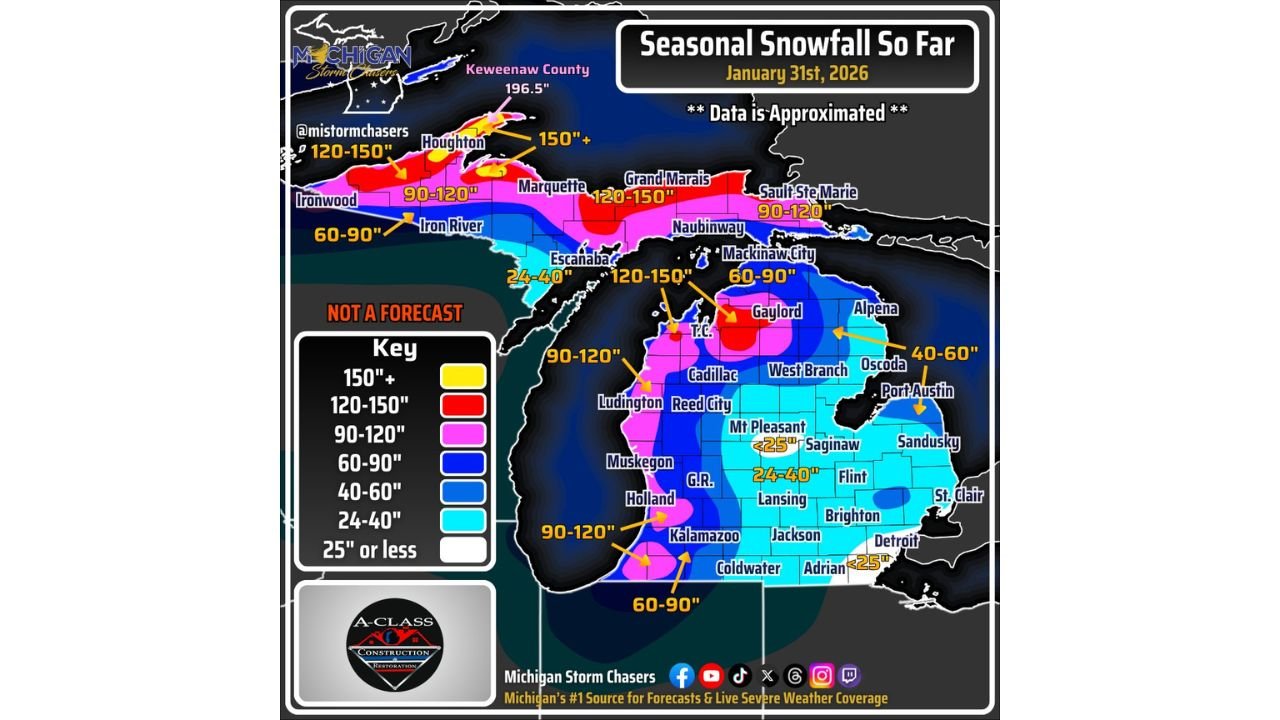
MICHIGAN — As the calendar turns to February 2026, season-to-date snowfall data confirms that Michigan remains locked in a classic, snow-heavy winter, with widespread accumulation stretching from the Upper Peninsula through inland and eastern Lower Michigan. Totals compiled for the 2025–26 winter season, which officially began on October 1, 2025, show that snow coverage has been both deep and consistent statewide heading into the heart of February.
Upper Peninsula Dominates Snowfall Totals Entering February
The Upper Peninsula continues to stand out as Michigan’s snow epicenter, fueled by repeated lake-effect events off Lake Superior and sustained cold air. Large portions of the western and central U.P. have now recorded 120 to 150 inches of snow, with several locations pushing even higher as February begins.
In the Kalkaska area and northern Upper Peninsula, seasonal totals have surpassed 125 inches, while select snowbelt corridors have exceeded 150 inches. The most extreme totals remain concentrated in Keweenaw County, where one reporting station has measured 196.5 inches of snow so far this season.
While that figure still trails last winter’s historic total of 315 inches at the same location, meteorologists note that snowfall trends remain strong enough to keep the region on pace for another exceptionally snowy finish if current patterns persist through late winter.
Lake Michigan Snowbelts Push Well Beyond 100 Inches
Across the Lake Michigan shoreline, snowfall has continued to build steadily into February. Many communities along the northwestern and western Lower Peninsula are now very close to or already past the 100-inch mark for the season.
Areas near Ludington, Muskegon, Holland, and Kalamazoo generally fall within the 60 to 120 inch range, depending on exposure to lake-effect bands and local terrain. These totals represent a notable improvement over last winter, when milder stretches limited snow accumulation despite favorable wind patterns.
Frequent cold snaps this season have allowed lake-effect snow to accumulate efficiently, keeping snowpack intact and deep across much of the region.
Inland and Eastern Michigan Maintain Steady Snow Coverage
Snowfall has not been confined to traditional snowbelts. Inland and eastern Michigan have also experienced a solid winter, with many areas reporting 24 to 48 inches of snow so far.
Communities including Lansing, Jackson, Flint, and the Saginaw Valley largely fall within the 24 to 40 inch range, while northern Lower Michigan, including areas near Gaylord, Cadillac, and Traverse City, has benefited from both synoptic storms and lake-enhanced snowfall, pushing totals into the 90 to 120 inch range.
Although a few localized dry pockets exist, forecasters emphasize that snowfall distribution across Michigan has been unusually broad and consistent this season.
How February Snowfall Totals Are Calculated
Officials caution that season-to-date snowfall figures remain approximate, particularly as February storms continue to add to totals. These snowfall ranges were calculated using a combination of CoCoRaHS observer reports, NOHRSC snowfall analysis, and National Weather Service data to confirm values for select regions and cities.
While exact numbers may vary by location, the statewide picture remains clear: Michigan has experienced a robust and sustained winter so far.
What to Expect as Winter Continues
With much of February and early March still ahead, meteorologists say additional snow remains likely, especially across the Upper Peninsula and Lake Michigan snowbelts, where cold air intrusions and open-water lake influence remain favorable.
For residents and snow lovers alike, the 2025–26 winter season continues to reflect what many consider a true Michigan winter, marked by deep snowpack, repeated lake-effect events, and long-lasting cold.
As Michigan moves deeper into February, residents should stay prepared for continued winter travel impacts and rapidly changing conditions. For ongoing coverage of seasonal weather trends, snowfall updates, and regional winter outlooks, visit ChicagoMusicGuide.com.