
New York, Pennsylvania, New Jersey, and New England Expected to Stay Colder Than Normal Through Late December as NOAA Outlook Shows Persistent Below-Average Temperatures
NEW YORK — NOAA’s Latest Outlook Shows the Northeast Staying Locked in a Colder-Than-Normal Pattern Through December 23
New temperature outlooks from NOAA show a clear signal for continued cold across New York, Pennsylvania, New Jersey, Connecticut, Massachusetts, Vermont, New Hampshire, and Maine, with below-average temperatures projected well into the second half of December.
While the current Arctic outbreak will ease in intensity, NOAA’s maps indicate that the Northeast will not see any sustained warmup between December 15 and December 23. Instead, the region remains shaded in blue — the national indicator for colder-than-normal conditions.
This keeps the Northeast in a winter-friendly environment heading into Christmas week.
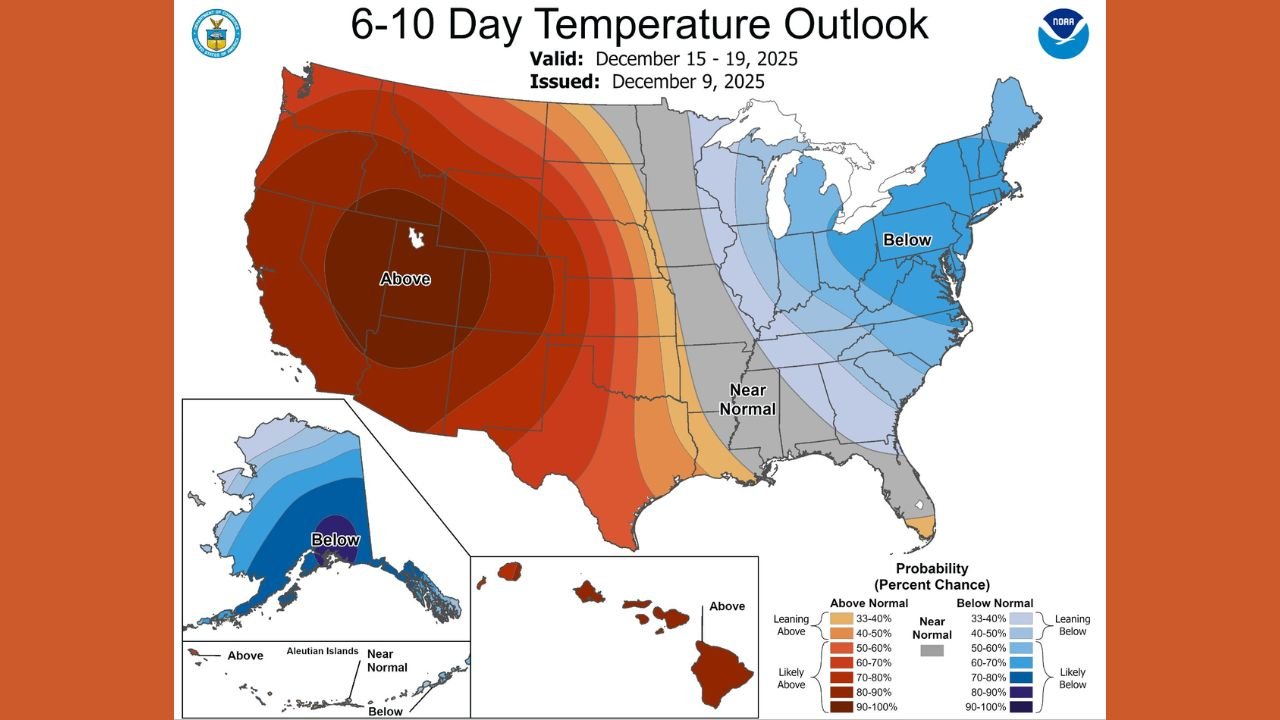
6–10 Day Outlook: December 15–19 Shows Continued Cold Across the Northeast
The first outlook window highlights a clear split across the country:
Colder Than Normal (Northeast & Great Lakes)
- New York
- Pennsylvania
- New Jersey
- New England states
- Ohio & Michigan also remain below average
NOAA maps show widespread 40–60% odds of below-normal temperatures, meaning daytime highs and overnight lows remain colder than what’s typical for mid-December.
Much Warmer West
Meanwhile, the western half of the United States — especially California, Nevada, Utah, and Arizona — shows strong confidence for above-normal warmth, with 60–90% probabilities of hotter-than-usual temperatures.
This sharp contrast between the warm West and cold Northeast reinforces a stalled weather pattern likely to last at least several days.
8–14 Day Outlook: December 17–23 Confirms the Northeast Will Stay Cold Into Christmas Week
The second NOAA map reinforces the ongoing theme:
the Northeast stays below normal, with little chance of a meaningful warm spell.
States remaining colder than normal include:
- New York
- Pennsylvania
- New Jersey
- Massachusetts
- Connecticut
- Vermont
- New Hampshire
- Maine
The cold signal extends westward into parts of the Great Lakes, including Ohio and Michigan, while the Southeast trends near normal.
Strong Warmth Builds in the West and Central U.S.
The West and central U.S. display deep red shading, indicating a high probability of above-normal temperatures spreading from:
- California to Colorado
- Texas to the central Plains
- The Gulf Coast and Mississippi Valley
This suggests a large-scale atmospheric setup that keeps warm air locked into the western half of the country while colder air repeatedly dips into the Northeast.
Why the Northeast Stays Cold While the West Warms Up
Meteorologists note that large-scale winter patterns often tilt one direction for weeks at a time. In this case:
- A persistent ridge (warmth) dominates the western United States
- A trough (cold) remains over the Great Lakes and Northeast
This balancing act keeps the Northeast from experiencing any long, steady warmup — even though the extremely cold temperatures of early December begin to ease.
Instead, the region settles into a steady colder-than-average pattern, favorable for snow risks if storm systems track nearby.
What This Means Heading Into Christmas Week
While it’s still too far out to forecast exact Christmas temperatures, NOAA’s extended guidance strongly suggests:
- The Northeast stays colder than normal
- No extended warmth is expected
- Several reinforcing shots of cold remain possible
- Snow threats remain on the table if coastal or inland storm systems develop
The pattern is not extreme like the early-December Arctic blast, but it is cold enough to maintain winter conditions across the region.
ChicagoMusicGuide.com Will Continue Tracking Northeast Weather Trends
As new temperature and precipitation outlooks arrive, ChicagoMusicGuide.com will provide updates on:
- Christmas week weather trends
- Potential snowstorm setups along the East Coast
- Additional temperature outlooks into January
Stay tuned for more regional weather articles covering multiple states — just let us know which region you want next.