
North Carolina at 87% Severe Drought and South Carolina at 67% as Worst Widespread Dry Spell Since 2008–2012 Intensifies
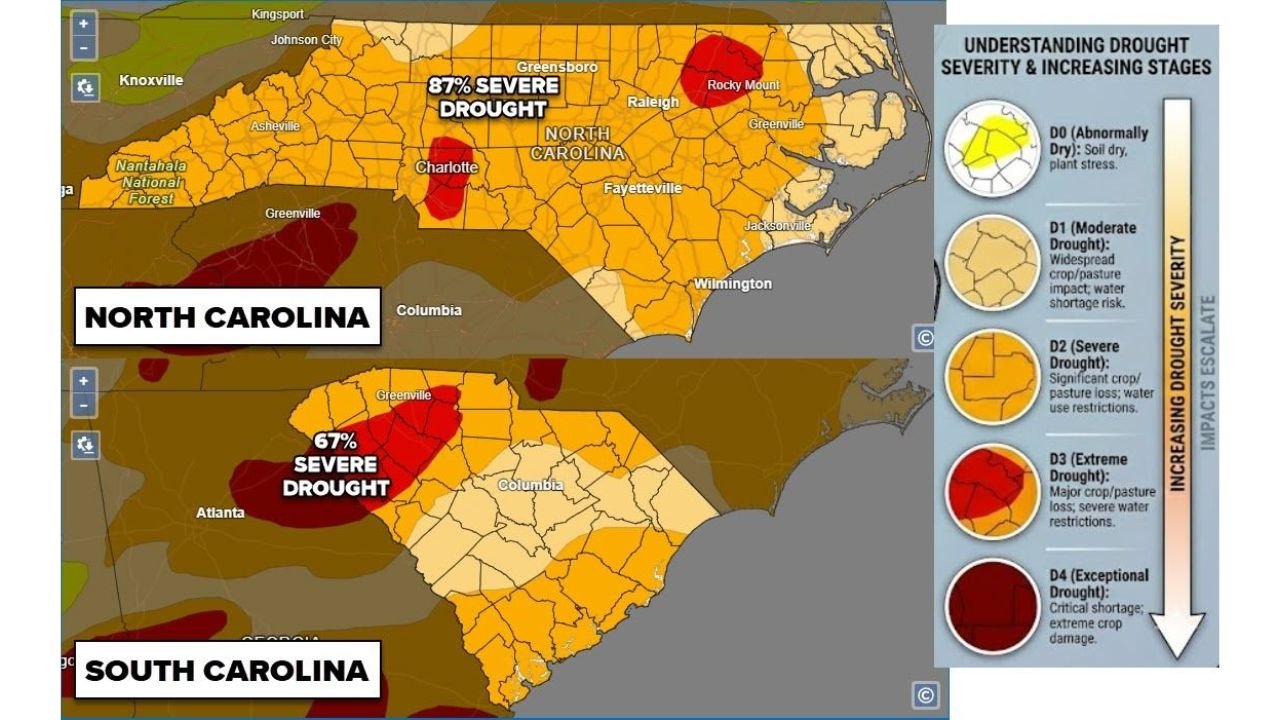
NORTH CAROLINA & SOUTH CAROLINA — Drought conditions across the Carolinas worsened again this week, with new data showing 87% of North Carolina now in Severe Drought (D2) and 67% of South Carolina classified as Severe Drought.
According to the latest maps, this marks the most widespread severe drought in North Carolina since 2008 and in South Carolina since 2012, underscoring just how rapidly conditions have deteriorated.
North Carolina: Severe Drought Dominates
Across North Carolina, large portions of the state are now shaded in orange, indicating Severe Drought conditions.
Major metro areas affected include:
- Charlotte
- Greensboro
- Raleigh
- Fayetteville
- Wilmington
Pockets of deeper red shading — representing Extreme Drought (D3) — are visible near Charlotte and in eastern sections near Rocky Mount.
With 87% of the state in Severe Drought or worse, soil moisture deficits and water stress are becoming widespread as the growing season approaches.
South Carolina: 67% in Severe Drought
South Carolina is also facing significant stress, with 67% of the state classified as Severe Drought.
The hardest-hit region appears across:
- The Upstate near Greenville
- Western portions bordering Georgia
- Areas extending toward central South Carolina
Columbia and surrounding counties show varying degrees of drought intensity, while some coastal areas remain slightly less impacted — though still dry.
Understanding the Severity Levels
The drought scale shown on the map progresses from:
- D0 (Abnormally Dry)
- D1 (Moderate Drought)
- D2 (Severe Drought)
- D3 (Extreme Drought)
- D4 (Exceptional Drought)
Severe Drought (D2) typically means:
- Significant crop and pasture loss
- Water use restrictions possible
- Increased wildfire risk
- Strain on reservoirs and groundwater
Extreme Drought (D3) escalates those impacts further.
Most Widespread Since the Late 2000s
Officials note that North Carolina has not seen this level of widespread severe drought since 2008, while South Carolina’s current footprint rivals conditions last experienced in 2012.
That makes this one of the most significant early-season drought expansions in more than a decade.
Why This Matters Now
As the growing season begins, the Carolinas need consistent, soaking rainfall — not just isolated showers — to reverse deficits.
Even when rain falls, it must be:
- Widespread
- Repeated
- Long-duration
Short bursts of precipitation may offer temporary relief but are unlikely to erase deep soil moisture shortages.
Looking Ahead
While scattered rain events may help in the short term, forecasters emphasize that both states will require sustained precipitation over several weeks to meaningfully improve conditions.
Until then, agriculture, water resources, and wildfire concerns will remain front and center across:
- Charlotte and the Piedmont
- Greenville and the Upstate
- Central and eastern North Carolina
Bottom Line
With 87% of North Carolina and 67% of South Carolina now in Severe Drought, the Carolinas are facing their most widespread drought stress in over a decade.
The recent rainfall is welcome — but far more will be needed to break this expanding dry spell.
For continued regional and national weather coverage, stay with ChicagoMusicGuide.com.