
Ohio Valley, Mid-Atlantic and Southern Plains See Massive Overnight Bird Migration Surge as Over 100 Million Birds Move North and Northeast Across the U.S.
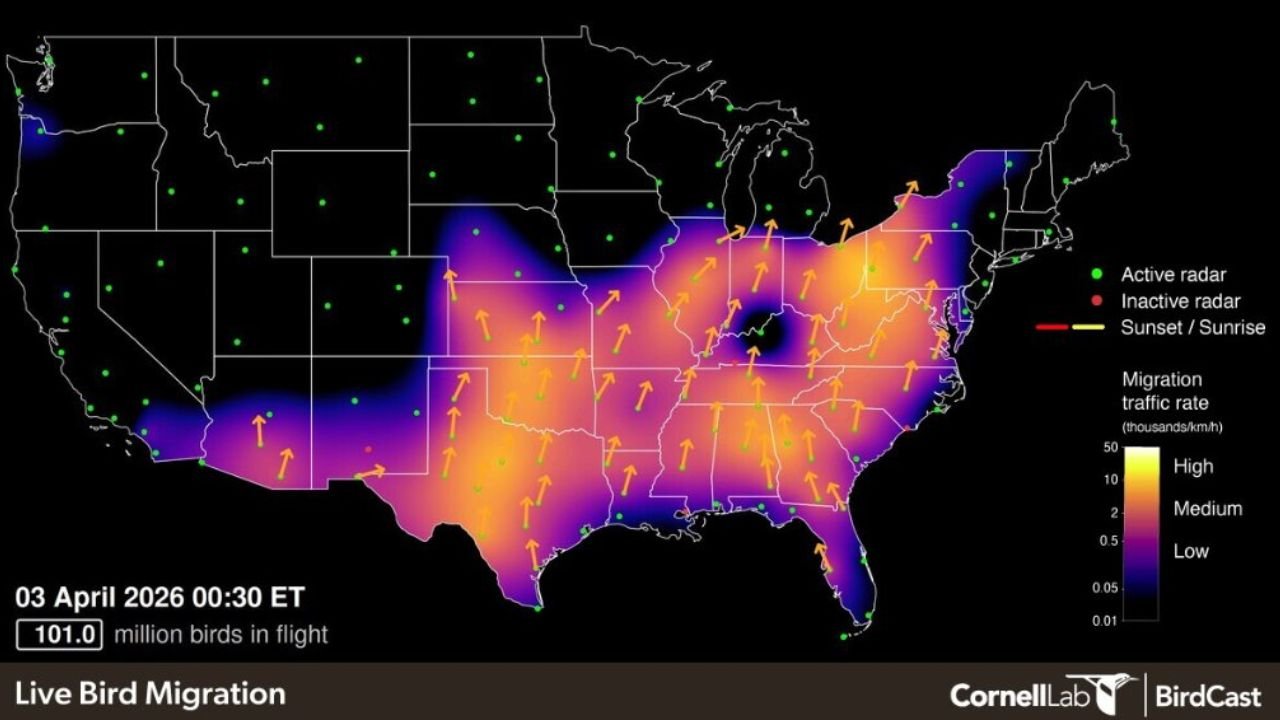
UNITED STATES — A remarkable surge in nocturnal bird migration unfolded overnight as an estimated 100 million birds took flight across the Lower 48, moving primarily north and northeast through key regions including the Mid-Atlantic, Ohio Valley, Southeast, and Southern Plains. Data captured by radar-based tracking highlights one of the more active migration nights of the season.
Where Bird Migration Was Most Concentrated Overnight
The latest migration data shows the highest concentrations of birds in flight stretching from the western Mid-Atlantic region into the Ohio Valley, with strong movement also extending into the Southeast and southern Plains.
Warmer color zones on the migration map indicate intense bird traffic, with particularly dense clusters visible across states like Kentucky, Tennessee, West Virginia, Pennsylvania, and parts of Arkansas and Oklahoma. These regions experienced continuous streams of birds moving in a northeast trajectory, signaling ideal migration conditions overnight.
Meanwhile, lighter activity was observed farther west and along portions of the northern U.S., where conditions were less favorable for large-scale migration. The directional arrows on the map confirm a consistent north and northeast flow, typical for spring migration patterns as birds head toward breeding grounds.
How Radar Technology Tracks Millions of Birds in Flight
The data comes from BirdCast, a system developed by the Cornell Lab of Ornithology, which uses Doppler radar networks across the United States to detect and estimate bird movement in real time.
This technology measures the density of objects in the atmosphere during nighttime hours, allowing scientists to distinguish bird migration from weather patterns. The result is a detailed visualization of how many birds are airborne and the direction they are traveling.
It’s important to note that these numbers represent birds currently in flight, meaning the total number of migrating birds is actually higher when accounting for those resting on the ground. The radar-based approach provides one of the most accurate large-scale insights into migration activity available today.
Why Conditions Were Ideal for a Major Migration Event
The widespread movement of birds overnight was likely driven by favorable weather conditions, including light winds, mild temperatures, and stable atmospheric patterns across much of the eastern and central United States.
Such conditions reduce energy expenditure for migrating birds and encourage mass takeoffs after sunset, leading to nights like this where migration activity spikes dramatically.
The alignment of these conditions across multiple regions—from the Southern Plains through the Mid-Atlantic—created a broad corridor of optimal travel, allowing millions of birds to move simultaneously.
More Migration Activity Expected Through the Weekend
Forecast trends suggest that significant bird migration will continue through the weekend, especially if similar weather patterns hold across the eastern half of the country.
As spring progresses, these migration waves will continue to bring large numbers of birds across the U.S., particularly during overnight hours when conditions are safest for long-distance travel.
For bird watchers and nature enthusiasts, this period represents one of the best opportunities to observe peak spring migration activity, especially during early mornings following heavy overnight movement.
Stay tuned to ChicagoMusicGuide.com for more updates on major natural events, weather patterns, and environmental highlights shaping the season.