
Oklahoma City and Tulsa Could Face Early-March Tornado Threat as March 5–10 Setup Signals Significant Plains Risk
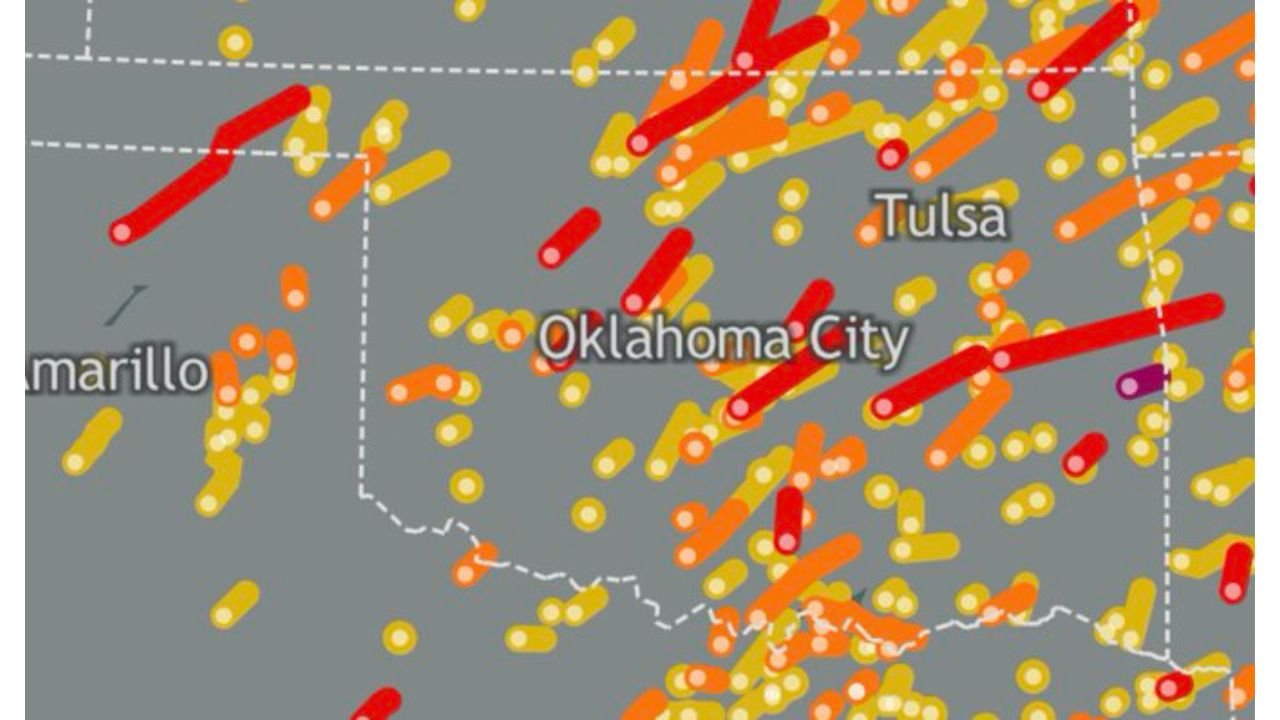
OKLAHOMA CITY, OKLAHOMA — Oklahoma is not typically viewed as a primary early-season tornado hotspot, but historical records show the state has experienced more than 50 significant tornadoes in March since reliable tracking began. Now, new forecast data suggests that March 5 through March 10 could bring another period worth watching closely across central and eastern Oklahoma.
Recent model guidance highlights a corridor of strong upper-level energy and increasing wind shear setting up across the Southern Plains, with Oklahoma City and Tulsa positioned within a favorable zone for organized severe weather.
History Shows March Is Not Quiet in Oklahoma
Although April and May are traditionally peak tornado months in Oklahoma, March has produced notable events in the past. The map of historical significant tornado tracks shows numerous paths crossing:
- Oklahoma City
- Tulsa
- Amarillo
- Western and central Oklahoma
These records reinforce that while early-season events are less frequent than peak spring outbreaks, they can still produce impactful tornadoes.
Upper-Level Jet Pattern Supports Severe Setup
The 500mb jet and height pattern displayed in the latest model data shows a strengthening southwest flow extending from West Texas through Oklahoma and into Arkansas and Missouri.
A concentrated core of stronger upper-level winds is projected near central Oklahoma, enhancing:
- Deep-layer wind shear
- Storm rotation potential
- Organized supercell development
This setup is often associated with discrete thunderstorms ahead of a developing frontal boundary or dryline — a classic Plains severe weather configuration.
March 5–10 Window Bears Watching
The potential threat window from March 5 to March 10 suggests multiple opportunities rather than a single storm day. When jet energy remains persistent over the Southern Plains for several days, it increases the likelihood of:
- Supercell thunderstorms
- Large hail events
- Damaging wind episodes
- Tornado development
The model depiction shows a focused zone across:
- Central Oklahoma
- Eastern Oklahoma
- Northern Texas
- Extending into Arkansas
Cities such as Oklahoma City, Tulsa, Norman, and Stillwater sit within this highlighted region.
Why This Pattern Is Notable
Early-season tornado threats often require a combination of:
- Adequate Gulf moisture return
- Strong wind shear
- A sharpening surface boundary
- Sufficient daytime heating
The projected jet configuration indicates strong shear will likely be present. The remaining question involves thermodynamics — specifically how much instability develops during the period.
If moisture return is robust, the environment could support rotating storms capable of producing tornadoes.
Oklahoma Not Immune to Early-Season Events
The historical track map underscores that Oklahoma has experienced numerous significant tornadoes in March. While not every year sees major activity, the state is far from immune during early spring transitions.
The combination of historical precedent and current model signals places Oklahoma among the regions to monitor closely next week.
Still Several Days Away
It is important to note that the March 5–10 timeframe remains several days out. Details such as exact storm timing, coverage, and intensity will evolve as higher-resolution guidance becomes available.
However, the consistency in upper-level wind projections and historical analogs suggests that the Southern Plains — particularly Oklahoma — could face an early-season severe weather episode.
Residents across Oklahoma City, Tulsa, and surrounding communities should stay attentive to updated forecasts as the window approaches.
As the first full week of March unfolds, preparedness and awareness will be key across Oklahoma and the broader Southern Plains. For continued updates on developing storm systems and severe weather outlooks, visit ChicagoMusicGuide.com.