
Oregon and Washington Dense Fog Alert Visibility Near 1/4 Mile in Willamette Valley and SW WA Wednesday Morning
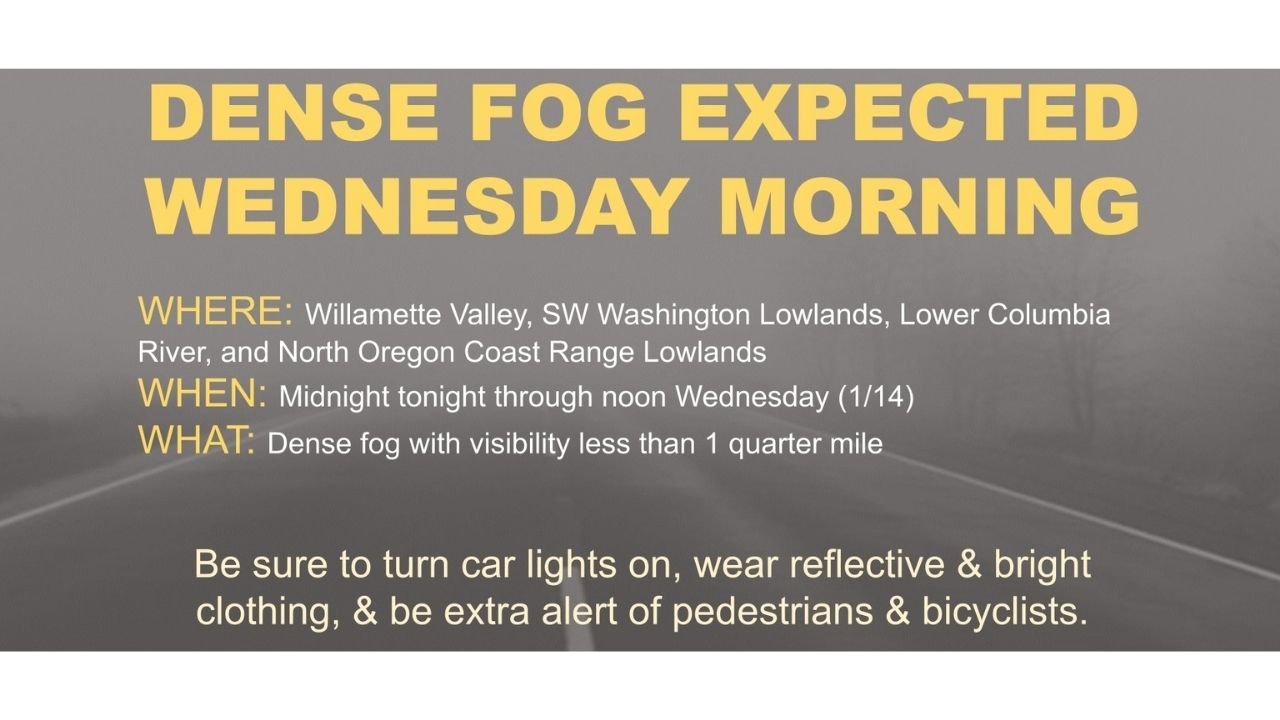
OREGON – Dense fog is expected to redevelop overnight and linger into Wednesday morning across northwest Oregon and southwest Washington, with visibility potentially dropping to less than one-quarter mile in several lowland corridors, creating a higher-risk commute window for drivers, cyclists, and pedestrians.
What the Advisory Is Showing and where the Worst Visibility May Hit
The guidance highlights a classic fog setup for the region’s valleys and river lowlands. The most fog-prone areas include:
- Willamette Valley (including the broader valley floor where fog can settle and hold)
- Southwest Washington lowlands
- Lower Columbia River corridor (where moisture and terrain can trap low clouds and fog)
- North Oregon Coast Range lowlands (especially in sheltered valleys)
If you live or travel in these zones, the biggest concern isn’t just “fog in general” — it’s rapid changes in visibility. One stretch of road can look manageable, and then a few minutes later you’re driving into a much thicker pocket where visibility collapses quickly.
Timing: when Fog Starts, when It Peaks, and when It Improves
The time window in the alert is straightforward and important for planning:
- Start: Midnight tonight
- Highest impact: Early Wednesday morning (the prime commute hours)
- End: Around noon Wednesday (1/14)
Fog often hangs on longer in valleys when winds stay light and the low-level moisture doesn’t mix out quickly. Even if conditions start improving late morning, some pockets can remain stubborn—especially near rivers, low-lying roads, and areas surrounded by higher terrain.
Why This Matters for the Wednesday Morning Commute
The main risk is limited visibility combined with driver overconfidence. When visibility drops near 1/4 mile or less, normal driving habits become dangerous fast. You can also get sudden “white wall” conditions, especially near bridges, open fields, or river-adjacent highways where temperature and moisture changes happen quickly.
Practical driving reminders for fog conditions like this:
- Slow down early (before you hit the thickest fog pocket)
- Increase following distance more than you think you need
- Use low-beam headlights (high beams can bounce glare back at you)
- Avoid sudden lane changes unless you’re sure the lane is clear
- Expect slick patches in shaded areas if temps are cold enough (even if fog is the main headline)
Pedestrians and Cyclists: a Real Visibility Problem, Not Just a “Driver Issue”
The advisory also emphasizes being extra alert for people outside of vehicles — and that’s not random. In thick fog, drivers may not see pedestrians or cyclists until the last second.
If you’re walking or biking Wednesday morning:
- Wear reflective and bright clothing
- Assume drivers can’t see you clearly at intersections and crosswalks
- Make movements predictable (don’t dart across lanes or between parked cars)
- If possible, shift travel times later in the morning when fog begins lifting
Travel Plans, Concerts, and Early Call Times: What to Do if You’Re Heading to an Event
ChicagoMusicGuide.com covers live music culture, but weather still decides whether people arrive on time — especially for:
- Early load-ins for venues
- Morning rehearsals and studio sessions
- Airport rides or regional travel
- Crew call times where delays snowball for everyone
If you have plans in Portland, Vancouver (WA), Salem, or along the Columbia corridor Wednesday morning, consider:
- Leaving earlier than normal (fog-related slowdowns build quickly)
- Sharing ETA updates with your group or crew
- Avoiding last-minute rushing (that’s when fog crashes happen)
What to Watch for Overnight
Fog can expand or shrink depending on wind, temperatures, and how much low-level moisture pools near the surface. Here are the signs conditions are getting worse:
- Visibility dropping quickly after midnight
- Roadway dampness increasing even without rain
- Thick fog forming along rivers and lowland highways first, then spreading outward
If you wake up and can’t see clearly down your block, that’s usually a sign the worst commute impacts are already underway.
If you’re seeing thick fog where you are Wednesday morning, take it seriously — slow down, turn your car lights on, and give yourself time. And if you’re heading to a show, a rehearsal, or a drive across the region, build your plan around the possibility that visibility drops to under a quarter mile in the fog-prone lowlands.
What are conditions like in your area — are you seeing the fog build already, or is it still clear? Share what you’re seeing and keep the conversation going with us at ChicagoMusicGuide.com.