
South Dakota to Northern Illinois Turns Abnormally Dry as February Precipitation Lags and Severe Drought Persists Into Planting Season
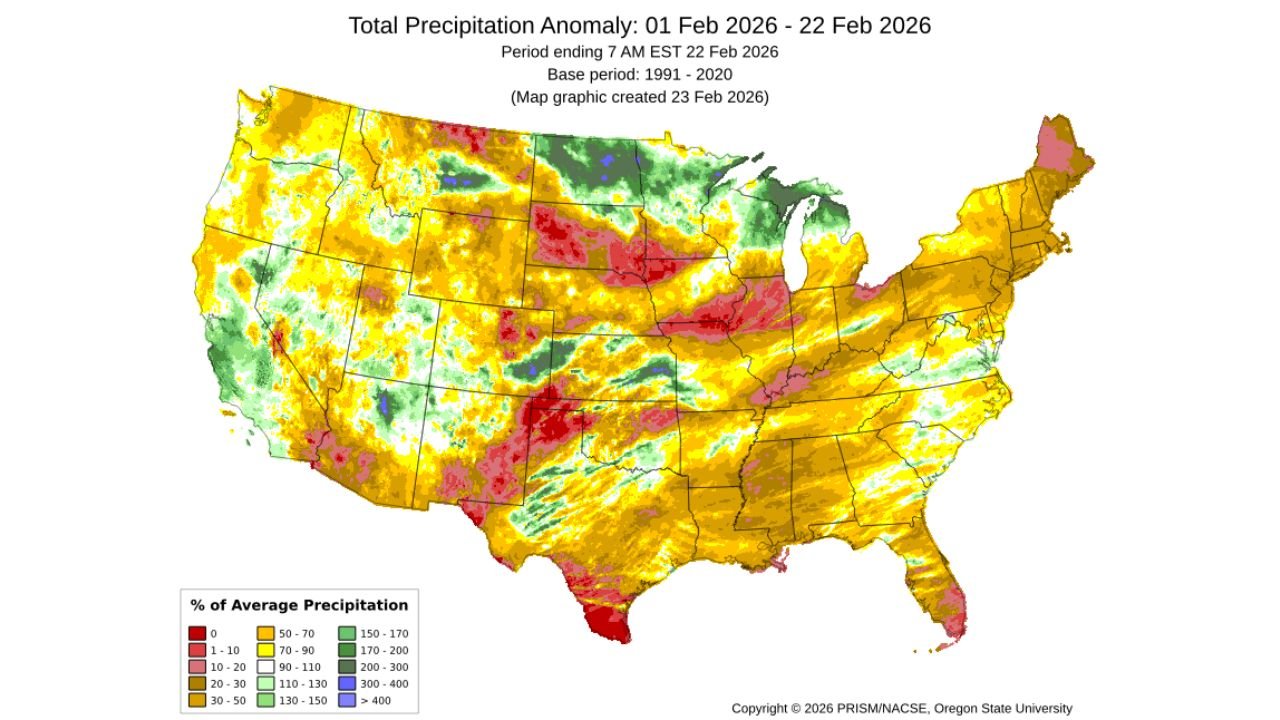
CHICAGO, ILLINOIS — Despite a few impactful winter storm systems this month, the overall February 2026 precipitation pattern has trended drier than normal, particularly from South Dakota through Iowa and into northern Illinois. Updated precipitation anomaly data through February 22, 2026 shows much of this corridor receiving well below average moisture, raising concerns as the region approaches the spring planting season.
Drought conditions remain entrenched in several key agricultural areas, with some locations still classified under severe to extreme drought.
February Precipitation Running Below Average
The latest Total Precipitation Anomaly (February 1–22, 2026) map reveals widespread deficits stretching from the Northern Plains into the Upper Midwest.
Areas from:
- South Dakota
- Nebraska
- Iowa
- Northern Illinois
are shaded in yellow to red tones, indicating precipitation levels ranging from roughly 50–90% of average, with pockets even lower.
While isolated regions saw beneficial snowfall or rain events, the broader monthly pattern failed to deliver consistent moisture across the region.
This dryness is especially notable in northern Illinois, where recent storm systems did not significantly erase existing moisture deficits.
Drought Monitor Shows Lingering Severe Conditions
The latest U.S. Drought Monitor map (valid February 17, 2026) highlights multiple areas across the central United States still dealing with notable drought intensity.
Across the broader Midwest and Plains:
- Portions of South Dakota and Nebraska remain in moderate to severe drought (D1–D2).
- Parts of the central U.S. show pockets of extreme drought (D3).
- Drought impact types include both short-term (S) and long-term (L) effects.
From South Dakota down through Kansas and into parts of the Midwest, drought shading remains prominent despite winter precipitation episodes.
Northern Illinois, while not uniformly extreme, still shows areas categorized under drought stress as the growing season approaches.
Planting Season Concerns Emerging
With spring planting just weeks away for many Midwestern producers, the continuation of below-normal precipitation could complicate soil moisture recovery.
Even though winter storms can deliver short-term moisture boosts, they have not been enough to:
- Fully replenish subsoil moisture
- Reverse long-term hydrological deficits
- Eliminate drought classifications in some regions
Agricultural planners often look for consistent late-winter and early-spring precipitation to improve topsoil and groundwater reserves before crops go into the ground.
Without sustained rainfall events in March and April, drought conditions from South Dakota to northern Illinois could remain a concern.
Not All Regions Impacted Equally
It is important to note that while the central corridor has run dry, other parts of the United States have seen near or above normal precipitation.
Portions of the:
- Pacific Northwest
- Parts of the Great Lakes region
- Segments of the Southeast
show more favorable moisture conditions on anomaly maps.
However, the focus remains on the central agricultural belt, where February has not delivered widespread drought relief.
What Comes Next for the Midwest?
Seasonal transition patterns in late February and March can sometimes bring more active storm tracks through the Plains and Midwest.
Whether upcoming systems will provide meaningful rainfall across South Dakota, Iowa, and northern Illinois remains uncertain.
Meteorologists will closely monitor storm track placement and moisture transport in the coming weeks, as early spring precipitation could determine how quickly drought classifications improve — or worsen.
For now, the data is clear: February 2026 has trended drier than normal across the central U.S., particularly from South Dakota to northern Illinois, and several regions remain under significant drought stress heading into planting season.
For continued updates on Midwest weather patterns, agricultural outlooks, and seasonal climate trends, visit ChicagoMusicGuide.com.